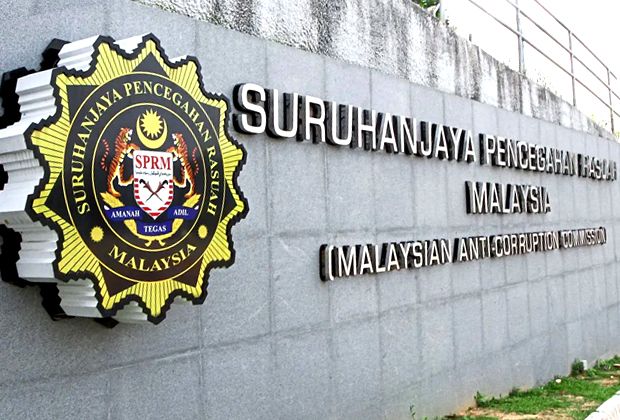
The Malaysian Anti-Corruption Commission (MACC) has moved to restore banking access for Rohas Tecnic's telecommunications and power transmission tower subsidiary, lifting financial restrictions that had been placed on the company's accounts just weeks earlier. The revocation orders, issued by the Deputy Public Prosecutor under provisions of the Anti-Money Laundering, Anti-Terrorism Financing and Proceeds of Unlawful Activities Act 2001 (AMLA), now affect all previously frozen accounts held by the unit known as HGPT, restoring operational flexibility to Malaysia's established player in critical infrastructure technology.
The decision to revoke the seizure orders extends beyond the corporate entity itself, encompassing the personal bank accounts of both current and former officers of HGPT. This comprehensive lifting of restrictions signals a resolution to the financial scrutiny that had ensnared not only the company but individuals connected to its management structure. The release of these personal accounts represents a significant development for those whose funds had been caught up in the investigation, allowing them to resume ordinary financial activities without the constraints imposed during the freeze period.
Rohas Tecnic disclosed the positive development through a filing with Bursa Malaysia, emphasizing that all accounts subject to the earlier seizure orders have now been released and restored to full operational status. The company underscored that it is now free to engage in normal banking transactions and resume its full range of business activities without the limitations that had previously constrained its financial management and commercial operations. This restoration of financial access is particularly significant for a company operating in sectors such as telecommunications and power transmission, where operational continuity and regular cash flow management are essential to service delivery.
The sequence of events leading to this outcome began on October 17, 2025, when Rohas Tecnic announced that it, alongside subsidiaries HGPT and Rohas-Euco Industries Bhd (REI), had received freezing and seizure orders from the MACC. These orders were issued under both Section 44(1) and Section 50(1) of AMLA, affecting specified bank accounts held by the entities. The initial action appeared to represent a serious enforcement measure, typical of MACC's approach to investigating potential financial irregularities or money laundering concerns within the corporate sector.
What followed was a relatively swift resolution process. On November 26, 2025, approximately six weeks after the initial seizure notice, both Rohas Tecnic and HGPT received revocation orders from the Deputy Public Prosecutor. The speed of this reversal suggests that the investigation either concluded without finding grounds to maintain the restrictions, or that sufficient cooperation and clarification from the company had addressed the MACC's initial concerns. For investors and stakeholders monitoring the situation, the rapid lifting of restrictions may indicate that any compliance issues have been satisfactorily resolved.
Interestingly, REI had received its revocation order slightly earlier, on November 25, 2025, issued directly by the MACC under Section 44A of AMLA. The staggered timing of the revocation orders across the various entities suggests that investigations may have proceeded at different paces, or that different legal pathways were involved in resolving the status of each subsidiary. This nuance is relevant for understanding the investigative process, though all entities have now been cleared to resume normal operations.
For Malaysia's corporate governance landscape, this case underscores the MACC's active enforcement posture regarding financial activities and anti-money laundering compliance. The swift action taken in October, followed by careful review and subsequent revocation, demonstrates the commission's commitment to investigating potential breaches while also maintaining a process that appears to respect the principle that restrictions should be lifted when circumstances warrant. The ability to reverse course relatively quickly also suggests mature procedural mechanisms within Malaysia's anti-corruption framework.
The implications for Rohas Tecnic are immediately practical. As a company engaged in power transmission and telecommunications infrastructure, operational continuity is critical to serving clients across Malaysia's energy and communications sectors. The restoration of banking access allows the company to resume normal vendor payments, employee compensation, and project financing without the constraints that could have disrupted service delivery or project timelines. For a company in critical infrastructure, such disruptions can have broader impacts on national service provision.
The broader context within Malaysia's corporate sector is noteworthy as well. Financial investigations by MACC, while necessary for maintaining integrity in business operations, can create significant uncertainty for companies and their stakeholders during the investigation period. The relatively rapid resolution in this case may provide some reassurance to other companies that the investigative process, while thorough, can proceed with reasonable expedition when circumstances permit. This balance between rigorous investigation and timely resolution is important for maintaining business confidence.
Stakeholders including investors, business partners, and employees of Rohas Tecnic will likely view the revocation orders as a positive development, clearing any cloud that had gathered over the company's financial standing and governance. For listed companies like Rohas Tecnic, such clarity is valuable in maintaining investor confidence and market perception. The removal of financial restrictions also means the company can pursue its strategic objectives and capital allocation decisions without the limitations imposed during the freeze period.
Looking forward, the case serves as a reminder of the importance of robust compliance frameworks within Malaysian corporations. While investigations by regulatory authorities are sometimes initiated on grounds that may later prove unfounded or insufficiently substantive, the initial freeze itself underscores that companies must maintain exemplary standards in their financial practices and reporting. The MACC's willingness to investigate and equally its willingness to revoke restrictions when appropriate provides both accountability and fairness within the system.

