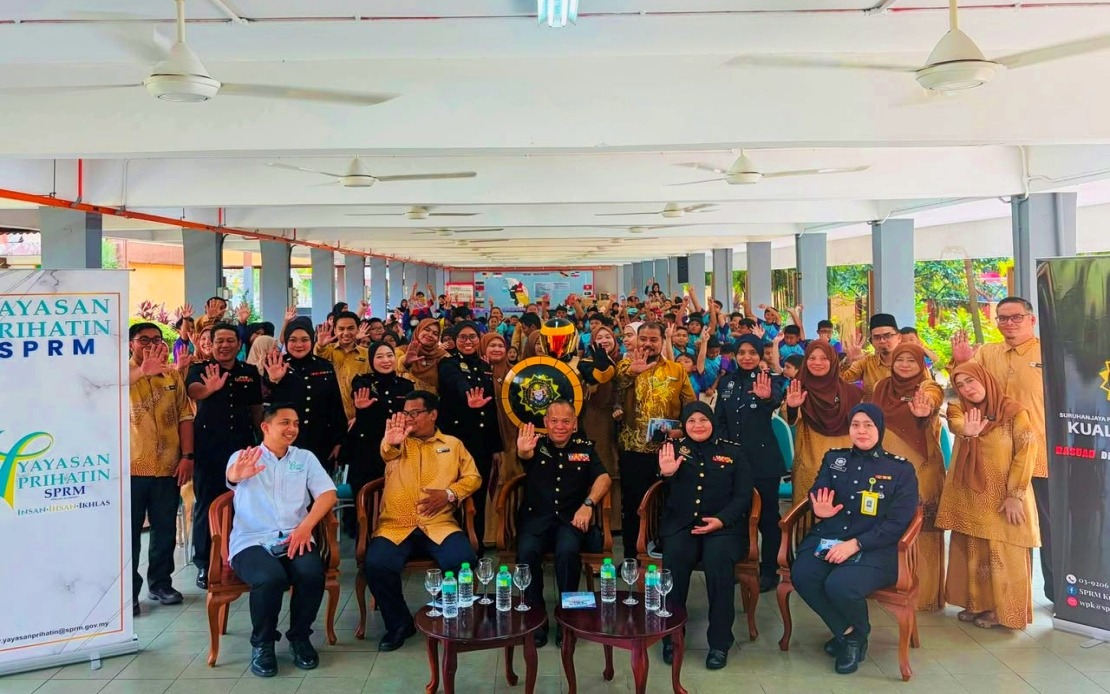
The Kuala Lumpur branch of the Malaysian Anti-Corruption Commission has launched a targeted initiative designed to cultivate ethical principles among primary school pupils, recognising that corruption prevention must begin in the classroom. The Wira Antirasuah (WAR) programme, unveiled at Sekolah Kebangsaan Jalan Pasar 1, represents an institutional effort to embed anti-corruption awareness at the grassroots level, where young minds are still forming their values and understanding of right and wrong.
Modhamad Zakkuan Talib, who heads the Kuala Lumpur MACC office, articulated the commission's philosophy that establishing integrity from childhood represents a fundamental investment in Malaysia's long-term institutional health. Rather than viewing corruption-fighting as purely a law enforcement matter, the agency positions early education as a preventative strategy capable of reducing misconduct before it takes root in adult behaviour. This approach acknowledges that behaviour patterns established during formative years often persist into adulthood, making childhood interventions potentially more effective than enforcement mechanisms applied to entrenched adult practices.
The conceptual framework underpinning the initiative challenges conventional heroism narratives, particularly relevant in a Malaysian context where public discourse often lionises dramatic gestures. Talib emphasised that genuine moral courage does not require extraordinary circumstances or superhuman abilities. Instead, integrity manifests through consistent small choices made daily—refusing to cheat in examinations, respecting others' property, maintaining honesty in personal dealings, and honouring commitments. This grounded approach to ethics recognises that most societal corruption emerges not from dramatic villainous acts but from accumulated small compromises and normalised unethical behaviour.
The programme's practical implementation combined educational content with engaging interactive elements designed to capture young participants' attention. The Kuala Lumpur MACC Community Education Branch conducted briefing sessions introducing pupils to core anti-corruption principles in age-appropriate language. Simultaneously, Kapten MACC, the commission's mascot, engaged students through more playful, character-driven education methods. This dual approach—combining formal instruction with entertainment—recognises that primary school audiences require varied pedagogical strategies to absorb and retain complex ethical concepts.
Beyond classroom instruction, the MACC established the SKJP1 Anti-Corruption Corner, a dedicated physical space within the school serving as an ongoing resource hub. This permanent installation suggests the commission's commitment to sustained rather than episodic engagement with the school community. By providing accessible information resources for both staff and pupils, the initiative creates opportunities for continued ethical reflection beyond a single launch event, establishing mechanisms for maintaining integrity awareness throughout the school year.
The programme extended beyond abstract ethical instruction to address material welfare concerns affecting student success. Yayasan Prihatin SPRM donated a smart television to the school, enhancing educational infrastructure and technology access. More significantly, the commission distributed school aid to 29 pupils from asnaf (economically disadvantaged) families, demonstrating recognition that ethical development cannot occur in isolation from basic material security. This integrated approach acknowledges that children struggling with poverty face cognitive loads that compromise their capacity to absorb ethical teachings, making welfare support a prerequisite for effective values education.
In a symbolic convergence of multiple policy objectives, the programme incorporated environmental stewardship into its messaging. Special education pupils participated in planting hibiscus flowers, simultaneously supporting the Keep Malaysia Clean campaign and marking National Month celebrations. This activity served multiple functions: it provided meaningful participation opportunities for students with diverse learning needs, visibly demonstrated commitment to environmental consciousness, and linked personal integrity with national patriotic sentiment through the planting of Malaysia's national flower.
The timing and scale of this initiative merit consideration within Malaysia's broader anti-corruption landscape. As a middle-income nation with persistent corruption challenges affecting institutional legitimacy, Malaysia requires multi-generational approaches to cultural change. The MACC's focus on primary school education indicates institutional recognition that decades of enforcement-heavy approaches require supplementation through preventative cultural strategies. By reaching children before peer influences and institutional pressures calcify their ethical frameworks, the programme addresses corruption at its origins rather than merely its manifestations.
For Malaysian educators and parents, this initiative represents an institutional endorsement of integrity as a teachable skill rather than an innate personality trait. The MACC's involvement lends governmental credibility to ethical instruction, potentially elevating its perceived importance within school curricula often constrained by competing demands and limited resources. The programme's design also offers replicable elements that other schools might adopt, potentially catalysing broader institutional adoption of similar approaches throughout Malaysia's education system.
The integration of special education pupils into the environmental component reflects evolving inclusive education practices in Malaysia, ensuring that anti-corruption messaging reaches all students regardless of learning differences. This intentional inclusivity models the principle that ethical standards apply universally, not merely to neurotypical or academically advanced pupils. Such symbolic representation reinforces the programme's core message that integrity is a foundational societal value transcending demographic categories.
Looking ahead, the programme's sustainability will depend on institutional commitment beyond the initial launch. For anti-corruption initiatives to influence behaviour at scale requires consistent reinforcement, teacher training, parental involvement, and integration with formal curriculum frameworks. The MACC's establishment of permanent physical spaces and ongoing information provision suggests serious implementation intent rather than symbolic gesture, yet the true measure of success will emerge through longitudinal tracking of whether pupils who participated in such programmes demonstrate measurably different ethical decision-making patterns in subsequent years.

