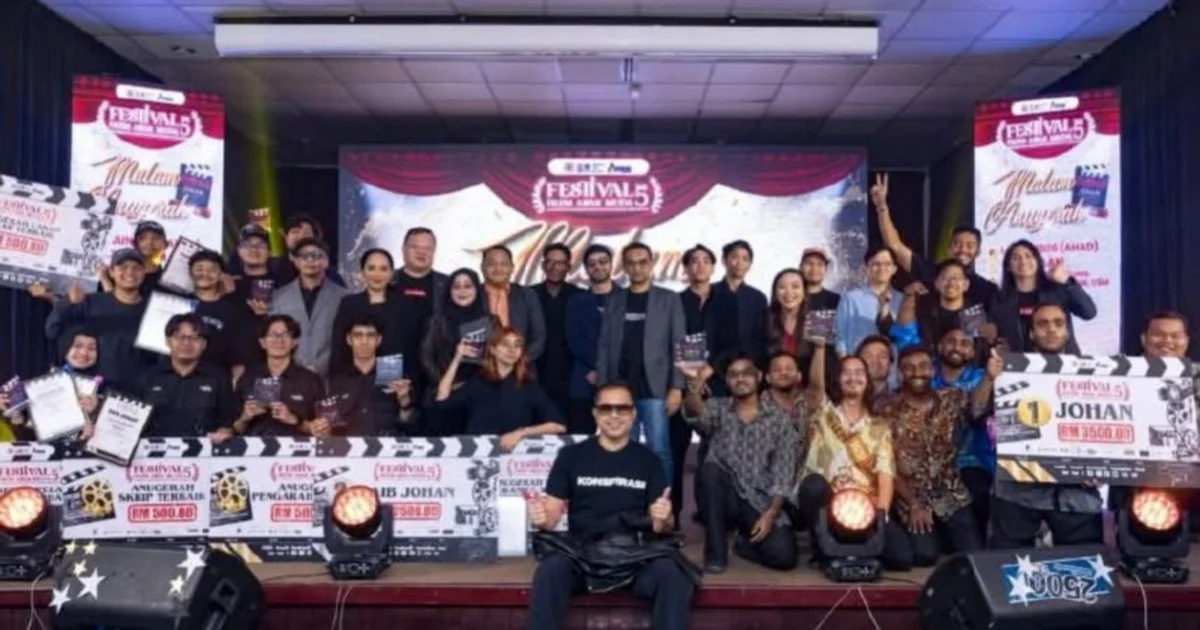
The Malaysian Anti-Corruption Commission (MACC) is expanding its strategic approach to fighting graft by working closely with young filmmakers and cinema enthusiasts at the 5th Youth Film Festival (FFAM) in Penang, recognising that creative storytelling has become an essential tool for embedding anti-corruption values in Malaysia's youth demographic. The partnership, being executed through the commission's collaboration with Universiti Sains Malaysia (USM), underscores a deliberate shift away from purely regulatory messaging towards culturally resonant and engaging public communication methods.
This initiative reflects growing recognition within anti-corruption circles globally that traditional enforcement and awareness campaigns, while necessary, have limited penetration among younger audiences who increasingly consume media through digital and cinematic formats. By positioning the MACC as a partner in a youth-focused cultural event, the commission aims to make integrity education feel organic and relevant rather than didactic. The festival provides an ideal venue to reach students and early-career creatives who will become future decision-makers in business, civil service, academia, and public institutions across the region.
The collaboration carries particular significance for Malaysia, where recent years have seen substantial shifts in anti-corruption enforcement and public perception following major scandals. Engaging younger generations now—before professional habits and ethical frameworks solidify—represents a preventive investment. Young people who internalise anti-corruption principles through compelling narratives and artistic expression are theoretically more likely to resist corrupt temptations and question institutional wrongdoing when they encounter it in their careers.
The FFAM serves as both a platform and a laboratory for MACC's messaging. By curating content that addresses corruption's human costs, the commission can demonstrate how graft undermines public services, distorts meritocracy, and damages social trust. Films tackling these themes—whether through documentary investigation, dramatic storytelling, or experimental approaches—create emotional and intellectual engagement that statistics alone cannot achieve. This methodology aligns with international best practices observed in jurisdictions such as Singapore and South Korea, where anti-corruption agencies actively participate in cultural and educational initiatives.
For the filmmakers and students participating in the festival, collaboration with MACC opens pathways to explore socially relevant topics with institutional backing and visibility. Young artists often grapple with questions of ethics and institutional accountability; channeling these concerns into festival submissions provides legitimate creative outlets while simultaneously strengthening the anti-corruption narrative pipeline. Winners and selected submissions may gain additional platforms through MACC's networks and communications channels, amplifying their reach beyond the campus environment.
The timing of this partnership also matters contextually. As Malaysia continues navigating post-1Malaysia Development Berhad recovery and institutional reforms, demonstrating that anti-corruption work extends beyond prosecutions to encompass cultural and educational dimensions signals a comprehensive government commitment to systemic change. It suggests that combating graft requires not just law enforcement but also sustained efforts to reshape attitudes, norms, and social expectations around integrity and accountability.
USM's role as host institution adds credibility and accessibility. Penang has historically positioned itself as a progressive, innovation-focused state, and hosting the festival aligns with that identity. Students across Malaysian universities can participate or attend, creating ripple effects throughout the higher education sector. The location also facilitates engagement with Penang's business community, media outlets, and civil society organisations, broadening the initiative's footprint beyond campus walls.
The festival itself can serve multiple functions simultaneously. Beyond spreading anti-corruption awareness, it provides MACC with valuable insights into how young people perceive institutional integrity, what messaging resonates, and where gaps in understanding persist. Feedback from festival participants and audiences becomes useful intelligence for refining future awareness campaigns. Additionally, the event may identify emerging filmmaking talent interested in documentary or narrative exploration of governance issues, potentially nurturing a new generation of accountability-focused media practitioners.
Regionally, this approach positions Malaysia within a competitive landscape where anti-corruption agencies across Southeast Asia are experimenting with cultural partnerships. Thailand's and Indonesia's institutions have similarly experimented with media collaborations, though with varying degrees of success and institutional autonomy. Malaysia's MACC partnership model—embedded within genuine cultural event rather than a government-controlled platform—demonstrates confidence in allowing creative voices to shape the narrative.
Challenges remain, of course. Ensuring that festival content maintains artistic integrity while advancing MACC's messaging requires careful curation and editorial independence. If participants perceive the collaboration as propagandistic or heavy-handed, credibility suffers. The commission must operate with sufficient restraint, allowing filmmakers genuine creative freedom rather than dictating narratives from above.
Longer-term success will depend on whether this single festival intervention catalyses sustained engagement with anti-corruption values among participants. One-off events generate publicity and goodwill but require follow-up mechanisms—alumni networks, mentorship programs, or post-festival distribution channels—to convert enthusiasm into behavioural change. MACC and USM should consider establishing formal frameworks for ongoing collaboration beyond the festival itself, perhaps including scholarships, internship opportunities, or residencies for filmmakers interested in governance and accountability issues.
This partnership ultimately reflects a maturing understanding that fighting corruption demands creativity, cultural sensitivity, and sustained engagement across multiple societal channels. By harnessing the Youth Film Festival, MACC demonstrates that anti-corruption work extends far beyond boardrooms and courthouses, reaching into the cultural imagination of Malaysia's youth.