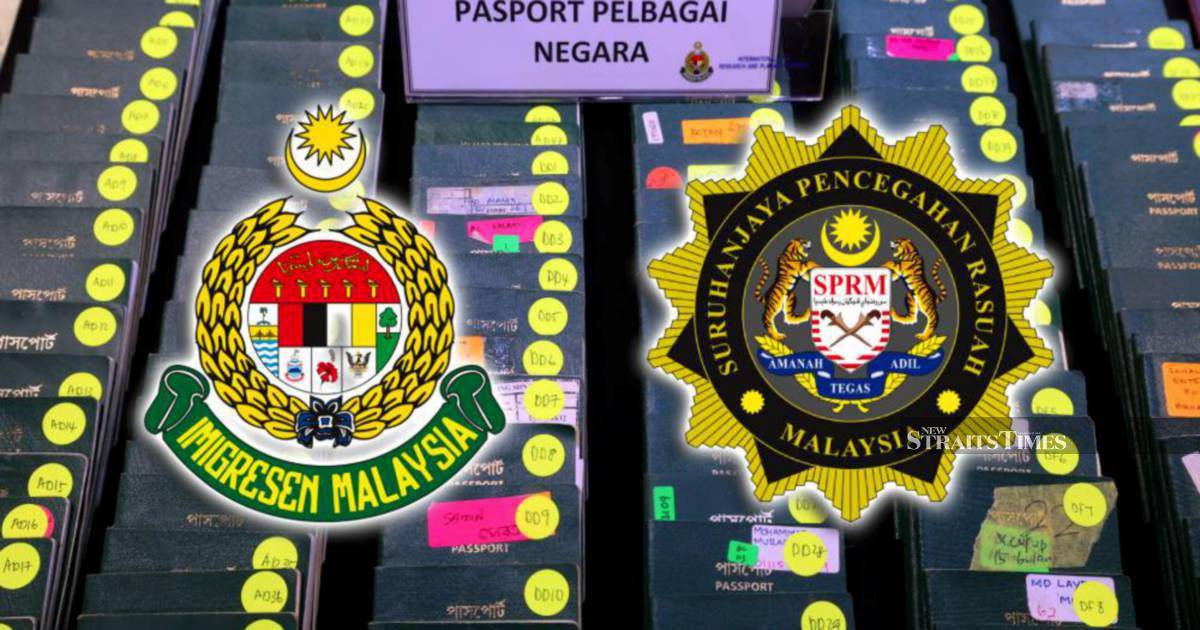
Authorities in Malaysia have moved decisively against a criminal organization accused of compromising the country's immigration database to unlawfully issue temporary work authorizations. The operation, conducted jointly by the Malaysian Anti-Corruption Commission and the Immigration Department, represents a significant blow against syndicates exploiting digital vulnerabilities within government systems to facilitate irregular employment.
The syndicate's operations centred on breaching the Malaysian Immigration System (MyIMMs), the digital backbone of the nation's border and immigration management framework. By gaining unauthorized access to this platform, the criminals were able to manipulate the approval process for Temporary Employment Visit Passes (PLKS), the official documentation required for foreign workers seeking short-term employment in Malaysia. This breach undermined not only the integrity of the immigration system but also posed serious risks to national security and labour market stability.
The perpetuation of such schemes highlights the evolving sophistication of cybercriminal networks operating within Southeast Asia. Rather than relying solely on manual forgery or document tampering, these organized groups have adapted to target the digital systems that governments increasingly depend upon. The MyIMMs platform, despite its intended benefits in streamlining immigration processes, became a vector for fraudulent activity when proper cybersecurity protocols failed to prevent unauthorized infiltration.
The implications for Malaysia's foreign worker programme are considerable. The country relies on hundreds of thousands of migrant labourers across construction, manufacturing, hospitality, and domestic work sectors. A compromised system for issuing work permits creates cascading problems: undocumented workers entering the labour market unvetted, employers gaining access to unauthorized staff without proper regulatory oversight, and potential risks to both worker safety and employer accountability. Furthermore, the syndicate's activities represent a form of institutional corruption that erodes public confidence in government digital infrastructure at a time when Malaysia is investing heavily in digital transformation.
The joint action between MACC and the Immigration Department signals important inter-agency coordination on cybercrime and institutional vulnerability. The MACC's involvement underscores that such breaches are not merely technical security failures but constitute potential corruption offences, particularly if individuals within the immigration bureaucracy were complicit in facilitating unauthorized access or approvals. This institutional angle is crucial, as external hackers alone cannot sustain such operations without insider assistance or negligent supervision that permits systematic abuse.
The dismantling of this particular syndicate will likely prompt broader security audits across government digital systems. Malaysia's ongoing digitalization push—encompassing everything from tax administration to social services—depends fundamentally on public trust that these systems are secure and resistant to manipulation. Any compromise creates opportunities for criminals while simultaneously damaging governmental credibility. The incident serves as a cautionary reminder that technological advancement must be accompanied by robust cybersecurity investment and institutional safeguards.
Regional implications extend beyond Malaysia's borders. Syndicates operating across Southeast Asia often target multiple countries' systems, and techniques perfected against one nation's infrastructure may migrate to others. Thailand, Indonesia, and the Philippines face similar pressures from organized networks seeking to circumvent immigration controls. The successful disruption in Malaysia may provide valuable intelligence and investigative techniques that benefit regional counterparts, particularly through ASEAN law enforcement cooperation mechanisms.
The fraudulent work passes generated through this scheme created an artificial pool of undocumented or improperly documented foreign workers within Malaysia's labour market. This has consequences for wage suppression, workplace safety standards, and tax revenue collection. Employers using such permits avoid compliance costs, creating unfair competitive advantages while legitimate businesses bearing the full regulatory burden face economic disadvantage. Workers holding false authorizations are simultaneously vulnerable to exploitation, as they cannot access formal protections or remedial channels without risking deportation.
The operation reflects Malaysia's authorities' capacity to respond to sophisticated digital threats, though questions remain about how the breach occurred initially and how long it persisted before detection. Understanding the timeline and scope of the fraud—how many fraudulent passes were issued, the financial proceeds, and the network of benefiting employers—will be essential for assessing the full extent of the damage and determining appropriate enforcement responses.
Moving forward, the incident will likely accelerate regulatory and security enhancements within the Immigration Department's digital infrastructure. This may include multi-factor authentication, enhanced access logging, real-time anomaly detection systems, and more rigorous personnel vetting for roles involving sensitive administrative access. Investment in cybersecurity, while costly, is increasingly recognized as essential infrastructure protection rather than discretionary spending.
The successful dismantling of this syndicate demonstrates that even sophisticated digital crimes are ultimately traceable and prosecutable when investigating authorities possess adequate resources and coordination. However, the incident also underscores the perpetual challenge facing government agencies: criminal networks continuously evolve their methods and exploit emerging technologies, creating an ongoing arms race between institutional security and criminal innovation that shows no sign of abating.

