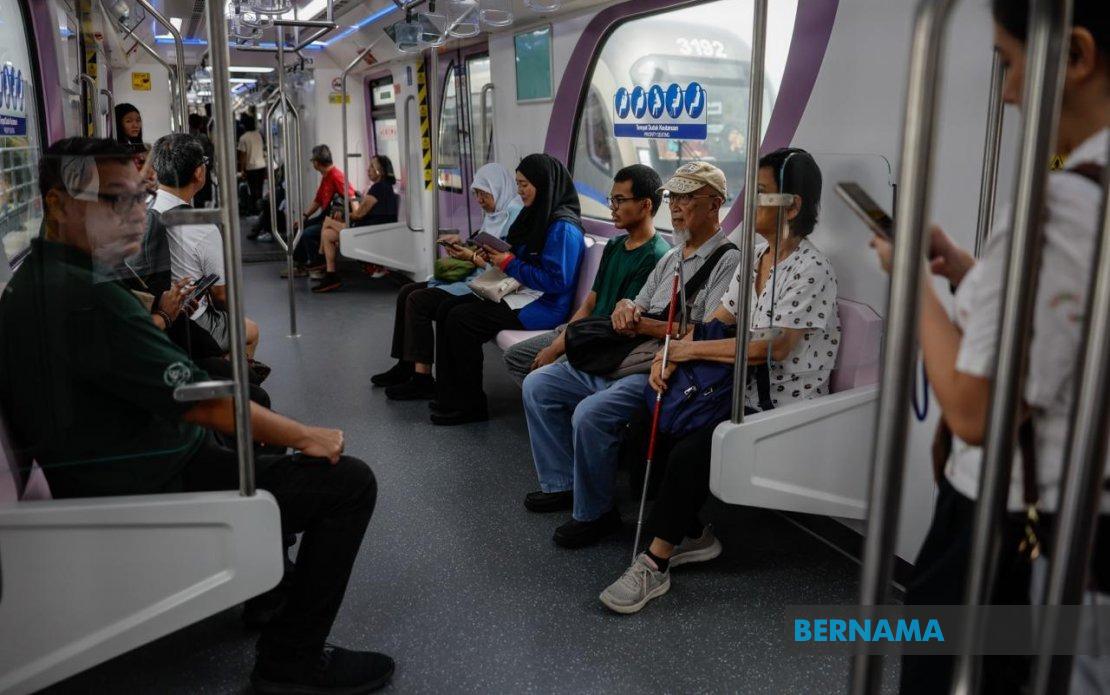
The newly inaugurated Light Rail Transit 3 (LRT3) Shah Alam Line commenced operations in Shah Alam on June 29 to widespread consumer approval, with commuters hailing the route as efficient, comfortable and instrumental in trimming journey times across the Klang Valley. The maiden day also witnessed constructive suggestions from passengers regarding enhancements to accessibility infrastructure and user facilities, signalling early momentum for the RM16.63 billion transport investment while highlighting specific areas requiring refinement as the system matures.
Visually impaired passenger Razlan Ibrahim, aged 40, articulated the positive impact of the new route during his trial journey from Kajang to Glenmarie 2 station, describing it as a meaningful step towards building a more universally accessible public transport ecosystem. Yet his experience also illuminated remaining shortcomings. Razlan pointed specifically to insufficient Braille signage at critical junctures including facilities designated for persons with disabilities (PwDs), prayer rooms segregated by gender, and lift entrances—gaps that compromise the capacity of visually impaired users to navigate independently and locate essential services.
The tactile guidance systems deployed throughout the network drew particular commendation from accessibility advocates. Razlan noted that pathways tactilely embedded at stations such as Bandar Utama functioned exceptionally well in facilitating mobility for disabled passengers, particularly where these routes led directly to PwD-specific toilets, segregated prayer facilities, and vertical transportation. This infrastructure represents genuine progress in universal design implementation on Malaysian mass transit systems. Nevertheless, the disconnect between physical accessibility and information accessibility—the difficulty users faced in obtaining directional data through formats suited to visual impairment—demonstrates that comprehensive inclusion extends beyond infrastructure to encompassing multi-sensory communication systems.
Prime Minister Datuk Seri Anwar Ibrahim's announcement of complimentary travel across the LRT3 Shah Alam Line for all passengers through July 31 creates a valuable testing window for both the transport authority and the commuting public. The promotional period encompasses feeder bus services operated by Prasarana Malaysia Berhad, effectively creating an integrated introductory experience that encourages broad trial adoption. This approach allows potential daily users—particularly cost-conscious demographic segments including students and workers—to evaluate the network's suitability for their regular commute patterns before committing financially.
Samantha Fong, a 26-year-old office worker, articulated the time-saving advantage that many commuters immediately recognised upon boarding. By enabling direct routing between Bandar Utama and Glenmarie 2 without requiring intermediate transfers, the LRT3 Shah Alam Line eliminates the coordination friction and schedule uncertainty that plague multi-leg journeys on existing networks. Fong praised the brevity of train wait times and overall operational smoothness, though she advocated for women-only coach configurations as a future enhancement to strengthen the sense of security and comfort particularly valued by female travellers navigating urban transit systems.
The preference for women-exclusive carriage space reflects international best practices observed in several high-capacity metros, particularly in Southeast Asian cities where such facilities have demonstrated strong demand and reduced harassment-related concerns. While not immediately implemented, the proposal merits consideration as ridership stabilises and operational data clarifies peak-hour demographics and service patterns. Women-only coaches have proven effective in encouraging female transit participation and retention, thereby broadening the user base and revenue streams while addressing genuine safety and comfort considerations.
Rainchie Lee, also 26, echoed the general commendation regarding operational smoothness and vehicle comfort, emphasising that the complimentary trial period serves a broader social function beyond mere marketing. By removing financial barriers temporarily, the promotional window democratises access to the new route across socioeconomic strata, enabling students and lower-income workers to assess integration possibilities without absorption of fares that might otherwise deter exploration. This trial-and-adopt model acknowledges the behavioural hesitancy that frequently accompanies new transit infrastructure, where potential users remain uncertain of reliability until personal experience validates claims.
The LRT3 Shah Alam Line exemplifies the government's strategic transport modernisation agenda, positioning public transit as a cornerstone infrastructure supporting economic productivity and urban livability across the Klang Valley. The RM16.63 billion investment reflects commitment to reducing vehicular congestion, lowering transportation costs for commuters, and anchoring sustainable urban mobility—particularly critical as the region continues rapid metropolitan expansion. However, the feedback from day-one passengers underscores that financial investment alone cannot guarantee equitable service outcomes; attention to inclusive design, information accessibility, and user comfort represents equally essential dimensions of transport infrastructure success.
The constructive feedback emerging from the launch period provides systems operators and policymakers substantive direction for iterative improvements. Prioritising Braille signage expansion at key facility nodes addresses a readily implementable gap that would substantially improve navigation autonomy for visually impaired passengers. Simultaneously, exploring women-only coach implementation, enhancing real-time passenger information systems, and gathering granular accessibility data will refine the service as it transitions from promotional operations to revenue-generating baseline service. The enthusiastic reception combined with thoughtful suggestions suggests the LRT3 Shah Alam Line has established sufficient foundation for sustainable adoption while retaining clear pathways for operational refinement.
For Malaysian commuters and policymakers, the LRT3 Shah Alam Line's opening illuminates both the transformative potential and implementation complexities of major transport infrastructure. The immediate operational success—comfortable vehicles, punctual service, and genuine time savings—validates the investment hypothesis and generates momentum for broader transit development. Simultaneously, accessibility gaps flagged by disabled passengers offer crucial reminders that technical infrastructure competence must couple with inclusive design philosophy to ensure mobility systems genuinely serve all population segments. As the complimentary trial period unfolds, this feedback loop should inform not only ongoing LRT3 refinements but also broader accessibility standards across Malaysia's expanding transit ecosystem.

