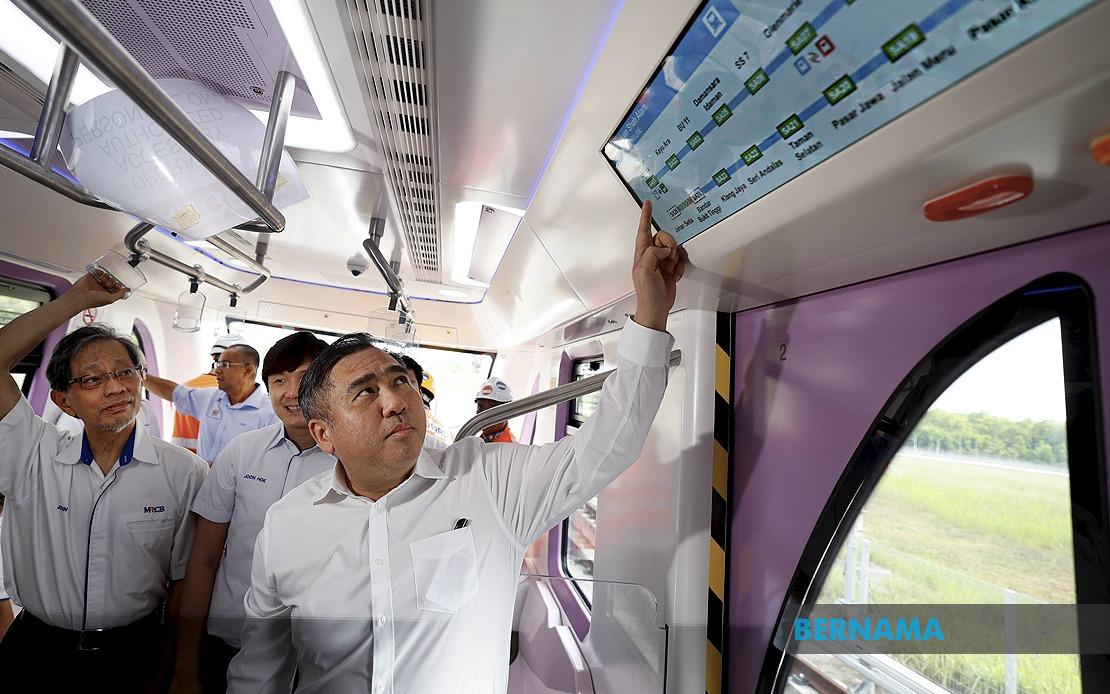
Malaysia's newest urban rail corridor will open its doors to the public next week, marking a significant milestone in the nation's public transport infrastructure development. Transport Minister Anthony Loke announced on Friday that the Light Rail Transit 3 (LRT3) service will begin full commercial operations on Monday, June 29, following an official launch ceremony scheduled for Sunday that will be presided over by Prime Minister Datuk Seri Anwar Ibrahim.
The LRT3 represents an important addition to the Klang Valley's transportation network, particularly for residents and workers in the western corridor who have long awaited improved rail connectivity. The announcement came during a media engagement at Terminal Bersepadu Selatan, where Loke was opening a new branch of the Road Transport Department (JPJ) in Bandar Tasik Selatan. The minister confirmed that the launch event would precede the immediate commencement of regular passenger services the following morning.
Extending across 37.8 kilometres, the new line traces a path from Bandar Utama in the north to Johan Setia in Selangor's industrial heartland. This routing strategically positions the LRT3 to serve multiple transportation corridors that previously lacked efficient rail alternatives. The line intersects numerous residential neighbourhoods, commercial hubs, and manufacturing zones, creating an integrated transport backbone for the western Klang Valley region.
Projections indicate the LRT3 will directly benefit approximately two million residents across the service area. This figure underscores the scale of the population that has been anticipating enhanced connectivity options. For families and workers spread across Shah Alam, Petaling Jaya, and surrounding municipalities, the new service promises to reduce travel times and offer a viable alternative to increasingly congested road networks during peak hours.
The design philosophy behind the LRT3 emphasises bridging existing gaps in the Klang Valley's public transport infrastructure. Rather than duplicating existing routes, the line fills crucial connectivity voids along the western corridor, linking residential zones where many lower and middle-income families reside with employment centres and commercial districts. This spatial planning approach aims to enhance socioeconomic mobility by improving access to job markets and services.
For commuters familiar with existing LRT and Monorail networks, the LRT3 introduces another layer to the region's transit ecosystem. The expanded rail network should alleviate pressure on highways such as the Federal Route and the Shah Alam Expressway, potentially reducing traffic congestion and associated environmental pollution. Property developers and businesses along the corridor have already begun responding to the anticipated accessibility improvements, with new mixed-use developments emerging near planned station locations.
The project's completion after years of construction represents a substantial public investment in mass transportation infrastructure. Like previous rail projects in the Klang Valley, the LRT3 supports Malaysia's broader objective of developing sustainable urban mobility options and reducing private vehicle dependency. This alignment with environmental and urban planning goals reflects the government's commitment to long-term transportation transformation.
Operationally, the LRT3's launch will require coordination among multiple stakeholders, including rail operators, station staff, and transport authorities responsible for managing passenger flows and safety protocols. The Sunday ceremony will provide an opportunity to showcase the completed infrastructure and demonstrate its readiness to handle daily commuter volumes. The timing of the Monday commencement suggests the authorities have completed final safety certifications and operational preparations.
For Malaysian readers, particularly those in the Selangor region, the LRT3 represents tangible infrastructure development that touches daily life. Commute patterns throughout the western Klang Valley will likely shift as residents discover journey-time savings and alternatives to driving. School commutes, office routings, and shopping trips may be reconfigured around the new rail network. This transition period will be critical for establishing ridership patterns and demonstrating the service's utility to its target population.
The launch also holds broader significance for Malaysia's positioning as a developing nation investing in modern public transport systems comparable to regional peers. Cities across Southeast Asia have expanded their rail networks substantially over the past decade, and Malaysia's incremental additions keep pace with regional urbanisation trends. The LRT3 fits into this continental context of growing metropolitan sophistication and infrastructure modernisation.
Operators will need to monitor initial ridership volumes closely to assess whether projections of benefiting two million residents translate into actual usage patterns. Pricing structures, service frequency, cleanliness, and reliability will all influence long-term acceptance. Agencies managing the system should anticipate adjustment periods as the public adapts to new routings and schedules, potentially requiring service modifications based on observed demand patterns.

