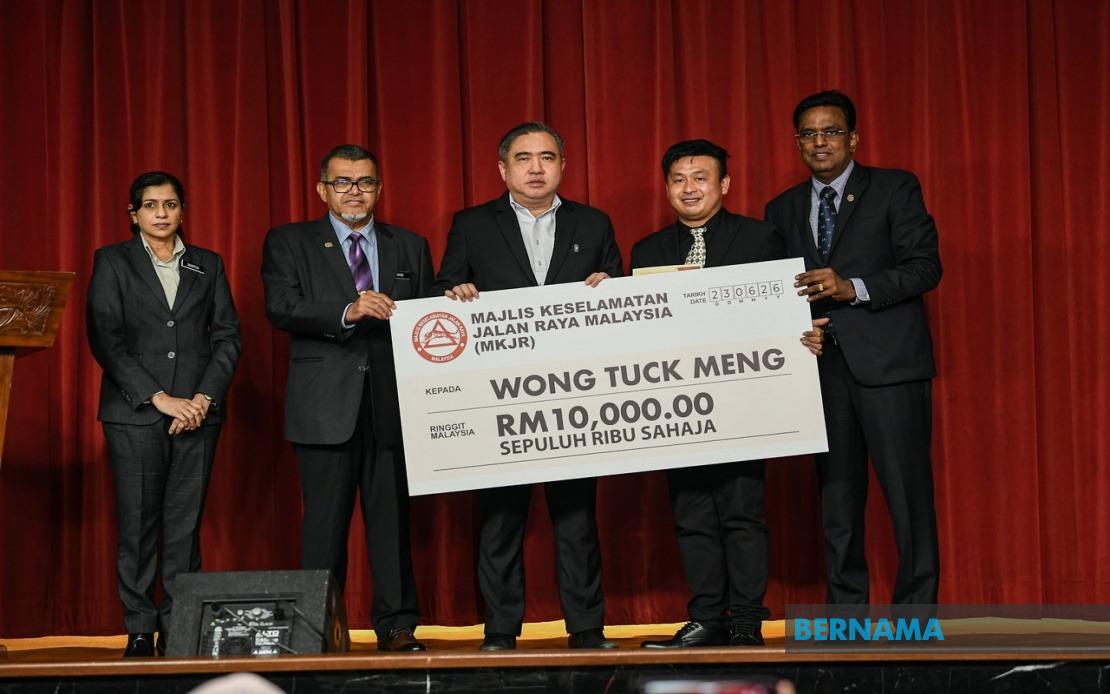
Wong Tak Ming, a lorry driver whose decisive intervention prevented what could have been a fatal bus accident, has been formally recognised by the Malaysian government with a Special Certificate of Appreciation and RM10,000 in recognition of his heroic actions. The award ceremony, held at the Parliament building, highlighted an incident on June 15 when the driver's instinctive response saved the lives of 21 passengers aboard an express bus travelling from Kedah to Kuala Lumpur.
Transport Minister Anthony Loke presented the award on behalf of the Malaysian Road Safety Council (MKJR), describing Wong as a courageous individual whose calm decision-making under pressure exemplified the best of Malaysian road safety culture. The minister emphasised that Wong's actions prevented a potential catastrophe despite the considerable personal danger he faced during the intervention, setting a benchmark for responsible behaviour on the nation's highways.
The incident unfolded when the express bus experienced a mechanical failure whilst navigating a steep downhill section approaching the Menora Tunnel. As the vehicle lost control and began bearing down on his lorry, Wong made a split-second decision that demonstrated remarkable presence of mind. Rather than attempting to flee, he used his heavier vehicle to make controlled contact with the bus, gradually reducing its forward momentum and preventing an uncontrolled collision with stationary traffic ahead.
Wong's response showcased the kind of decisive action that can mean the difference between a manageable incident and a multi-vehicle tragedy on Malaysia's busy expressways. By positioning his lorry strategically and guiding both vehicles towards the guardrail, he created a buffer zone that arrested the bus's dangerous descent whilst simultaneously alerting other motorists to the unfolding emergency. His honking of the horn provided precious seconds for vehicles ahead to move clear of the danger zone.
When asked about his motivations during the ceremony, Wong displayed a commendable humility, insisting that he had simply reacted on instinct to prevent loss of life. He explained that the spatial awareness and quick calculation of his options had given him confidence that intervention was possible without creating greater danger. His focus was entirely on saving lives and buying time for other road users to escape the potential impact zone, priorities that underscore his genuine concern for public safety over personal risk.
The incident gained significant traction on social media platforms, where video footage of the event circulated widely and generated substantial public admiration for Wong's bravery. This organic recognition from the community likely influenced the government's decision to formalise recognition of his actions through an official award and monetary recognition funded through the Malaysian Road Safety Council.
Parliament itself acknowledged Wong's contribution to road safety, with Deputy Speaker Datuk Dr Ramli Mohd Nor conveying the gratitude of the Dewan Rakyat during proceedings related to the Road Transport (Amendment) Bill 2025. This legislative moment provided an appropriate forum for recognising that individual actions on Malaysia's roads can have far-reaching implications for public safety and that such exemplary behaviour deserves official commendation.
The Menora Tunnel incident offers valuable lessons for Malaysian motorists regarding the importance of vehicle maintenance, safe driving practices on mountainous terrain, and the instinctive responsiveness that can prevent tragedy. Steep downhill sections of expressways present particular hazards where mechanical failures can escalate rapidly into multi-vehicle disasters, particularly when heavy vehicles are involved in close proximity to one another.
Wong's actions also underscore broader questions about road safety infrastructure and maintenance protocols. The technical failure that afflicted the express bus raises questions about the adequacy of vehicle inspection regimes and whether current standards sufficiently account for the demands placed on commercial transport operating across Malaysia's varied terrain. Regular maintenance and rigorous pre-journey inspections represent essential safeguards for protecting both passengers and other road users.
For Malaysian motorists, Wong's example provides a sobering reminder that road safety extends beyond adhering to speed limits and traffic regulations—it encompasses the willingness to take calculated risks when lives depend on immediate intervention. The recognition he has received sends a powerful message that the government values and rewards citizens who prioritise public safety over personal convenience or caution.
The RM10,000 award and official certificate represent tangible recognition of Wong's service to Malaysian road safety, though colleagues and industry observers would note that such financial compensation pales in comparison to the potential tragedy he averted. Nevertheless, the public ceremony and parliamentary recognition ensure that his contribution will not fade into obscurity but rather serves as an inspiration for other Malaysians to consider their own role in maintaining safe roads.
As Malaysia continues to grapple with persistently high rates of road accidents and fatalities across its expanding highway network, stories like Wong's remind stakeholders—from government agencies to individual drivers—that safety requires constant vigilance and a willingness to act decisively when circumstances demand intervention.

