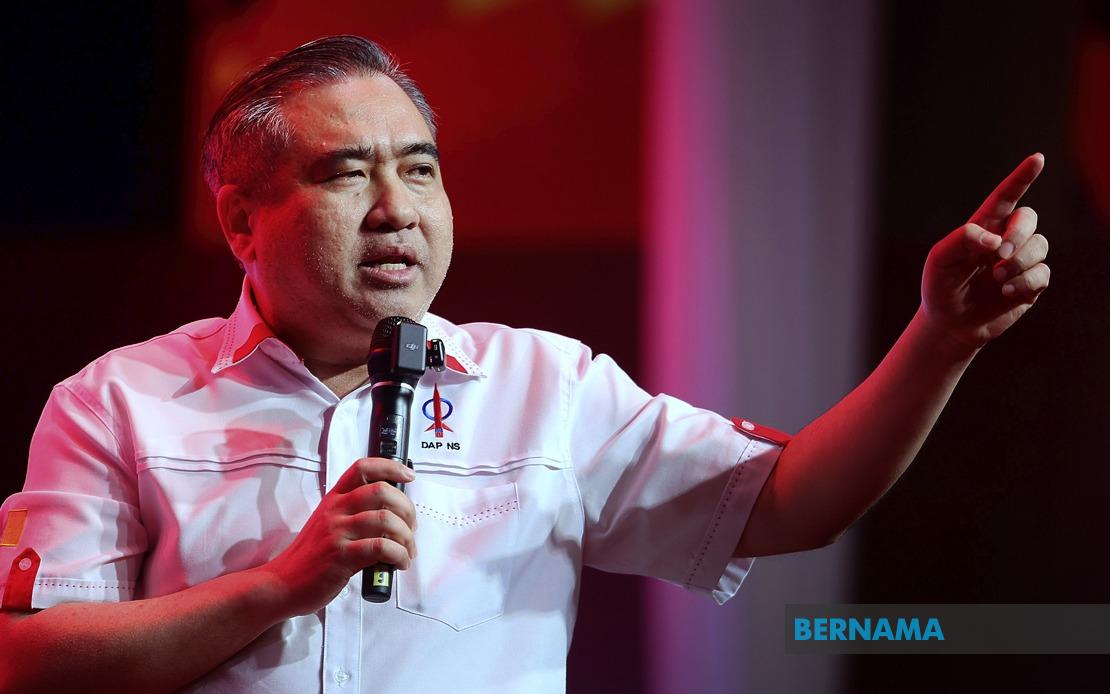
DAP secretary-general Anthony Loke has signalled a departure from adversarial campaign tactics in the 16th Negeri Sembilan state election, insisting that political contests should centre on substantive policy platforms rather than personal attacks. Speaking after a Pakatan Harapan dinner in Seremban on July 19, the Transport Minister articulated a deliberate strategy to keep the campaign focused on what his party intends to deliver to voters, emphasising the importance of clarity around party positions and commitments.
Loke's approach reflects broader discipline within the Unity Government coalition. Prime Minister Datuk Seri Anwar Ibrahim had earlier advised government officeholders to maintain restraint during electoral campaigns and refrain from attacking federal authorities. This guidance appears to have shaped Loke's personal campaign conduct, particularly given his Cabinet responsibilities and the weekly coordination required at ministerial meetings. For Loke, maintaining decorum with colleagues outweighs the tactical advantages of aggressive campaigning, a stance that underscores the coalition's commitment to internal cohesion even during competitive state-level contests.
One striking manifestation of this restraint is Loke's decision to avoid campaigning in the Rantau state constituency, which is defended by Foreign Minister Datuk Seri Mohamad Hasan, the Barisan Nasional deputy chairman. Rather than exploit potential vulnerabilities or seek to unseat a rival within the federal government, Loke has chosen to preserve harmony within the broader Unity Government framework. This illustrates how coalition politics imposes constraints on traditional competitive electoral behaviour, particularly when key players occupy overlapping federal and state responsibilities.
Instead of a scatter-gun approach, Loke has concentrated his energies on two primary fronts. He is mounting a personal contest in the Chennah seat while simultaneously supporting other DAP candidates across various constituencies. Additionally, he is assisting Menteri Besar Datuk Seri Aminuddin Harun in the Linggi seat, demonstrating coordination within the coalition's state-level campaign infrastructure. This targeted deployment of his political capital suggests a calculated strategy to maximise impact where the party's prospects are strongest.
The Transport Minister has also pushed back against suggestions that his Cabinet position has created a distance between himself and his Chennah constituents. Rather than viewing ministerial duties as a liability, Loke frames his position as fundamentally advantageous to the constituency. His access to federal resources and decision-making apparatus allows him to secure allocations and benefits that a backbench representative could not match. This reframing is particularly significant in Malaysian electoral contexts, where voters frequently weigh incumbent access to development funds and government largesse.
Loke highlighted concrete examples of how his ministerial status translates into tangible returns for Chennah. The Kampung MADANI initiative represents one such avenue through which federal allocations can be channelled to improve living standards. These development projects carry symbolic weight in Malaysian politics, where infrastructure improvements and government assistance directly influence voter behaviour. By demonstrating capacity to deliver on such initiatives, Loke seeks to convert his Cabinet role from potential liability into electoral asset.
Beyond infrastructure, Loke emphasises the institutional capacity he has assembled to serve constituents. A dedicated full-time team manages constituency affairs and responds to resident concerns, providing an additional layer of service delivery that might otherwise be compromised by his ministerial commitments. This arrangement attempts to reconcile the demands of national governance with local constituency responsibility, a perpetual challenge for politicians holding dual roles. The ability to maintain effective constituency representation whilst shouldering Cabinet duties remains a critical measure of political effectiveness in Malaysia.
The electoral calendar for Negeri Sembilan creates specific constraints on campaign strategy. Early voting takes place on July 28, with the main polling day scheduled for August 1, compressing the window for persuasion and engagement. Within this condensed timeframe, Loke's focus on policy messaging and constituency-based delivery assumes greater importance. Rather than lengthy attack campaigns that require sustained repetition to gain traction, policy-oriented messaging can achieve resonance more quickly by directly addressing voter concerns and presenting concrete solutions.
The emphasis on policy-centred campaigning also reflects demographic and political shifts within Malaysian electoral behaviour. Urban and semi-urban voters in constituencies like Negeri Sembilan increasingly expect substantive discussion of governance, service delivery, and institutional performance. Personal attacks, whilst they generate short-term media attention, may alienate sophisticated electorates seeking serious engagement with policy platforms. Loke's approach appears calibrated to this constituency composition, prioritising the substance of government capability over personalised criticism.
The broader context of the Negeri Sembilan contest involves competition between Pakatan Harapan and Barisan Nasional for state-level dominance. However, the federal-level cooperation within the Unity Government creates an unusual dynamic where state electoral contests occur against a backdrop of governmental collaboration at the national level. This structural tension requires careful navigation to avoid undercutting federal arrangements through overly aggressive state-level campaigns. Loke's restrained approach represents one attempt to reconcile these competing pressures.
For Malaysian voters in Negeri Sembilan, the question ultimately centres on whether policy-focused campaigns generate sufficient differentiation to enable informed choice between competing platforms. The Transport Minister's position essentially argues that substantive debate about government performance, development priorities, and resource allocation should dominate electoral discourse. Whether such an approach proves electorally decisive remains uncertain, but it reflects a particular vision of how democratic competition ought to function within coalition governments facing simultaneous federal and state contests.

