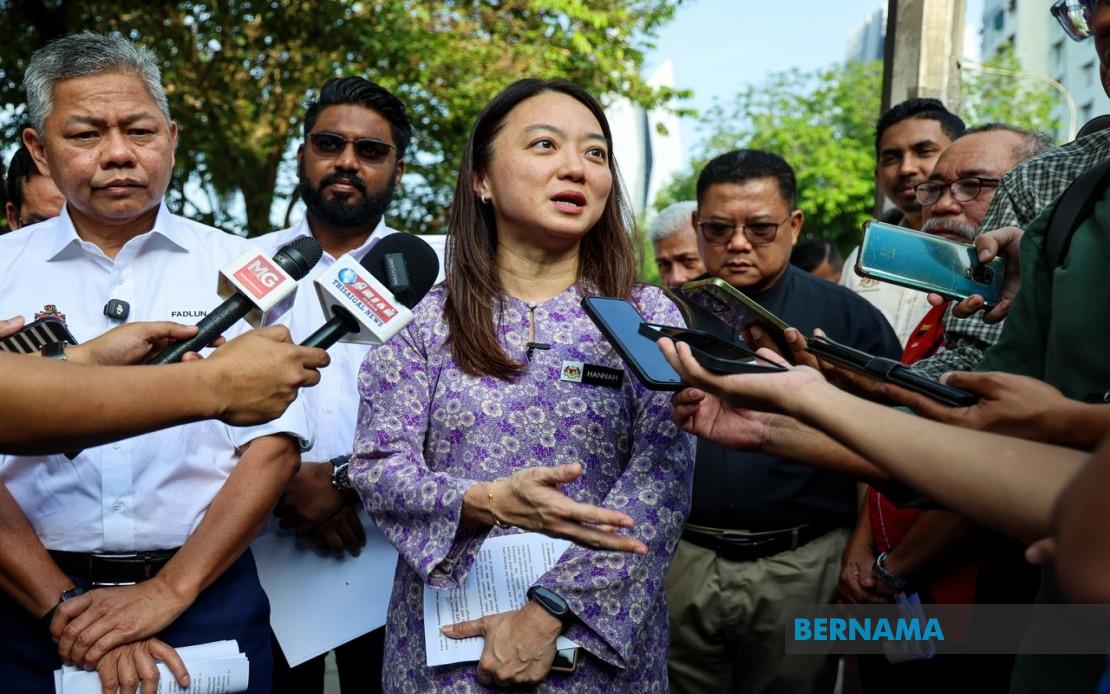
Malaysia's local authorities face mounting pressure to adopt a more preventive approach to maintaining public infrastructure, with the Minister in the Prime Minister's Department (Federal Territories) Hannah Yeoh directing particular focus towards popular tourism areas such as Putrajaya. Speaking in Kuala Lumpur on June 19, Yeoh emphasised that municipal bodies cannot afford to remain passive, allowing maintenance concerns to accumulate until social media users highlight them online.
The remarks came amid recent complaints circulating across digital platforms regarding damaged amenities in Putrajaya, including malfunctioning lifts and escalators. These issues underscore a broader challenge facing urban management across Malaysia, where reactive approaches to maintenance have become increasingly visible through social media exposure. Yeoh's intervention signals that federal oversight intends to push local authorities towards a culture of continuous facility inspection and upkeep rather than crisis management.
According to Yeoh, routine housekeeping activities should form part of the standard operational procedure for all local authorities, regardless of size or budget constraints. She indicated that while substantial infrastructure projects may depend on securing additional financial allocations, fundamental cleanliness and safety protocols should never become negotiable. This distinction is important for Malaysian municipalities grappling with competing budgetary demands, as it suggests that basic maintenance represents a non-negotiable baseline rather than an optional priority competing for limited resources.
Putrajaya Corporation has already initiated corrective measures following media scrutiny, with repair work underway across multiple facilities. However, Yeoh's broader message extends beyond this single municipality, directing her appeal to the entire landscape of local authorities nationwide. The emphasis on Putrajaya reflects its status as both a purpose-built administrative capital and a destination attracting tourists and business visitors, making its public infrastructure particularly significant for national image and visitor experience.
Yeoh advocated for intensified site visits by management teams to identify and address deterioration before it becomes publicly apparent. This proactive surveillance model represents a departure from systems that often wait for complaints to trigger investigation. For Malaysia's urban centres facing growing visitor numbers and increasing scrutiny from digitally-connected populations, such preventive frameworks could prove instrumental in maintaining standards consistently across all public touchpoints.
The minister also addressed the broader phenomenon of viral complaints, offering perspective on how social media amplifies facility issues. She acknowledged that while digital platforms have democratised the ability to report maintenance problems, this same capability can distort public understanding by presenting incomplete narratives. Videos and posts circulating online frequently lack context about underlying causes, timelines for repairs, or systemic factors influencing local authority performance.
Yeoh cautioned social media users to exercise judgment before amplifying concerns, noting that individual recordings may represent merely a fraction of the complete picture. This dual messaging—demanding more from local authorities while urging circumspection from the public—reflects the complex dynamics between governmental accountability and digital-era communication. The advice implicitly acknowledges that municipal bodies now operate under constant observation, where a single malfunction can achieve rapid-fire distribution before context or corrective action becomes known.
For Southeast Asian context, Malaysia's experience mirrors challenges confronting urban administrations across the region. Rapid urbanisation, tourist influx, and social media penetration have created environments where infrastructure standards face intense scrutiny. Cities like Bangkok, Jakarta, and Singapore have similarly grappled with balancing maintenance across sprawling municipal areas while managing public expectations shaped by instant digital communication.
The directive from Yeoh's ministry represents an attempt to establish clearer accountability frameworks within Malaysia's local government structure. By explicitly stating that negligence regarding cleanliness and safety lacks justification, federal oversight signals zero tolerance for preventable deterioration. This messaging carries implications for how local authorities allocate staff resources, training emphasis, and inspection scheduling over coming months.
Yeoh's comments also touch on the evolving relationship between government institutions and digital-native populations. Rather than dismissing social media concerns as exaggeration, her response validates the underlying issues while questioning methodology. This approach potentially creates space for more productive dialogue between municipalities and residents, though implementation will depend on whether local authorities translate her directives into sustained operational changes.
Moving forward, Malaysian municipalities may find themselves under heightened scrutiny regarding maintenance standards, with clear expectations established from federal level. The challenge lies in translating these directives into consistent practice across diverse local authorities with varying capacities and resources. Success will likely require both genuine commitment from municipal leadership and realistic resource allocation to support intensified maintenance schedules across the country's numerous local government areas.

