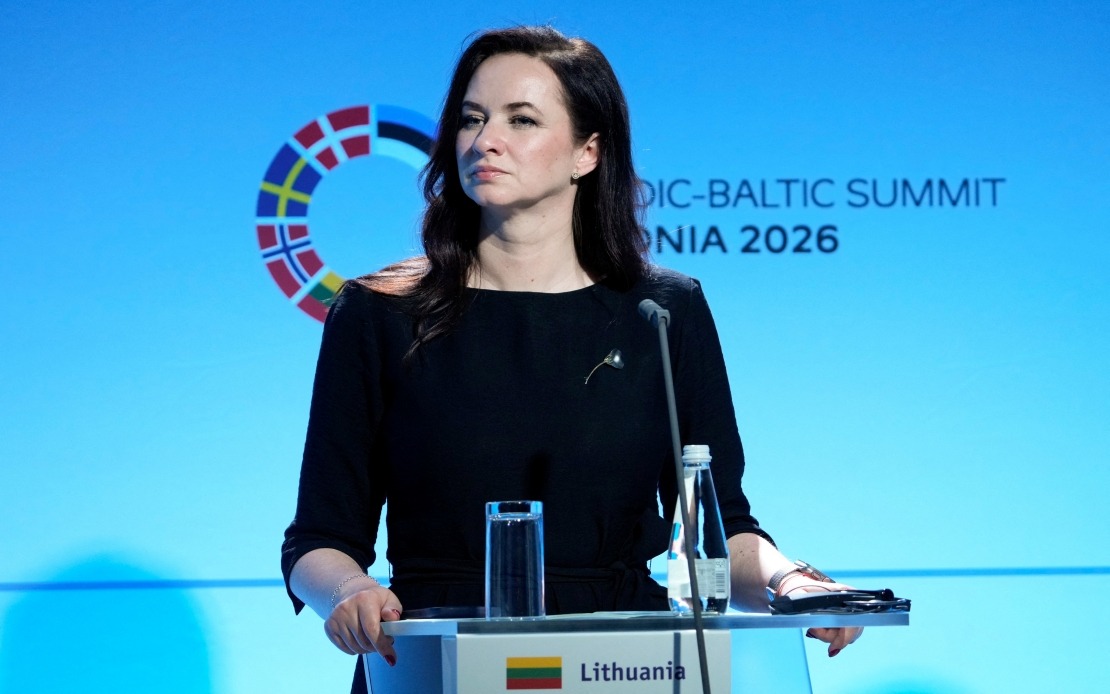
Lithuanian Prime Minister Inga Ruginiene has announced her government's resignation, setting in motion constitutional procedures that will lead to the formation of a fresh administration in the Baltic nation. The announcement on Tuesday reflects deepening tensions within the ruling coalition that has governed since August 2023, when the previous administration under Gintautas Paluckas collapsed. The move underscores the fragility of Lithuania's current political landscape, where no single party commands an outright majority in parliament, necessitating complex coalition negotiations to sustain stable governance.
Under Lithuania's constitutional framework, President Gitanas Nauseda must now identify and nominate a successor within a 15-day window. The designated prime minister must subsequently obtain approval from the Seimas, the 141-seat unicameral parliament that serves as the country's legislative body. Once parliament confirms the nomination, the incoming premier receives a further 15 days to construct a viable Cabinet, followed by an additional fortnight to present the complete ministerial roster for parliamentary endorsement. This phased approach, while allowing for deliberate coalition-building, can extend the transition period and leave governance in provisional hands during sensitive times.
Mindaugas Sinkevicius, who chairs the Lithuanian Social Democratic Party, is widely anticipated to secure the presidential nomination and parliamentary backing. His ascension would represent a continuation of Social Democratic dominance at the executive level, even as the party navigates its third government formation since voters went to the polls in late 2024. This pattern of successive coalition adjustments within the same party framework reflects structural challenges in translating electoral support into stable parliamentary mathematics, particularly given the distribution of seats across Lithuania's fragmented party system.
The outgoing Cabinet convened for a final meeting on Tuesday, during which ministers unanimously endorsed the resignation resolution. Ruginiene, reflecting on her tenure despite its abbreviated nature, acknowledged that her administration had achieved notable accomplishments whilst contending with demanding circumstances. Her remarks suggest an orderly transition process rather than an acrimonious political rupture, though the underlying pressures that prompted the resignation remain largely unexamined in public statements. Such restrained rhetoric is typical of Baltic political culture, where coalition partners generally maintain decorum even when relations deteriorate sufficiently to trigger government collapse.
President Nauseda has formally accepted the resignation and invoked constitutional provisions designating the departing Cabinet to operate in a caretaker capacity. This interim arrangement permits routine governmental functions to continue—tax collection, law enforcement, essential services—without the incumbent administration claiming a mandate for major policy initiatives. The caretaker framework effectively freezes substantive decision-making until a new government with full parliamentary confidence assumes office, a necessary safeguard against potentially partisan actions by a transitional executive.
Lithuania's three coalition shifts since the November 2024 elections highlight a troubling pattern of political instability that distinguishes the nation from its Baltic neighbours and constrains its influence within European Union and NATO forums. For policymakers and investors monitoring regional developments, the frequency of governmental reorganisations raises questions about executive continuity on critical matters ranging from Ukraine support and defence spending to economic management and judicial reform. The social democrats' ability to maintain control despite successive coalition collapses suggests their party possesses structural organisational advantages or that alternative coalition compositions face even steeper obstacles.
The formation of another government under presumed Social Democratic leadership will test whether Sinkevicius can assemble a parliamentary majority with different coalition partners than his predecessors, or whether existing arrangements require merely cosmetic adjustments. The composition of the incoming Cabinet will signal whether the transition addresses substantive policy disagreements or merely reflects jockeying for ministerial positions and portfolio allocations. The stakes are considerably elevated given Lithuania's prominent role in NATO's eastern flank and its vocal support for Ukraine against Russian aggression, dimensions that demand consistent, decisive executive authority.
For Southeast Asian observers of Lithuanian affairs, the current political turbulence offers instructive parallels regarding coalition governance in fractionalised parliaments. Like several ASEAN nations navigating multi-party systems without dominant legislative majorities, Lithuania demonstrates how structural fragmentation can undermine governmental durability even when fundamental democratic institutions function properly. The Baltic experience suggests that electoral reform, stronger party discipline mechanisms, or enhanced incentives for coalition stability might warrant consideration in regional democracies facing similar vulnerabilities to serial government collapses.
The timing of Lithuania's governmental transition occurs amid heightened geopolitical tension in Europe, with Russia's war in Ukraine creating unprecedented security demands on the Baltic states. Any extended period of governmental transition risks undermining the decisiveness required to manage defence expenditure, coordinate NATO operations, and sustain public morale during a continental security crisis. Sinkevicius and his coalition partners must therefore prioritise swift Cabinet formation and present a coherent policy agenda that reassures both domestic constituencies and international allies of Lithuania's unwavering commitment to European integration and collective defence.

