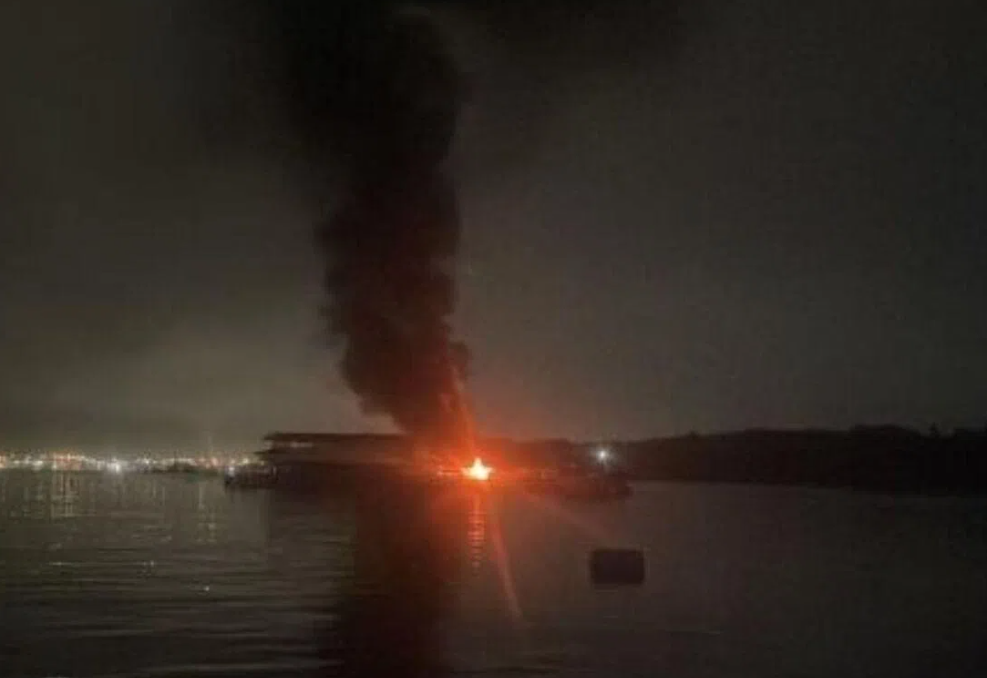
An intense fire swept through at least two floating fish farms off Singapore's Lorong Halus jetty on June 24, with emergency responders engaging in a protracted battle against the flames that began around 8.10pm that evening. The blaze, believed to have been triggered by a lightning strike, initially consumed one facility before advancing to neighbouring operations in what unfolded as a cascading disaster across the marine aquaculture zone situated between Pulau Ubin and Pulau Ketam.
The suspected ignition point was the targeted strike on solar panels at the first farm, according to reporting by Lianhe Zaobao. This detail underscores a growing vulnerability affecting Singapore's expanding renewable energy infrastructure as it scales across diverse installations—from rooftops to floating platforms serving agricultural and industrial purposes. The concentration of electrical systems on these remote, water-based structures creates particular risk profiles during thunderstorms that maritime operators have historically managed through immediate intervention.
The Singapore Civil Defence Force (SCDF) coordinated a multi-agency response that mobilized marine assets from both the Maritime and Port Authority of Singapore and Airport Emergency Service to suppress the fire on open water, a challenging operational environment where conventional firefighting techniques require significant modification. Local fish farm operators from surrounding facilities voluntarily assisted containment efforts, demonstrating the communal solidarity that characterizes Singapore's tight-knit aquaculture community despite competitive pressures within the sector.
One farm owner quantified the material devastation as approximately S$120,000 in direct losses, encompassing destroyed or severely damaged assets spanning fish feed supplies, diesel generators, photovoltaic panels, a fishing vessel, and multiple fish traps integral to daily operations. Critically, fishing nets sustained considerable harm during the incident, enabling at least half of the farm's fish population to escape into surrounding waters, compounding the economic impact beyond mere equipment replacement costs. This represents a compounded loss trajectory when factoring in lost productivity during recovery periods and the uncertain recapture rate of escaped aquaculture stock.
The absence of on-site workers at the moment ignition occurred proved consequential to the fire's severity and spread. The farm operator reflected on previous lightning incidents when personnel presence enabled rapid response protocols that contained damage to localized zones, suggesting that staffing schedules and emergency preparedness directly correlate with incident outcomes in aquaculture operations. The pattern of repeated lightning strikes against these solar installations points toward either inadequate grounding infrastructure or the inherent exposure of structures positioned in open marine environments with minimal protection from atmospheric electrical discharge.
Notably, the farm operator reported inability to pursue insurance recovery for this particular incident, a detail that carries significant implications for the financial resilience of small and medium-sized aquaculture enterprises. Insurance gaps for weather-related events targeting renewable energy components on farms represent a systemic vulnerability within Singapore's food production landscape, particularly as the sector transitions toward sustainability objectives that mandate photovoltaic adoption. This coverage deficit places operational sustainability burden squarely on individual operators' balance sheets rather than distributing risk across pooled insurance mechanisms.
The incident illuminates broader questions about resilience standards for Singapore's aquaculture sector as it pursues aggressive food security targets outlined in its "30 by 30" initiative to produce thirty percent of its nutritional needs domestically by 2030. Floating fish farms constitute a critical component of this strategy, yet infrastructure design standards may require reassessment regarding lightning protection, emergency automation systems, and redundant operational continuity measures. The absence of reported injuries reflects fortunate circumstances rather than inherent safety design, leaving questions about whether protocol optimization could prevent or mitigate future incidents.
Regional aquaculture operators across Malaysia, Indonesia, and Thailand observe developments in Singapore's farming sector closely, as regulatory frameworks and technological adoption in the city-state frequently establish standards that permeate regional supply chains and operational practices. A fire incident of this magnitude prompts neighbouring countries to evaluate their own floating farm infrastructure and whether similar vulnerabilities exist within their respective aquaculture sectors, particularly during monsoon seasons when electrical storm frequency intensifies across Southeast Asia.
Investigations remain ongoing into precise causation factors and whether contributing circumstances—such as inadequate grounding systems, maintenance lapses, or design deficiencies—emerged. The Singapore Civil Defence Force determination of causation will likely inform regulatory discussions within Singapore's food production governance structures. Maritime authorities may subsequently consider mandated lightning protection standards, worker presence requirements during high-risk weather conditions, or insurance framework adjustments to ensure the sector's continued viability and expansion trajectory essential to national food security ambitions.

