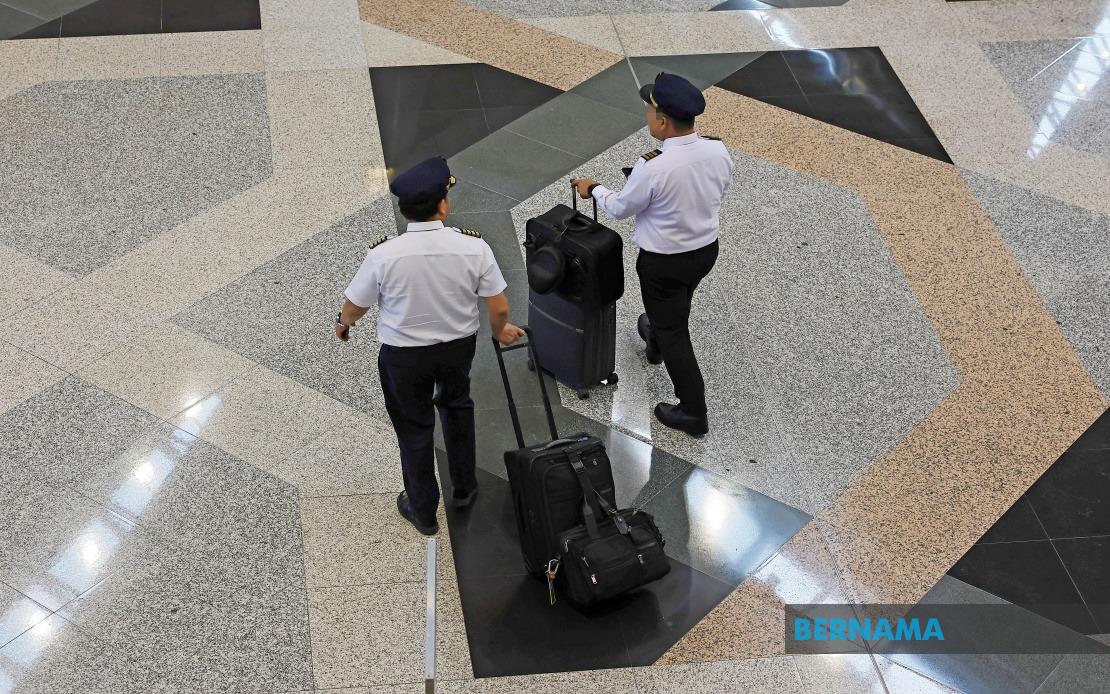
The head of the Alliance For A Safe Community has pressed authorities to undertake a detailed examination of safety protocols at Kuala Lumpur International Airport in response to the detention of a Malaysian pilot suspected of attempting to transport narcotics through Jakarta's Soekarno-Hatta International Airport. Tan Sri Lee Lam Thye raised the call following the 39-year-old pilot's apprehension at Terminal 3, where Indonesian officials allegedly discovered approximately 25 kilogrammes of drugs in the individual's possession. While acknowledging the principle that individuals remain innocent until conviction through proper legal channels, Lee emphasised that the case highlights troubling gaps in how the nation's primary aviation hub manages its passenger and personnel screening systems.
The incident presents a significant challenge to Malaysia's aviation sector, which has long positioned itself as a regional leader in airport management and safety standards. The seizure at a neighbouring country's terminal suggests potential vulnerabilities in how personnel with airport access are monitored before departure. Lee's intervention reflects broader concerns that security protocols may not apply uniformly across all categories of travellers, particularly those with professional aviation credentials. His statement underscores a critical principle: the integrity of any security framework depends on its consistent application regardless of an individual's occupation or status within the aviation industry.
Lee specifically questioned how the suspected contraband escaped detection during KLIA's initial screening procedures, framing this as a fundamental interrogation of the airport's operational security. The question carries weight given the significant investments Malaysia has made in modernising airport infrastructure and implementing advanced detection technologies. If screening measures failed at the first point of departure, this raises uncomfortable questions about whether the investment in equipment matches the investment in training and procedural rigour. The pilot's passage through KLIA security without the alleged drugs being identified suggests either a breakdown in the screening process itself or insufficient vigilance among personnel responsible for implementing these measures.
The Alliance For A Safe Community chief urged collaboration among multiple stakeholders to remedy any identified weaknesses. He specifically named airport security operators, law enforcement agencies, and the Civil Aviation Authority as institutions that must jointly conduct the review. This multi-agency approach reflects the complexity of aviation security, which spans technical equipment, personnel training, standard operating procedures, and inter-agency coordination. Malaysia's aviation sector cannot afford to address such vulnerabilities in isolation; each organisation must examine its own performance while contributing to a holistic assessment of systemic weaknesses.
Lee stressed that the screening of airport employees and flight crew demands particular attention. Personnel working within aviation facilities occupy a uniquely privileged position, possessing greater access to restricted areas and reduced likelihood of intensive examination during their own travel. This asymmetry creates both opportunity and motivation for those inclined toward illegal activity. Many nations have recognised that individuals with airport credentials require enhanced rather than diminished scrutiny, particularly during international travel. The Malaysian review should examine whether current protocols adequately account for this principle or whether operational convenience has eroded security standards for insiders.
A central theme in Lee's commentary is the relationship between security performance and public confidence. He argued that maintaining traveller and public trust in Malaysia's aviation system represents a strategic national interest beyond the immediate question of drug interdiction. Repeated security breaches, whether actual or perceived, can damage the reputation of Malaysian airports and affect their competitiveness in the region. Airlines may question whether their staff are adequately screened before boarding, and international carriers may reconsider their operations at hubs perceived as vulnerable to security lapses. This reputational dimension gives Malaysia practical reasons to address security concerns promptly and transparently.
The timing of the incident has regional significance. Southeast Asia has intensified efforts to combat drug trafficking across porous borders, with aviation routes increasingly exploited by smuggling networks. Malaysia, as a major aviation hub connecting Southeast Asia, South Asia, and beyond, faces particular vulnerability to being used as a transit point for narcotics. A pilot departure from a Malaysian airport carrying substantial quantities of drugs represents precisely the threat scenario that regional counter-narcotics cooperation aims to prevent. The incident suggests that KLIA's security performance may have consequences extending beyond Malaysia's borders and reputation.
Lee's call for consistent enforcement without exception reflects a lesson learned from security failures elsewhere. Exceptions granted to particular groups—whether based on professional status, nationality, or other factors—often become the weak points that malicious actors exploit. A former Malaysian official, a respected airline pilot, or any person with established credentials might assume they will face lighter scrutiny, consciously or unconsciously creating opportunity for prohibited activity. Modern security thinking rejects such categorical exceptions in favour of risk-based screening that treats individuals according to their particular circumstances rather than their professional affiliations.
The accused pilot's presumption of innocence remains legally and ethically binding until conviction, yet the case has already served to expose questions about Malaysia's screening infrastructure. Regardless of how the individual case resolves, the security review will provide value by identifying whether systematic weaknesses enabled the alleged incident or whether other factors were responsible. The investigation should distinguish between equipment limitations, procedural gaps, training deficiencies, and compliance failures, as each requires different remediation strategies.
Moving forward, KLIA and its regulatory overseers face pressure to demonstrate that the security review produces tangible improvements rather than merely reassuring public sentiment. This might include enhanced training for screening personnel, upgraded detection equipment in critical areas, randomised secondary screening protocols for all travellers regardless of status, and regular audits of compliance with established procedures. The review's credibility will depend on transparency about findings and demonstrated commitment to implementing recommendations. Malaysian authorities have an opportunity to strengthen aviation security while reinforcing the principle that safety cannot be compromised for operational convenience or professional courtesy.

