Laotian authorities have launched a concentrated assault on an entrenched wildlife trafficking operation that has been exploiting the country's porous borders and strategic location in mainland Southeast Asia. The enforcement actions, which unfolded across multiple provinces last week, revealed the scale and sophistication of networks moving endangered species between Thailand and beyond, offering a rare window into how organised crime continues to devastate biodiversity across the Mekong region.
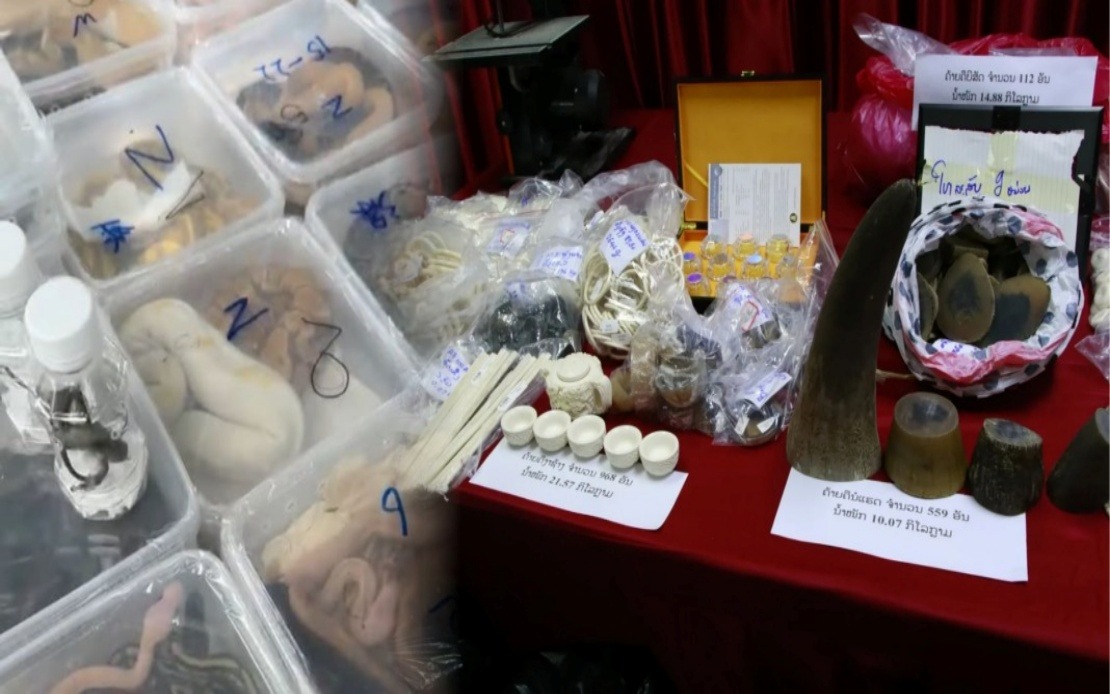
The series of coordinated seizures began in Luang Prabang, where wildlife enforcement officers discovered approximately 60 kilogrammes of contraband materials at a location in the popular tourist destination. The confiscated items painted a stark picture of the illegal trade's reach: traditional Chinese medicine ingredients fashioned from endangered animals, including elephant skin powder, bear gallbladder, and herbal remedies containing suspected wildlife components. Authorities also recovered ivory-like objects, rhino horns, pangolin scales, and the preserved remains of protected bird species such as hornbills. These products typically command premium prices in markets across China, Vietnam, and Thailand, where demand for wildlife-derived traditional remedies remains stubbornly high despite international prohibitions.
Four days after the Luang Prabang operation, wildlife rangers achieved an even more dramatic interdiction at the Vang Tao International Checkpoint in Champasak Province, seizing 294 live wild animals that were being transported across the Thai border. The captured creatures—encompassing turtles, pythons, various snake species including the vulnerable green snake and gold-ringed cat snake, and multiple lizard varieties—were destined for the illegal pet trade and wildlife markets. The interception at this crucial customs point connecting Thailand's Ubon Ratchathani Province underscores how trafficking syndicates attempt to move contraband through official border crossings rather than remote frontier areas, betting that the sheer volume of legitimate traffic will obscure their shipments.
The timing of these Laotian operations reflects mounting regional pressure on trafficking networks. Just weeks earlier, in late May, Thai authorities arrested a woman operating a traditional medicine and souvenir shop in Nakhon Phanom, in Thailand's northeastern region bordering Laos. The shop owner had allegedly smuggled more than 100 protected animal remains from across the border, indicating how retail fronts in border towns serve as crucial nodes in the supply chain connecting rural trappers to final consumers. The same week, law enforcement disrupted another major trafficking attempt when authorities stopped a shipment containing 130 kilogrammes of cut elephant ivory and animal carcasses along the Thai–Lao boundary, demonstrating that gangs operating in this region traffic not only live animals but also processed products destined for international black markets.
Geographers and conservation experts point to Laos's inherent vulnerability to trafficking. The country shares land borders with five nations—Cambodia, China, Myanmar, Thailand, and Vietnam—creating multiple vectors through which criminal networks can funnel wildlife. This geographical reality transforms Laos into what trafficking experts term a "transit zone," where animals captured in forests across Southeast Asia, or even Africa and Asia, can be repackaged, relabelled, and moved onward to final destinations. The country's limited resources for wildlife enforcement, combined with widespread poverty in border regions where local communities may be incentivised to trap animals for traffickers, perpetuates the cycle.
The international community's response to wildlife crime has expanded substantially in recent years, though effectiveness remains inconsistent. The United Nations Office on Drugs and Crime released its World Wildlife Crime Report 2024, which offered sobering conclusions about the persistence of illegal trade despite two decades of coordinated international and national enforcement efforts. The report identified institutional corruption as a fundamental enabler of trafficking operations—customs officials, local police, and border guards can be compromised or turned a blind eye, allowing contraband to pass. This corruption dimension helps explain why seizures, while significant, represent only the fraction of total trafficking that enforcement agencies manage to intercept.
The economics of wildlife trafficking place it among the world's most lucrative criminal enterprises. According to UNODC calculations, illegal wildlife trade generates approximately US$10 billion annually on the global black market, positioning it alongside human trafficking, narcotics smuggling, and the arms trade as a revenue stream of comparable magnitude for criminal organisations. For impoverished communities in Southeast Asia, the financial incentives are substantial—a single pangolin or elephant tusk can represent months of income. This economic reality means that enforcement alone, without addressing poverty and providing alternative livelihoods, will struggle to curtail supply.
For Malaysia and other Southeast Asian nations, the implications of Laotian trafficking networks extend beyond biodiversity concerns. Organised crime syndicates operating in the wildlife trade frequently maintain connections to drug smuggling, human trafficking, and weapons dealing. The same corrupt officials and border infrastructure enabling animal contraband also facilitate other illegal goods. Additionally, many species trafficked through this region—particularly pangolins, elephants, and bears—have already declined dramatically across Southeast Asia, with Malaysian populations of several species either extinct or teetering on the brink. The loss of remaining populations in Laos and Thailand represents an irreplaceable erosion of the region's natural heritage.
The recent Laotian enforcement successes offer tentative encouragement but underscore the scale of the challenge. Rescuing 294 animals and seizing tonnes of products represents meaningful intervention, yet trafficking networks adapt quickly. Traffickers shift routes, change species composition, and invest in bribing officials rather than avoiding borders. Sustainability of anti-trafficking efforts requires not merely occasional dramatic seizures but sustained investment in enforcement capacity, international cooperation frameworks that facilitate real-time intelligence sharing, and crucially, the political will of Southeast Asian governments to prosecute kingpins rather than merely street-level traders. The Mekong region's wildlife cannot depend on intermittent busts; it requires systemic commitment to disrupting the entire chain from trappers to retailers.

