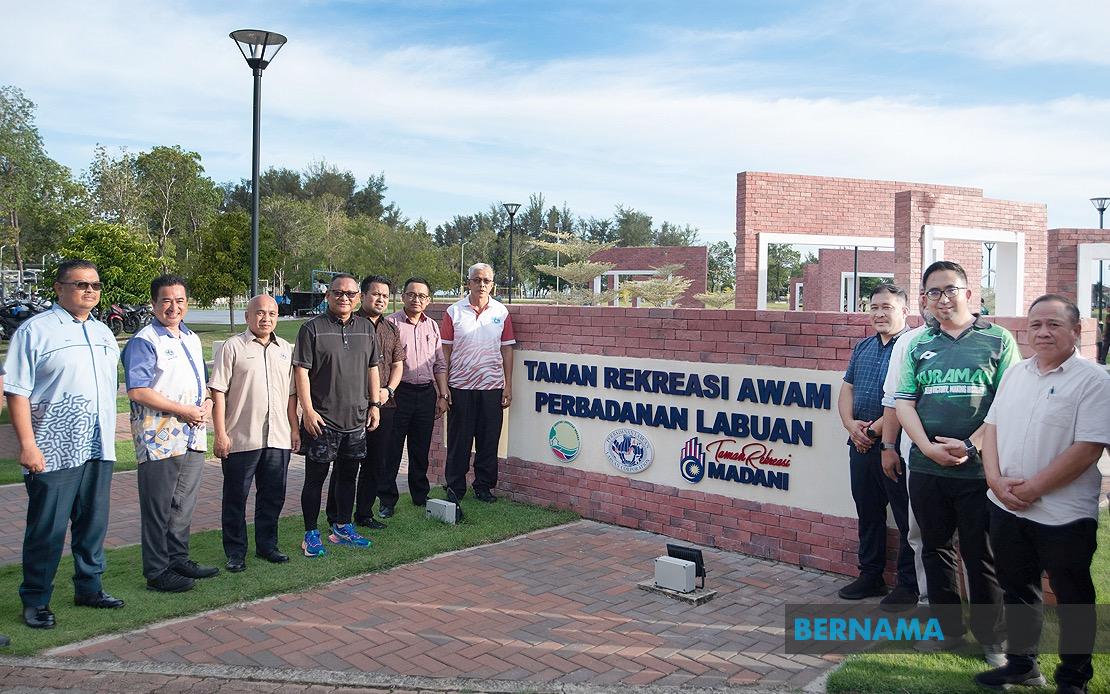
Labuan has taken a significant step towards promoting public health and community wellbeing with the official opening of the Labuan Public Recreation Park at Tanjung Purun, a centrally located facility that has undergone substantial improvements totalling RM495,382. The project, implemented through the Madani Recreation Park initiative with funding from the National Landscape Department under the Ministry of Housing and Local Government, represents a strategic investment in revitalising urban green spaces on the island.
Rithuan Ismail, chief executive officer of Labuan Corporation, emphasised that the park was developed with inclusivity at its core, designed to serve residents across all age groups and fitness levels. The facility addresses a growing recognition within Malaysian municipalities that accessible public recreation spaces are essential for fostering active lifestyles and strengthening the social fabric of communities. By providing a democratic gathering place that requires no membership fees or entry charges, the park exemplifies the government's broader Madani framework of ensuring quality public amenities benefit all citizens regardless of socioeconomic status.
The transformation of the site is particularly noteworthy given its previous condition. The location, formerly known as the LDA Field, had suffered from chronic underutilisation despite occupying a prime downtown position. Poor lighting conditions, deteriorating casuarina trees that created safety concerns, and inadequate recreational infrastructure had rendered the space unattractive to residents. The strategic selection of this specific site reflected careful planning by authorities, who recognised that its downtown location, suitable land dimensions, good accessibility, and absence of land ownership complications made it an ideal candidate for redevelopment.
The upgraded facility now offers a comprehensive range of recreational amenities designed to accommodate diverse community needs. An 800-metre jogging track provides a dedicated space for runners and fitness walkers, while outdoor fitness gym equipment caters to those preferring strength and conditioning activities. Concrete benches scattered throughout create comfortable rest areas and social gathering spots, while the welcoming garden contributes to the aesthetic appeal and environmental quality of the space. These elements collectively transform what was once a neglected corner of Labuan into an attractive destination that particularly draws evening visitors seeking to exercise or socialise.
The development strategy reflects broader trends across Southeast Asia where urban planners increasingly recognise the importance of walkable, well-maintained public spaces in densely populated areas. For Labuan, which functions as a financial and offshore business centre, such recreational facilities serve not only residents but also attract visitors and business professionals seeking work-life balance. The park's evening popularity suggests it successfully addresses a genuine community need for accessible outdoor spaces during cooler hours.
Labuan Corporation has demonstrated commitment to continuous improvement by planning further enhancements. Three open courts designed for pickleball and sepak takraw are scheduled for completion by the end of 2024, further expanding the facility's appeal to sports enthusiasts. This phased approach to development allows for budget management while maintaining momentum in the facility's evolution. The inclusion of sepak takraw reflects cultural sensitivity to traditional Malaysian sports, while pickleball's inclusion acknowledges the growing popularity of this sport among diverse age groups across the region.
The park's success will ultimately depend on sustained maintenance and community stewardship. Rithuan's appeal to residents to take responsibility for preserving facilities recognises a persistent challenge facing public amenities in Malaysia: the balance between public provision and public responsibility. Vandalism, littering, and neglect have historically compromised the longevity of recreational facilities, making community engagement essential. The corporate emphasis on shared ownership reflects lessons learned from previous projects where top-down management alone proved insufficient.
For Malaysian policymakers and urban planners across the region, the Labuan Public Recreation Park offers an instructive example of how strategic site selection, adequate funding, and thoughtful facility design can successfully activate underutilised urban spaces. The RM495,382 investment represents a relatively modest expenditure capable of generating substantial improvements in public quality of life, suggesting comparable projects could be efficiently implemented in other Malaysian municipalities facing similar challenges with neglected downtown areas.
The project also demonstrates the value of inter-agency coordination, with funding flowing from the National Landscape Department through the Ministry of Housing and Local Government to local implementation by Labuan Corporation. This vertical integration of planning and resource allocation enabled rapid project execution without the delays that sometimes accompany fragmented administrative structures.
Beyond Labuan, the park's development carries implications for the broader discourse on urban sustainability and public health in Southeast Asia. As cities grapple with rising obesity rates and sedentary lifestyles accelerated by digitalisation, providing free, accessible recreation spaces represents a preventive health strategy with positive long-term economic returns through reduced healthcare costs and improved workforce productivity. The evening popularity of the Labuan facility suggests residents recognise and value such opportunities when provided.

