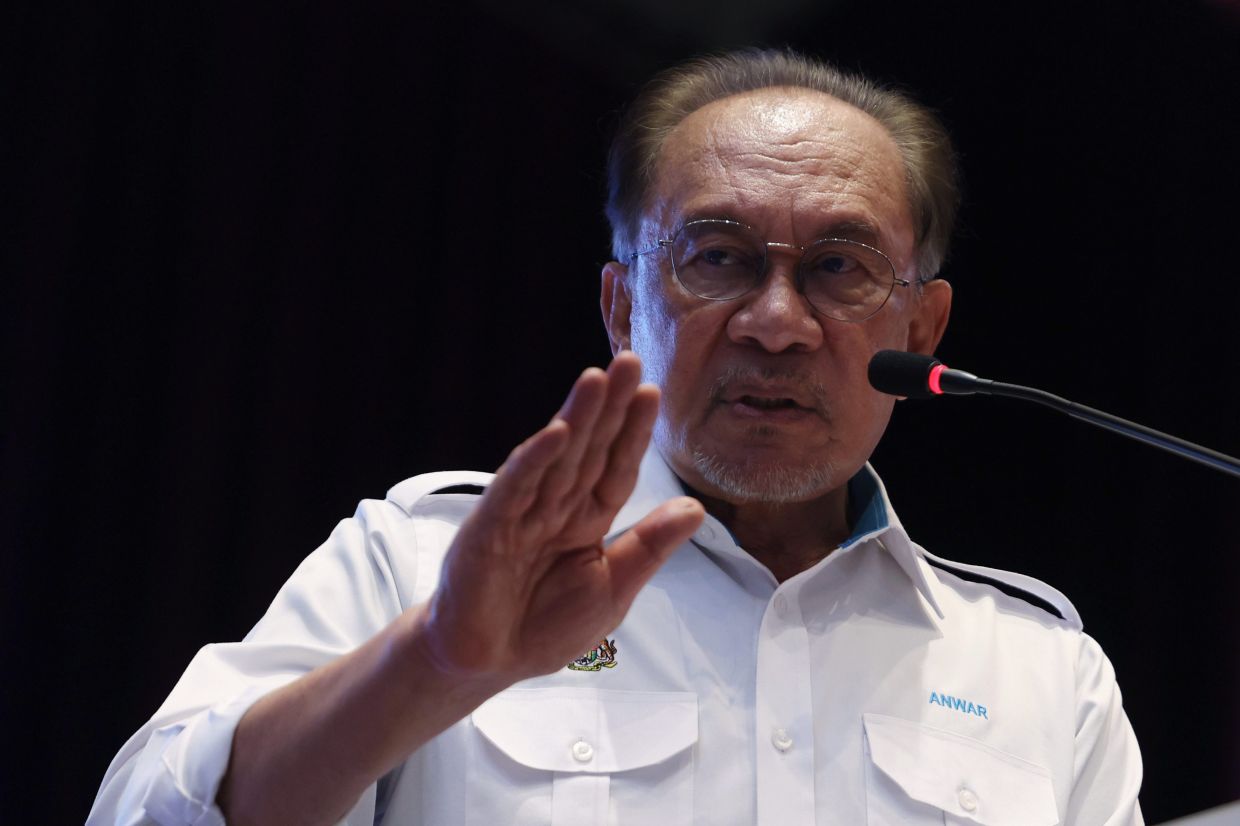
Prime Minister Datuk Seri Anwar Ibrahim has urged stakeholders to assess the Retirement Fund (Incorporated) (KWAP) fairly, pointing to its substantial RM12.9 billion net profit as evidence of sound financial stewardship. Speaking in the Dewan Negara, Anwar emphasised that achieving such returns reflected the calibre of KWAP's investment committee, senior management and institutional leadership, suggesting that the fund's performance merited commendation rather than blanket criticism.
The Prime Minister's remarks came amid ongoing scrutiny of KWAP's investment decisions, particularly its participation in emerging technology ventures. Anwar sought to place the fund's portfolio strategy within a broader international context, noting that KWAP's involvement in eFishery—an aquaculture technology startup—was not undertaken in isolation. Instead, he highlighted that the company had attracted capital from some of the world's most sophisticated institutional investors, including Singapore's Temasek, Japanese conglomerate SoftBank, venture capital firm Sequoia Capital, Aqua-Spark, Abu Dhabi-based 42XFund and Indonesia's NorthStar. This alignment with heavyweight global investors, Anwar implied, lent credibility to KWAP's due diligence process.
Crucially, Anwar underscored that KWAP's investment strategy extends well beyond international ventures into promising domestic startups, a point he believed had been overlooked in recent discourse. The fund maintains significant exposure to Malaysian entrepreneurship and innovation, bolstering the nation's startup ecosystem while generating returns. Beyond its traditional portfolio, KWAP participates in the GEAR-uP initiative—a flagship Ministry of Finance programme executed jointly with the National Trust Fund (KWAN)—which commands a combined RM30 billion in capital. This dual engagement in both private market opportunities and government-backed development initiatives positions KWAP as a multi-faceted institutional investor.
Anwar's defence centred on KWAP's long-term financial health metrics. The fund achieved a compound annual growth rate exceeding 8.5 per cent, a figure Anwar stressed merited emphasis when evaluating performance across economic cycles. This metric, more meaningful than single-year snapshots, demonstrates the fund's capacity to navigate volatility and deliver consistent value creation for its members over extended periods. Yet Anwar also acknowledged the finite nature of investment returns in addressing pension obligations, suggesting that the broader challenge facing retirement funds transcends investment performance alone.
Responding to Senator Mohd Hasbie Muda's inquiry about sustaining dividends amid geopolitical headwinds, the Prime Minister—who also holds the Finance portfolio—outlined a more nuanced reality. Despite generating tens of billions of ringgit in profits across investment cycles, KWAP's accumulated returns remain insufficient to fully underwrite long-term pension liabilities through investment income alone. This structural reality has generated tension within Malaysian society, as some constituencies advocate for easier access to retirement savings, reflecting anxieties about economic security in an uncertain environment.
On governance, Anwar provided assurances regarding KWAP's decision-making structures. The fund's investment panel comprises exclusively seasoned professionals, while its board incorporates both ministry representatives and worker delegates, ensuring diverse perspectives in stewardship. This composition aims to balance technical expertise with public interest considerations, though governance complexity occasionally creates friction between professional judgment and political or constituency pressures.
When pressed on the eFishery investment specifically, Anwar demonstrated circumspection. He acknowledged that the venture's losses warranted careful reflection, particularly regarding whether decisions made by elite international investors should automatically guide Malaysian fund managers. The Prime Minister noted that while SoftBank and European or Japanese institutions command respect, their global positioning and risk tolerance differ fundamentally from Malaysia's domestic context. He characterised the eFishery episode as an isolated incident rather than symptomatic failure, suggesting that rigorous post-investment analysis should inform future decisions without paralyzing institutional confidence entirely.
The exchange illuminates the inherent tensions facing Malaysian retirement funds in an era of elevated uncertainty. KWAP must balance the imperative to generate robust returns through strategic risk-taking against pressure to preserve capital and ensure pension security. International investors' participation in KWAP-backed ventures provides both validation and potential insulation from criticism, yet does not eliminate accountability to Malaysian beneficiaries. Anwar's framing reflects an attempt to navigate these competing demands, defending institutional sophistication whilst acknowledging that even professional investors occasionally misjudge opportunities.
For Malaysian workers and retirees, the debate carries immediate relevance. KWAP's investment philosophy directly affects retirement adequacy, while the fund's ability to supplement government contributions influences long-term pension sustainability. The RM30 billion GEAR-uP commitment signals official commitment to scaling capital deployment, yet depends upon continued discipline and rigorous evaluation of investment merit. As demographic pressures mount and life expectancies extend, retirement fund governance will require both public confidence and professional latitude—a balance Anwar's defence attempts to preserve.

