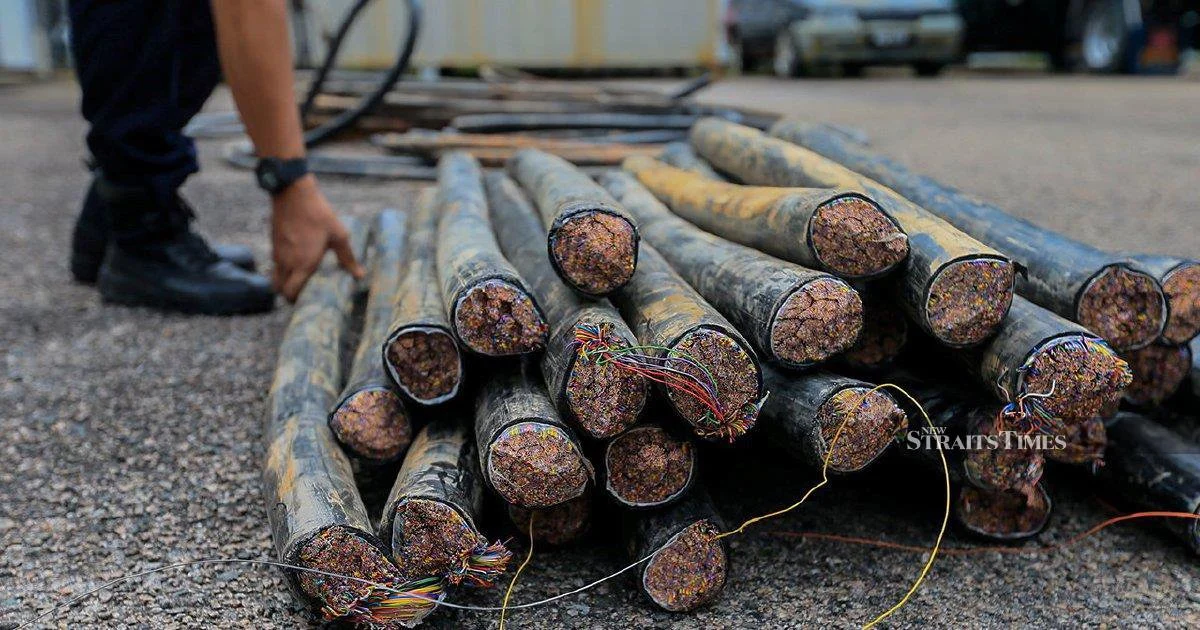
Police authorities in Kuala Lumpur have announced a significant downturn in cable theft cases this year, marking a potential turning point in efforts to curb a crime that has long plagued the nation's capital and surrounding areas. The force recorded merely 71 reported incidents of cable theft between January and May 2025, a striking contrast to the 205 cases documented throughout the entirety of 2024. This substantial reduction—representing roughly a 65% decrease in the reporting period—suggests that intensified policing strategies and investigative operations may finally be gaining traction against organised copper and cable pilfering networks.
The decline occurs alongside increased enforcement activity, with police arresting 85 suspects so far this year in connection with cable-related theft offences. This figure demonstrates a more proactive stance by law enforcement in targeting the individuals and organised groups responsible for stripping valuable copper wiring and cables from infrastructure, telecommunications installations, and construction sites across the federal territory. The higher arrest rate relative to previous years indicates that investigative units have sharpened their focus on dismantling supply chains that feed stolen materials into the black market.
Cable theft has represented a persistent challenge for Malaysian authorities, particularly in urban centres where targets are abundant and perpetrators can vanish quickly. The crime impacts far beyond individual property loss, creating ripple effects across critical infrastructure. Telecommunications networks suffer disruptions when trunk cables are severed, leaving communities without connectivity. Power distribution systems face vulnerabilities when high-voltage cables are targeted, risking public safety and triggering outages that affect hospitals, businesses, and households alike. Construction projects experience costly delays when materials destined for installation become targets for thieves seeking quick profits.
The economic incentive driving cable theft remains substantial. Copper and other metals extracted from stolen cables command reasonable prices in the scrap metal market, particularly in Southeast Asia where demand from manufacturers and recyclers remains steady. Organised theft rings exploit this demand by coordinating strikes on multiple locations simultaneously, selling bulk quantities to dealers who either knowingly or unknowingly purchase stolen goods. This ecosystem has historically made the crime attractive to both street-level offenders and sophisticated criminal networks.
The improved figures likely reflect a combination of tactical adjustments by the police force. Enhanced patrols in known hotspots, intelligence sharing between divisions, and coordinated operations targeting known receivers of stolen materials all contribute to disrupting the theft cycle. Additionally, awareness campaigns targeting residents and business owners may have encouraged greater vigilance and faster reporting of suspicious activity. When communities become alert to the signs of cable theft operations—vehicles lingering near infrastructure, cutting sounds in unusual hours, or unfamiliar individuals surveying locations—detection rates naturally improve.
For Malaysian stakeholders dependent on reliable infrastructure, the downward trend offers cautious optimism. Telecommunications companies, electricity providers, and construction firms have repeatedly advocated for stronger enforcement action against cable thieves. Each incident results in expensive repairs, service restoration costs, and compensation claims from affected parties. When theft incidents decrease, businesses can allocate resources more productively rather than repeatedly patching the same vulnerable points.
The regional context adds weight to these developments. Cable theft remains a persistent problem across Southeast Asia, with Indonesia, Thailand, and the Philippines reporting similar challenges. Malaysian authorities' relative success this year could provide valuable lessons for neighbouring nations grappling with comparable infrastructure crime. The reduction suggests that sustained commitment to enforcement, when coupled with intelligence-driven tactics, can measurably impact even deeply entrenched criminal networks.
However, the figures warrant careful interpretation. A 65% reduction over five months, if sustained, would project to roughly 170 cases for the full year 2025—still above ideal targets but substantially lower than 2024. Authorities must remain vigilant to prevent complacency. Criminal networks adapt when law enforcement pressure increases, sometimes shifting operations to neighbouring jurisdictions or targeting less heavily monitored infrastructure. The reduction could also partly reflect reporting variations or definitional changes in how incidents are classified.
Looking ahead, police emphasise the importance of maintaining current enforcement momentum. With 85 arrests already recorded, prosecution of these cases through the courts will prove crucial in demonstrating that cable theft carries meaningful consequences. Conviction rates and sentencing severity directly influence deterrence effectiveness; when potential offenders understand that apprehension leads to prosecution and imprisonment, the crime becomes less attractive.
The collaboration between police and infrastructure owners—telecommunications firms, utility companies, and local authorities—appears increasingly critical. Intelligence about attempted thefts, suspicious buyer enquiries, and suspicious scrap dealer activities creates a feedback loop that strengthens enforcement. Some companies have invested in improved perimeter security, surveillance systems, and real-time monitoring of critical cable installations, making targets harder and riskier to attack.
For ordinary Malaysians, particularly those in Kuala Lumpur and the Klang Valley where cable theft remains frequent, the reported decline means potential improvements in service reliability. Power cuts become less likely, telecommunications disruptions diminish, and infrastructure projects progress without theft-related delays. These practical benefits extend beyond crime statistics to tangible improvements in daily life and business continuity.
As 2025 progresses, observers will watch closely whether police can maintain this downward trajectory through the remainder of the year. If the trend persists, it would validate the effectiveness of current strategies and provide a model for combating other organised crime categories. Conversely, any reversal would signal that criminal networks have adapted their methods or that enforcement resources require further enhancement. For now, the initial figures represent progress in addressing a crime that has affected Malaysia's infrastructure security for years.

