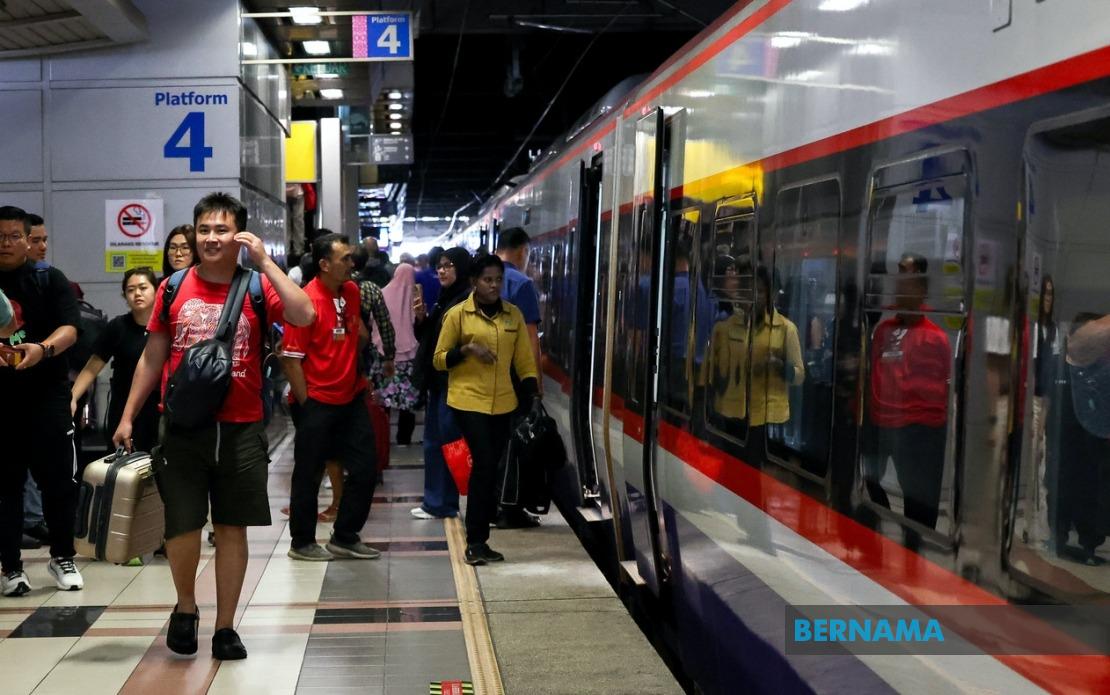
Keretapi Tanah Melayu Berhad (KTMB) has announced a substantial expansion of its Electric Train Service capacity for the Johor state election this weekend, putting an additional 7,464 seats into circulation across its most-travelled southern routes. The move reflects mounting pressure on Malaysia's rail infrastructure during peak electoral periods, when voters traverse the country to cast ballots in their home constituencies, straining transport networks and accommodation systems nationwide.
The railway operator is deploying eight new train services across two critical corridors connecting the Klang Valley with Johor Bahru during the three-day operational window from July 10 to 12. Four additional departures will run the KL Sentral to JB Sentral to KL Sentral route, whilst a matching number will service the JB Sentral to Gemas to JB Sentral link. This configuration delivers approximately 2,488 seats per day, allowing KTMB to accommodate the surge in demand that proved insufficient when the operator's previous round of additional tickets, released on June 19, sold out completely within days.
The surge in electoral travel demand speaks to a fundamental challenge facing Malaysia's transport sector: the concentration of the electorate across dispersed geographic areas necessitates coordinated national efforts during polling periods. Unlike general elections that occur less frequently, state polls can generate unpredictable spikes in demand that test existing infrastructure. The Johor election has proven no exception, with voters from the Klang Valley and beyond keen to return to their constituencies, creating bottlenecks that conventional service levels struggle to manage.
KTMB's response includes a strategic pricing intervention designed to shift travel patterns towards rail rather than competing road options. The 20 per cent discount applied uniformly across all additional services during the three-day period represents a significant incentive for price-conscious travellers, particularly younger voters and those with limited disposable income. This pricing strategy aligns with broader government initiatives to reduce road congestion and promote sustainable transport modes during high-demand periods, though the quantum of the discount—typically considered modest in transport industry terms—suggests KTMB is balancing revenue protection with accessibility.
Ticket sales commenced on a staggered basis designed to manage server capacity and prevent platform crashes common during election periods. The JB Sentral to Gemas route opened sales at 3:00 pm on the announcement day, whilst the KL Sentral to JB Sentral corridor followed the next morning at 9:00 am. This sequenced approach reflects lessons learned from previous elections when simultaneous ticket releases triggered system failures, frustrating voters and generating social media backlash against KTMB and the government. The operator has clearly incorporated digital resilience into this release strategy.
KTMB has emphasised cashless transactions through its KITS Style mobile application, the official website, and kiosk machines at selected stations. This digital-first approach serves multiple objectives: reducing queues, minimising physical contact points, generating real-time demand data, and encouraging advance booking that allows the operator to optimise train formations and crew scheduling. For Malaysian rail users accustomed to variable digital service quality, the prominence given to multiple booking channels suggests KTMB recognises that a single platform might prove insufficient during peak demand windows.
Operational guidance issued by KTMB highlights practical considerations often overlooked in transport announcements. The requirement for passengers to arrive 30 minutes before departure, with platform entrances closing five minutes prior to train departure, reflects standard rail operations but carries particular weight during elections when voter turnout and travel timing are unpredictable. For voters unfamiliar with rail travel or those attempting to transit during unfamiliar hours, such timing requirements can prove restrictive, potentially disadvantaging certain demographic groups.
The Johor election provides a case study in how transport infrastructure planning intersects with democratic participation. Unlike routine commuting, electoral travel concentrates demand across narrow time windows and specific corridors, challenging operators accustomed to managing distributed demand across extended periods. Malaysia's rail network, whilst expanded significantly over the past decade, remains vulnerable to such concentrated surges. The KTMB announcement suggests the operator has adopted a reactive rather than proactive approach—responding to demonstrated demand rather than forecasting requirements independently.
For regional observers, the Johor election's transport logistics illuminate broader Southeast Asian challenges around democratic administration in geographically dispersed countries. Thailand's decentralised population, the Philippines' island geography, and Indonesia's archipelago complexity all generate similar pressures during national polls. Malaysia's linear peninsular geography makes the problem more tractable than in some regional neighbours, yet KTMB's apparent surprise at demand levels suggests that even relatively predictable networks can be stressed by electoral cycles.
The broader context includes ongoing expansion of Malaysia's rail network, with the Klang Valley Double Track Project and other initiatives gradually increasing capacity on major corridors. However, these infrastructure improvements typically operate on multi-year development timelines that cannot address immediate electoral transport demands. KTMB's emergency additional services thus represent a pragmatic interim response whilst longer-term infrastructure solutions progress through planning and construction phases.
The discount structure warrants scrutiny from a policy perspective. A 20 per cent reduction on already-subsidised rail fares represents a meaningful but not dramatic incentive. Comparative analysis with similar initiatives in neighbouring countries—such as Thailand's rail concessions during national elections or Indonesia's transport subsidies for returning voters—would illuminate whether Malaysia's approach is positioned competitively. For the Malaysian public, however, the immediate question centres on whether the combined capacity of 7,464 seats genuinely addresses demand or merely reduces, but does not eliminate, queuing and congestion.
Looking forward, this Johor election episode suggests KTMB should integrate electoral transport planning into its annual forecasting cycles. Rather than responding to sold-out tickets from previous rounds, the operator might develop predetermined surge capacity protocols triggered automatically when state elections are announced. Such systematic approaches would reduce last-minute scrambling and provide voters with greater certainty around travel availability. The Malaysian transport sector generally would benefit from this maturation of electoral-cycle planning.

