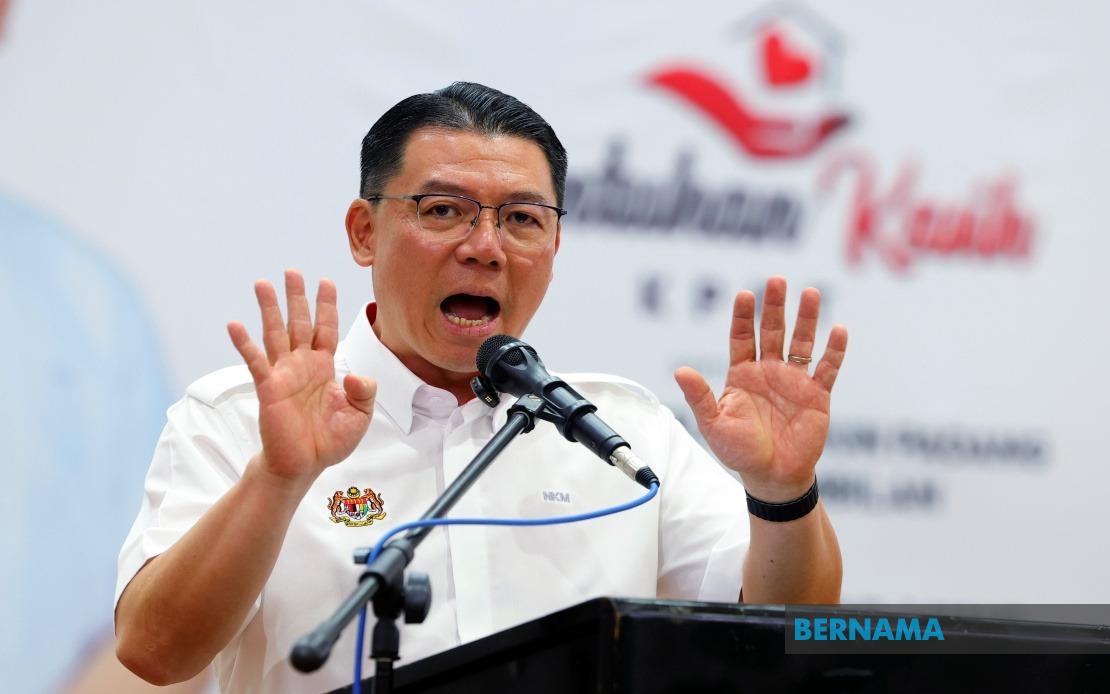
The Ministry of Housing and Local Government (KPKT) is directing RM430.3 million towards Negeri Sembilan's development agenda, with 80 key initiatives planned between 2023 and 2026 aimed at improving residential quality, public amenities and overall livelihood standards. The commitment underscores the MADANI Government's broader strategy to address housing accessibility and community well-being across Malaysian states, with Negeri Sembilan positioned as a priority region for comprehensive urban transformation.
For 2026 specifically, RM119.6 million has been earmarked under the Rolling Plan framework, with RM115.5 million dedicated to KPKT-approved development projects and an additional RM4.05 million supporting the state's urban planning objectives. Housing and Local Government Minister Nga Kor Ming detailed the allocation structure during a working visit to the state, emphasising the government's resolve to ensure equitable access to quality housing and improved public services. The breakdown reveals strategic prioritisation: RM3 million funds the Negeri Sembilan Development Plan Study for 2025–2026, RM750,000 supports the Safe City Programme and RM300,000 advances Smart City initiatives—demonstrating integration of modern urban governance concepts with traditional development needs.
A cornerstone of the investment focuses on affordable housing expansion through the People's Residency Programme (PRR), which addresses the persistent challenge of housing affordability affecting Malaysian households across income brackets. This programme represents a tangible policy response to demographic pressures and urbanisation trends within the state, where rapid economic growth has created demand for accessible residential options. By channeling substantial resources into PRR, KPKT signals commitment to preventing housing shortages and ensuring younger families and lower-income earners can access dignified accommodation in developing areas.
Beyond bricks and mortar, the allocation reflects environmental consciousness increasingly important to Southeast Asian governance. Funds support enhanced solid waste management systems, a critical concern as Malaysian municipalities grapple with rising consumption and disposal challenges. Complementary investments upgrade essential public facilities including markets, hawker stalls and community halls—spaces that form the economic and social backbone of local neighbourhoods, particularly in smaller urban centres and rural localities where informal economies sustain livelihoods.
Public safety infrastructure receives dedicated attention through new fire station construction, addressing vulnerability in areas previously underserved by emergency response capabilities. This investment carries implications beyond immediate fire suppression, signifying broader government recognition that development must include protective services enabling residents and businesses to operate with confidence. Combined with urban and rural development projects, the spending demonstrates integrated rather than siloed planning approaches.
During his Negeri Sembilan visit, Minister Nga inspected multiple projects illustrating fund deployment in practice. The refurbishment of Medan Niaga Bahau represents market modernisation essential for hawkers adjusting to contemporary trading conditions. The Urban House Repair Programme at Taman Cempaka addresses deteriorating public housing stock, a persistent problem across Malaysian urban areas where ageing residential blocks require systematic intervention. MADANI recreational facilities at Bandar Seri Jempol Public Park signal investment in community spaces beyond utilitarian infrastructure, recognising that social wellbeing encompasses leisure and gathering areas.
The stall upgrades in Durian Tipus and basketball court improvements in Kampung Baru Sungai Muntoh exemplify how allocations penetrate secondary towns and village communities, preventing the concentration of resources in state capitals. This distribution pattern matters significantly for Malaysian development equity, where smaller localities frequently experience infrastructure neglect. The renovation works at Lobak Flats and lift replacements at Casa Prima Apartments underscore the Total Participation Maintenance initiative, addressing public housing deterioration affecting thousands of residents in older affordable housing complexes.
Significantly, KPKT's allocation includes RM224,000 for repairs at the Immaculate Conception Catholic Church in Port Dickson and RM73,000 for the Seremban Baptist Church, with maintenance support extended to 24 non-Muslim houses of worship. These allocations recognise that religious and cultural infrastructure represents legitimate public assets serving community identity and cohesion, particularly relevant in Malaysia's pluralistic context. The Port Dickson church, over a century old, exemplifies heritage preservation imperatives alongside religious functionality. Father Edwin Peter's emphasis on roof repairs addresses immediate structural urgency while preserving a century-old institution serving 1,000-plus members, reflecting how targeted maintenance prevents catastrophic deterioration.
The Seremban Baptist Church's seventy-year history and RM73,000 allocation similarly demonstrate commitment to safeguarding established community institutions. Deputy chairman Vincent Chong's characterisation of the church as a symbol of religious heritage and community unity articulates broader value beyond physical structure—these are spaces where diverse populations converge, reinforcing social cohesion in increasingly pluralistic urban environments. Government support for such maintenance, particularly across multiple faith communities, signals inclusive governance sensitive to diverse constituencies' needs.
Minister Nga emphasised KPKT's commitment to strategic cooperation with state governments and local authorities, critical for implementation efficacy and transparency. This partnership approach recognises that centralised policy requires localised execution, making inter-governmental coordination essential for converting allocations into tangible improvements. The collaboration framework aims to ensure development projects achieve planned timelines and impact targets while maintaining fiscal accountability—increasingly important as Malaysian citizens demand evidence of value from government investments.
For Negeri Sembilan residents and broader Malaysian observers, the RM430.3 million commitment signals sustained government attention to state-level development beyond election cycles. The diversified portfolio—spanning housing, infrastructure, safety, environmental sustainability and cultural preservation—reflects contemporary development thinking acknowledging that prosperity requires multidimensional improvements rather than single-sector focus. Implementation success will determine whether these allocations genuinely enhance livelihood quality or remain unrealised commitments.
The allocation's significance extends beyond Negeri Sembilan, potentially establishing implementation benchmarks for other states negotiating development funding. As Malaysia pursues post-pandemic economic recovery and sustainability goals, such integrated regional investment models may inform national development strategy. The emphasis on public participation, safety enhancements and environmental stewardship aligns with MADANI Government's stated priorities, though translating budgetary commitments into improved citizen experiences remains the ultimate measure of policy success.

