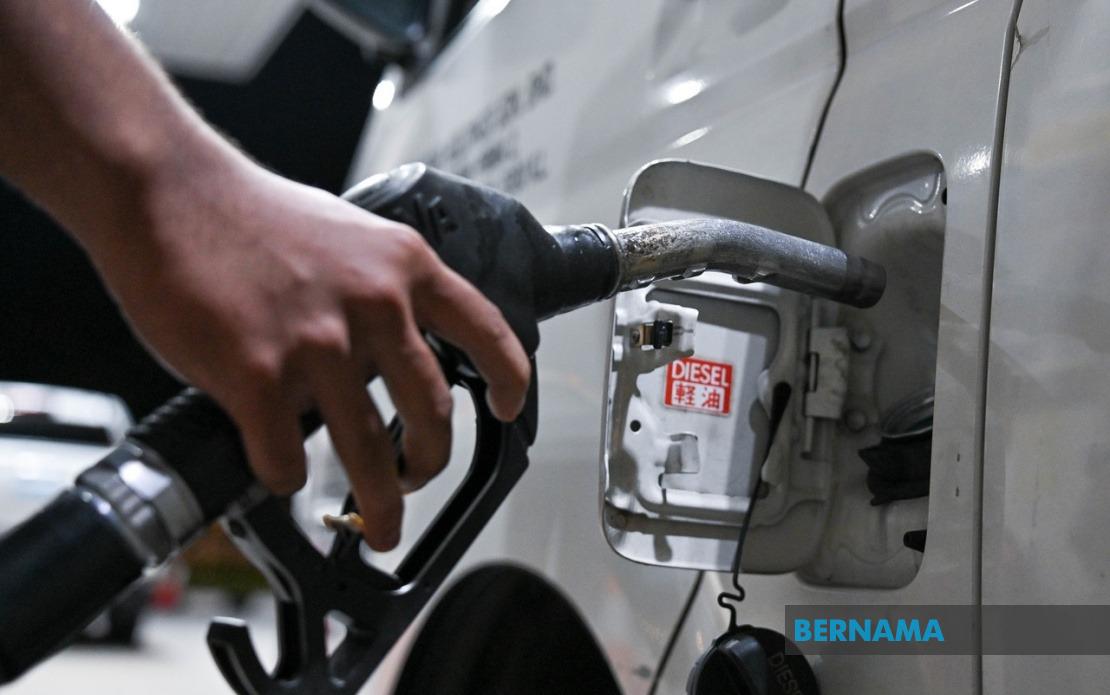
The Ministry of Domestic Trade and Cost of Living (KPDN) has dismantled long-standing restrictions on diesel sales to land transport operators across Sabah, Sarawak, and the Federal Territory of Labuan, eliminating tiered purchase quotas that previously capped individual transactions at 50, 100, or 150 liters. The regulatory change takes immediate effect as part of a broader federal strategy to modernise how subsidised fuel reaches eligible consumers across Malaysia's Eastern states and its offshore jurisdiction.
The revocation stems directly from Prime Minister Datuk Seri Anwar Ibrahim's policy announcement on June 21, which unified the price of subsidised diesel nationwide under the BUDI Diesel Programme at RM2.10 per liter. This standardisation marked a significant shift in fuel subsidy architecture, eliminating previous regional pricing disparities that had created administrative complexity and differential treatment for businesses and drivers depending on geographic location. By aligning prices across the peninsula and East Malaysia, the government sought to simplify implementation while ensuring equitable access to subsidised fuel for transport operators nationwide.
KPDN Director-General of Enforcement Datuk Azman Adam confirmed the formal cancellation of the Directive on Implementing Control of Diesel Sales to Land Transport Vehicles, which had been in place since March 27, 2026. His statement underscored that this administrative revocation reflects the government's confidence in a replacement mechanism designed to target subsidy distribution more precisely than the previous quantity-based controls. Rather than restricting how much diesel operators could purchase in individual transactions, the new approach relies on identity verification through the MyKad national identification system at petrol stations, creating a digital gatekeeping mechanism that officials contend will be more efficient and less prone to abuse.
The shift from volume restrictions to identity-based purchasing represents a notable evolution in how Malaysia's government manages fuel subsidies in the transport sector. Previously, operators in East Malaysia faced defined caps on per-transaction purchases, creating potential friction for fleet operators and long-haul transport companies requiring substantial fuel quantities. By removing these hard limits and substituting a verification system tied to individual identity and eligibility, policymakers aim to reduce administrative bottlenecks while maintaining subsidy integrity. The approach aligns with broader Southeast Asian trends toward digital governance and targeted welfare distribution, moving away from blanket quantity controls toward precision-targeted mechanisms.
The timing of this regulatory change carries implications for Sabah and Sarawak's transport sectors, which face distinct logistical challenges compared to peninsular Malaysia. These states depend heavily on road transport for inter-state commerce and rely on diesel-powered vehicles for both commercial and essential services across territories with limited public transport infrastructure. The removal of purchase restrictions potentially eases operational constraints for transportation companies while the subsidised price floor theoretically protects them from volatile global fuel markets. However, the success of this approach depends entirely on smooth implementation of the MyKad verification system at petrol stations across remote and semi-urban areas where digital infrastructure remains uneven.
Retail fuel retailers holding scheduled controlled goods licenses across Sabah, Sarawak, and Labuan received formal notification that the diesel sales directive is no longer enforceable. This directive shift transfers compliance burden from retailers, who previously had to monitor and enforce customer purchase limits, to a centralised digital verification system. The change potentially reduces point-of-sale administrative friction but creates dependency on robust IT systems and reliable personal identification database access. For independent petrol station operators in smaller towns and rural areas, the transition may require technology upgrades and staff retraining to operate the MyKad verification mechanism effectively.
KPDN has expressed confidence that the newly implemented MyKad-based mechanism will ensure subsidised diesel reaches genuinely eligible consumers through a more efficient and transparent process than quantity-based restrictions permitted. Officials argue that identity-based verification creates an auditable transaction record and prevents fraud more effectively than simply monitoring litre volumes. The underlying assumption is that restricting access by personal verification will prevent bulk purchases for resale or unauthorized commercial use more reliably than quantity caps, which clever operators could circumvent through multiple smaller transactions or involving multiple family members. This represents a shift toward behavioral controls rather than mechanical ones.
The policy change also reflects growing government emphasis on ensuring subsidy programmes benefit their intended recipients. Transport sector operators constitute a politically important constituency, as fuel costs directly affect commercial viability and commodity prices throughout the economy. By removing administrative friction while maintaining subsidy access controls, the government attempts to balance cost containment with competitive support for the transport industry. In East Malaysia particularly, where distance and geography create inherent transport cost premiums, the standardised subsidised price represents a form of regional economic support that helps level competitive playing fields between peninsula and East Malaysian businesses.
Implementation timing matters considerably, as the new system launches simultaneously with the directive's cancellation. Petrol station staff must immediately begin processing MyKad verification for diesel purchases rather than applying quantity restrictions, requiring operational coordination across hundreds of retail points. Any lag between directive removal and operational readiness for the new system could create confusion among operators accustomed to existing protocols. The government has urged all stakeholders to comply fully with the fresh mechanism, though enforcement capacity and technical readiness in geographically dispersed locations remain variables that will determine whether the transition achieves intended efficiency gains.
For Malaysian policymakers and regional observers, this initiative exemplifies the tension between maintaining fiscal discipline in subsidy programmes and ensuring practical market access for essential transport operators. The shift from quantity controls to identity-based verification represents a technological and philosophical reorientation of how governments deliver targeted economic support. If successfully implemented, the model could influence how other Southeast Asian nations design fuel subsidy distribution systems. Success hinges on KPDN's monitoring capacity, retailer cooperation, and public familiarity with the MyKad verification process—variables that will become clearer as the programme matures beyond its initial rollout phase in East Malaysian jurisdictions.

