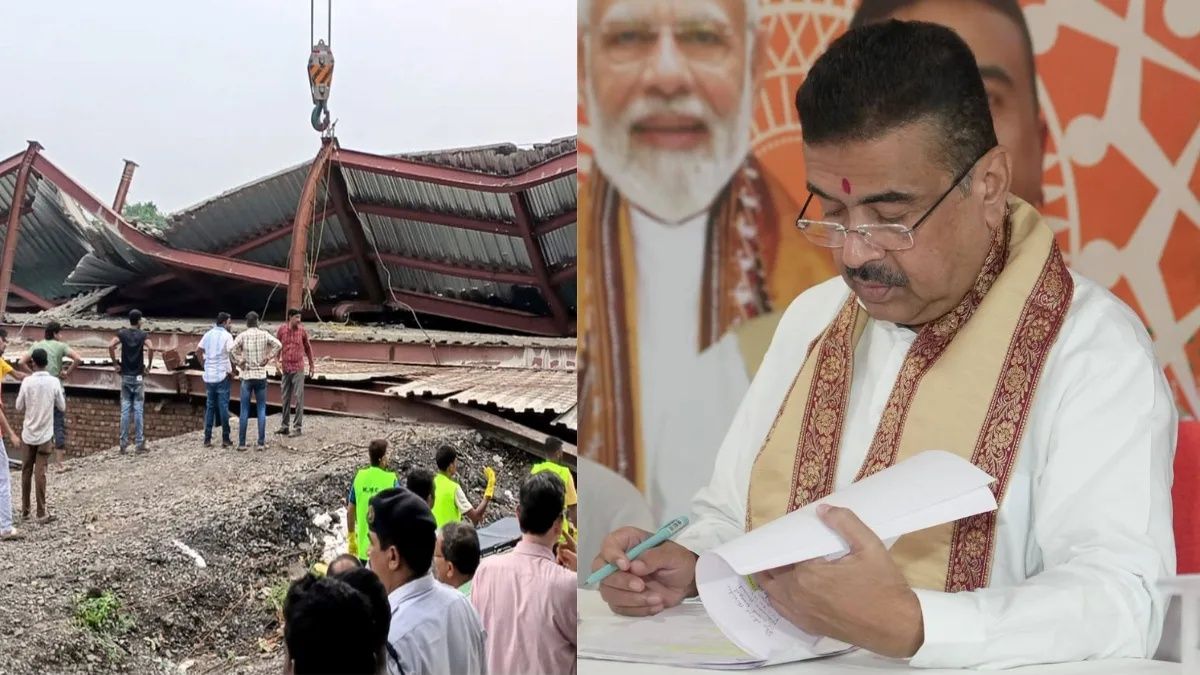
Rescue efforts at the Taratala warehouse collapse site in Kolkata stretched into its second day as the confirmed death toll climbed to 11, with authorities continuing to fear additional casualties may remain trapped beneath the rubble. The latest victim was recovered near midday on June 25 and transported to the Trauma Care Centre at SSKM Hospital, though identification remained pending. The ongoing search operation has demonstrated coordinated action between federal and state resources, with personnel from the Indian Army, the National Disaster Response Force (NDRF), and other agencies working systematically through the debris field.
West Bengal Chief Minister Suvendu Adhikari used the occasion to pivot the discussion toward accountability, launching a sharp critique of the previous Kolkata Municipal Corporation administration that operated under Trinamool Congress control. Speaking in the state assembly, he presented documentary evidence suggesting the warehouse structure had received formal approval despite containing serious architectural deficiencies. By referencing official records bearing the signature of former Mayor Firhad Hakim, Adhikari sought to establish a pattern of negligence extending from the planning stage through to the catastrophic structural failure that claimed lives this week.
The political dimension of the disaster cannot be separated from broader questions about governance quality in West Bengal's urban management. Adhikari characterised the approval process as symptomatic of endemic corruption, alleging that systematic extraction of informal payments—locally termed "cut money"—had degraded municipal oversight to the point where public safety became secondary to financial extraction. This framing positions the warehouse collapse not merely as a construction accident but as a predictable consequence of administrative decay under the previous political dispensation, a narrative likely to dominate discourse in the coming weeks.
Law enforcement has already moved swiftly, with five individuals remanded into custody. Those arrested include the construction supervisor, the metal fabricator responsible for structural elements, the land lessee, a labour contractor working under the Trimex system, and a broker implicated in securing KMC approval. However, the alleged primary figure in the scheme, identified as Azgar, remains at large, suggesting investigative efforts will extend beyond the initial arrests as authorities pursue the full network of responsibility.
The immediate response has involved sweeping restrictions on future construction activity across a substantial geographical footprint. Adhikari announced a four-week suspension of all non-essential construction work throughout the Kolkata Municipal area and neighbouring jurisdictions including Rajarhat-New Town, Maheshtala, Budge Budge, Pujali, Bishnupur, Sonarpur, and Baruipur. This blanket approach affects not only new projects but also previously approved buildings already under development, creating potential economic disruption across the region's construction sector while signalling the administration's determination to prevent similar incidents.
Central to the government's remedial strategy is a comprehensive audit of all existing approved building plans within the affected zones. A high-level committee chaired by Additional Chief Secretary Rajesh Pandey has been constituted to undertake this examination, bringing together expertise from multiple domains. The committee draws personnel from IIT Kharagpur's engineering faculty, the Rail India Technical and Economic Service (RITES), Indian Railway Construction Limited (IRCON), the state Fire Services Department, the Public Works Department, and representatives of the KMC itself, creating a multidisciplinary body capable of evaluating structural soundness across diverse building types and construction methodologies.
The inclusivity of this audit framework reflects recognition that structural safety requires technical expertise beyond what municipal authorities typically possess. By incorporating railway engineering specialists and institute-level academics, the government appears intent on applying rigorous standards substantially more demanding than those apparently applied during the previous approval regime. This recalibration of technical oversight addresses a fundamental gap that the warehouse disaster exposed: the capacity of municipal planning boards to assess complex structural designs and construction practices with adequate rigour.
Adhikari's public statements have emphasised that accountability will extend beyond criminal prosecution to encompassing asset confiscation where necessary to compensate victims' families. This approach, if implemented, would represent a significant departure from typical Indian legal practice and signals an attempt to translate blame into tangible restitution. By indicating willingness to liquidate wrongdoers' property holdings to fund victim compensation, the Chief Minister positioned the state as prepared to impose substantial material consequences on those found culpable, potentially serving as deterrent against future malfeasance.
The disaster carries implications extending well beyond Kolkata's municipal boundaries. Urban centres across Southeast Asia and South Asia grapple with similar tensions between rapid development and safety oversight, with municipalities frequently lacking the technical capacity or political will to enforce rigorous structural standards. The warehouse collapse represents a cautionary case study for other Indian cities and regional governments wrestling with urbanisation management. The audit announced here and the enforcement mechanisms being mobilised may establish precedents that influence how other jurisdictions approach building safety in coming years.
Investigators will likely scrutinise not only how the warehouse design received approval despite flaws, but also the broader systems that enabled such approval to proceed. Questions about inspector capacity, adequacy of training, financial incentives corrupting decision-making, and the gap between formal regulations and actual enforcement all warrant examination. For Malaysian observers, the case illustrates vulnerabilities that emerge when municipal structures lack sufficient independence from political manipulation and when technical standards compete against revenue generation through informal extraction.
The four-week construction moratorium represents both a practical recalibration period and a symbolic gesture. During this interval, the committee's audit will establish baseline assessments of structural compliance across the region, creating detailed documentation of deficiencies requiring remediation. The suspension also signals to developers and contractors that the administration intends meaningful policy shift rather than mere rhetorical response to the tragedy. However, converting a temporary moratorium into durable structural reform requires sustained political commitment and sufficient resource allocation to expand municipal technical capacity.
As rescue operations concluded and investigation proceeded, attention necessarily turned toward prevention. The warehouse collapse represents a systemic failure at the approval stage, yet structural integrity depends equally on maintenance, inspection, and adaptive management throughout a building's lifecycle. Any comprehensive audit must therefore address not only the initial design approval but also the operational and maintenance frameworks that would theoretically catch deterioration before catastrophic failure occurs. This broader perspective on building safety throughout construction and operational phases will determine whether recent reforms prove adequately comprehensive or remain merely reactive responses to discrete incidents.

