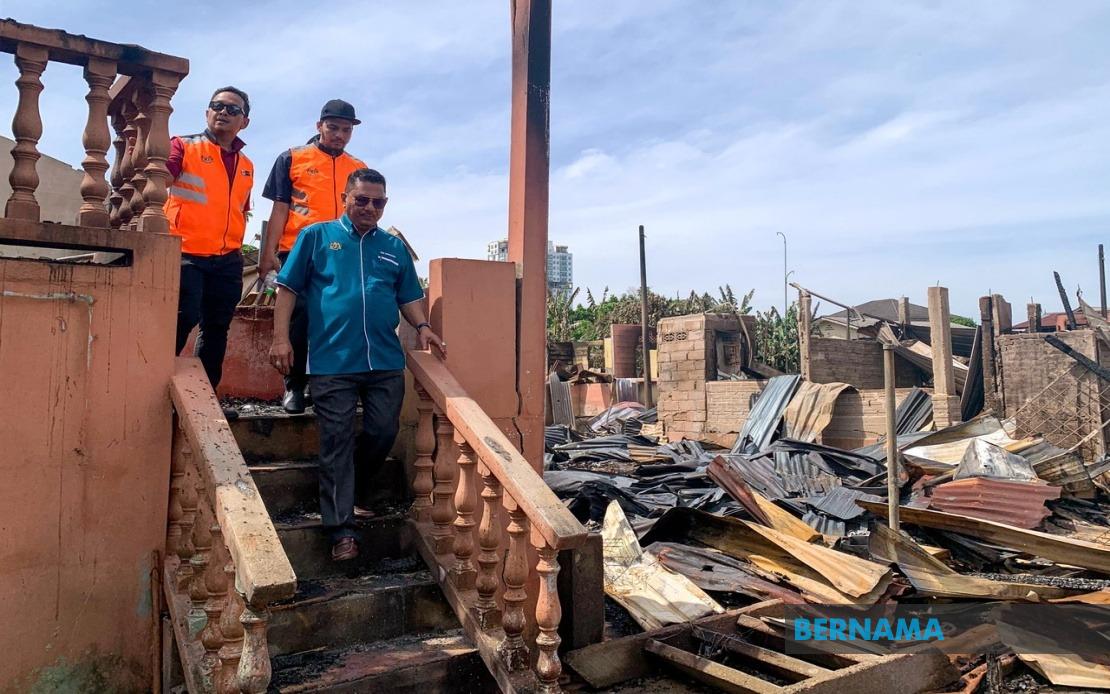
The major residential fire that ravaged Kampung Gok Kapur in Kota Bharu on June 8, destroying 27 dwellings and displacing more than a hundred people, originated from a reckless act of burning papers in a kitchen, according to investigators from Kelantan's Fire and Rescue Department. The department's forensic analysis, which examined physical evidence and witness statements, traced the ignition point to a gas lighter used to set fire to a pile of papers in the kitchen of the house where the incident began.
Kelantan Fire and Rescue Department director Farhan Sufyan Borhan released the findings this week, explaining the sequence of events that transformed a domestic chore into a catastrophic community disaster. The investigation revealed that the open flame source was applied directly to papers in the kitchen area, creating an uncontrolled fire that spread rapidly through the initial structure. Within moments, the flames consumed surrounding combustible materials before jumping to neighbouring properties, a typical pattern when fires break out in densely packed residential neighbourhoods where houses share walls or stand in close proximity.
The circumstances underscore a persistent fire hazard that authorities across Malaysia continue to warn against. Burning refuse indoors, particularly using direct flame sources like lighters or matches, represents one of the most preventable causes of residential fires in the region. Despite decades of public safety campaigns, household members still resort to open-flame disposal methods, often underestimating how rapidly fire spreads in confined spaces where oxygen circulates freely and combustible materials cluster together.
Investigators attributed the fire's origin directly to negligence during the burning activity itself. The person conducting the paper-burning operation appears not to have exercised basic precautions: maintaining safe distance from flammable materials, having water or extinguishers within reach, or simply disposing of papers through safer methods. The decision to burn papers inside rather than in a designated outdoor area demonstrates a critical lapse in household fire safety awareness that proved catastrophic for the entire village community.
The humanitarian toll of the June 8 incident extended far beyond property loss. One hundred and ten residents—families with children, elderly household members, and individuals with disabilities—found themselves homeless within minutes. The Mukim Banggol Mosque converted its facilities into a temporary evacuation centre to shelter the displaced villagers, placing sudden strain on religious institutions and local government resources. Fortunately, the rapid response by emergency services and the relatively quick evacuation prevented fatalities, though many residents lost personal possessions, documents, and irreplaceable items.
The investigation file now passes to police authorities for potential criminal proceedings, though prosecution outcomes for accidental negligence often depend on local jurisdiction policies and whether gross negligence charges apply. This transitional phase typically involves determining whether the individual faced such serious and obvious risks that the law should impose criminal liability, or whether civil compensation claims through insurance would be the appropriate remedy. The distinction matters significantly for victims seeking accountability and redress.
Firefighters and rescue personnel responding to major incidents like this consistently report that residential fires in densely populated village settings spread with frightening speed. Wooden structures, shared walls, inadequate separation distances, and the presence of combustible household goods—cooking gas cylinders, stored materials, furniture—create perfect conditions for rapid escalation. Once flames breach a single property boundary, controlling the spread becomes nearly impossible without substantial firefighting resources. This pattern explains why what began as a single kitchen incident consumed an entire neighbourhood in hours.
Kelantan authorities have seized this incident as an educational opportunity. Farhan Sufyan Borhan's public statement directly addressed residents, cautioning them about open-flame sources and advocating for the elimination of burning activities near or within residential areas. Such messaging aims to penetrate community consciousness, particularly in rural and semi-rural villages where traditional disposal methods persist. Electronic media reach remains limited in some areas, making word-of-mouth and official statements delivered through local channels crucial for behaviour change.
The broader context for Malaysian and Southeast Asian fire safety reveals persistent vulnerabilities in household practices. Unlike developed nations where waste disposal services reach most residential areas and households routinely use bins or municipal collection, rural communities sometimes lack convenient alternatives to burning. This infrastructure gap inadvertently incentivises dangerous practices. Simultaneously, rapid urbanisation means that villages constructed decades ago with minimal building code enforcement now house residents more densely than originally intended, amplifying fire risk when traditional practices continue in tighter spatial configurations.
Fire prevention experts emphasise that effective community resilience requires both individual responsibility and systemic support. Residents must abandon open-flame disposal and embrace safer alternatives, whether purchasing inexpensive waste bins or waiting for collection services. Simultaneously, local governments should extend refuse management infrastructure to underserved areas, reducing the practical incentive for burning. Building codes in existing villages warrant review to ensure adequate fire breaks, accessible water sources, and appropriate emergency egress routes—modifications that require investment but save lives.
The Kampung Gok Kapur incident also highlights the importance of post-disaster community recovery planning. Beyond immediate shelter at the mosque, displaced residents require assistance rebuilding homes, replacing documents and possessions, and restoring livelihoods. Comprehensive disaster response encompasses not only emergency response but also medium-term recovery support and long-term prevention initiatives. Communities that experience major fires often remain vulnerable to future incidents unless underlying risk factors receive systematic attention.
As Malaysian authorities process the formal investigation file and consider next steps, the lessons from this preventable disaster should resonate across the nation. Fire safety remains fundamentally about human choice and community practice supported by adequate systems and services. The destruction of 27 homes and the displacement of 110 residents traced back to a single negligent moment—a decision to burn papers in a kitchen rather than disposing of them safely. In fire prevention, as in so many aspects of public safety, awareness combined with accessible alternatives creates the foundation for resilient, safer communities.

