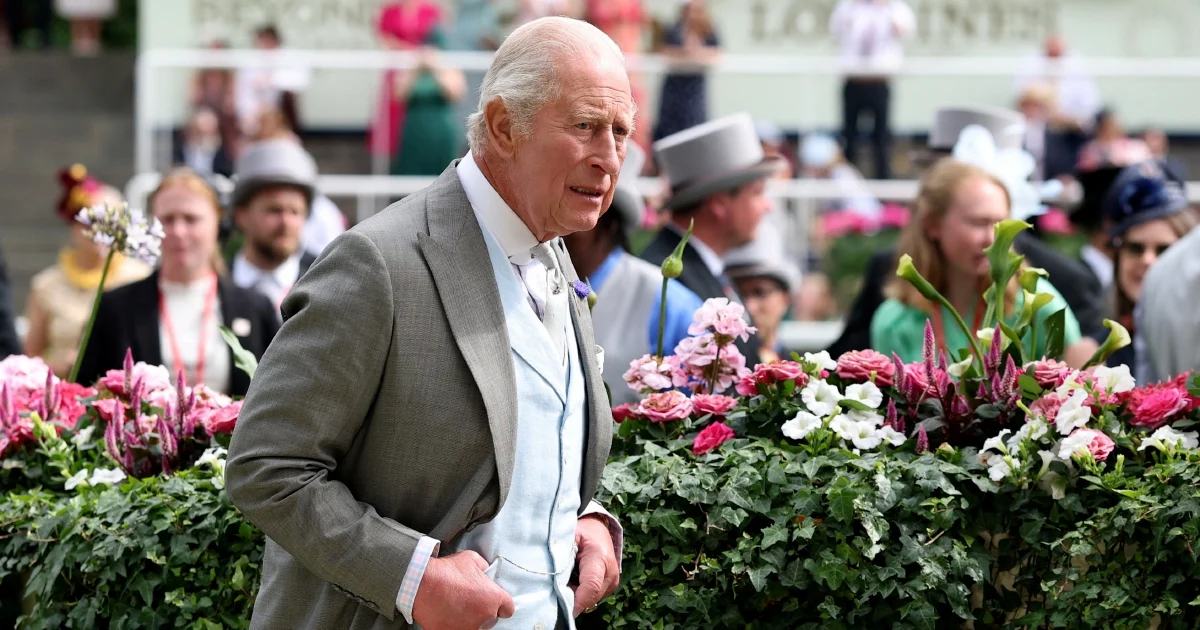
King Charles III has announced plans to reveal his personal tax contributions in a significant shift toward greater financial transparency. Buckingham Palace confirmed the disclosure to UK media outlets on Saturday, signalling a deliberate effort to address mounting public concerns about how the royal family manages its extensive wealth and meets its fiscal obligations to the state.
The decision represents a notable departure from historical royal practice, where financial matters surrounding the monarch have traditionally remained largely private. By voluntarily making his tax records public, Charles seeks to counter growing scepticism about whether the institution adequately fulfils its responsibilities to taxpayers who ultimately sustain it through various mechanisms of state funding and constitutional privilege.
Royal finances have become an increasingly contentious topic in Britain, particularly as ordinary citizens face cost-of-living pressures and demands for austerity. Public curiosity about the monarchy's income streams—including the Sovereign Grant, Duchies of Cornwall and Lancaster revenues, and private investments—has grown more intense in recent years. Questions about how much tax the royal household actually pays relative to its estimated wealth have fuelled debate about fairness and institutional accountability.
This transparency initiative comes at a time when the monarchy is navigating broader conversations about its relevance and role in modern Britain. The institution has faced periodic criticism over infrastructure investments funded by taxpayers, the scale of courtly expenditure, and the sometimes opaque governance of vast landed estates. Charles himself has long positioned himself as a reformer interested in streamlining aspects of royal operations, and this tax disclosure aligns with that established persona.
The move may also be strategically positioned to pre-empt further investigative journalism and Freedom of Information requests that have increasingly penetrated the veil surrounding royal finances. Media scrutiny of inherited wealth, tax advantages available to the monarchy, and comparative figures showing how much the institution costs relative to other European monarchies has intensified. By voluntarily releasing information, the palace appears to be attempting to frame the narrative rather than respond reactively to damaging revelations.
For Malaysian observers, the situation reflects broader global dynamics around institutional transparency and public accountability. Commonwealth realms like Malaysia maintain constitutional connections to the British monarchy, and questions about how Westminster institutions function resonate within regional governance debates. The tension between institutional tradition and modern expectations for openness mirrors similar challenges faced by governments and institutions throughout Southeast Asia as citizens demand greater fiscal clarity from those wielding power and privilege.
The palace's decision also suggests recognition that the royal family's financial standing requires public justification in ways previous generations did not confront. The concept of noblesse oblige—the obligation of privilege to serve the common good—has evolved significantly. Contemporary publics increasingly expect tangible evidence that wealthy institutions and individuals contribute fairly to collective welfare rather than extracting benefits through structural advantages while avoiding comparable burdens.
Chapter and verse on exactly which tax filings will be disclosed remains unclear from the palace announcement. The distinction between personal income tax, capital gains tax, property taxes, and various other obligations may prove significant. How much of the Sovereign Grant and Duchy revenues constitute taxable income, and whether foreign investments and assets face appropriate scrutiny, will shape public perception of the disclosure's comprehensiveness.
Historically, the monarchy has benefited from exemptions, deferrals, and preferential treatment unavailable to ordinary citizens. Voluntary disclosure of tax payments provides an opportunity to demonstrate that these structural advantages do not translate into systematic tax avoidance. Conversely, if the figures reveal minimal tax contributions relative to assets and income streams, the disclosure may intensify rather than diminish public criticism about preferential treatment.
The announcement reflects Charles's apparent understanding that survival of the monarchy in its present form depends partly on demonstrating that it operates within the same general framework of accountability expected of other institutions. The institution cannot indefinitely maintain its unique position in British constitutional life if large portions of the population perceive it as fundamentally unaccountable to the mechanisms that bind ordinary citizens.
This transparency measure also positions Charles as distinct from his predecessors in his willingness to embrace modern expectations around institutional governance. Perception matters enormously for an institution that depends substantially on public goodwill and constitutional deference. By appearing to embrace scrutiny rather than resist it, the monarchy attempts to shape its image as contemporary and responsive rather than archaic and defensive.
The coming weeks will determine what form this disclosure takes, which fiscal years it covers, and how comprehensively it addresses public questions about royal finances. The exercise will ultimately constitute either a meaningful step toward genuine transparency or a carefully calibrated exercise in managed disclosure. Either way, it signals that even the world's oldest continuously functioning monarchy recognises that opacity can no longer substitute for accountability.

