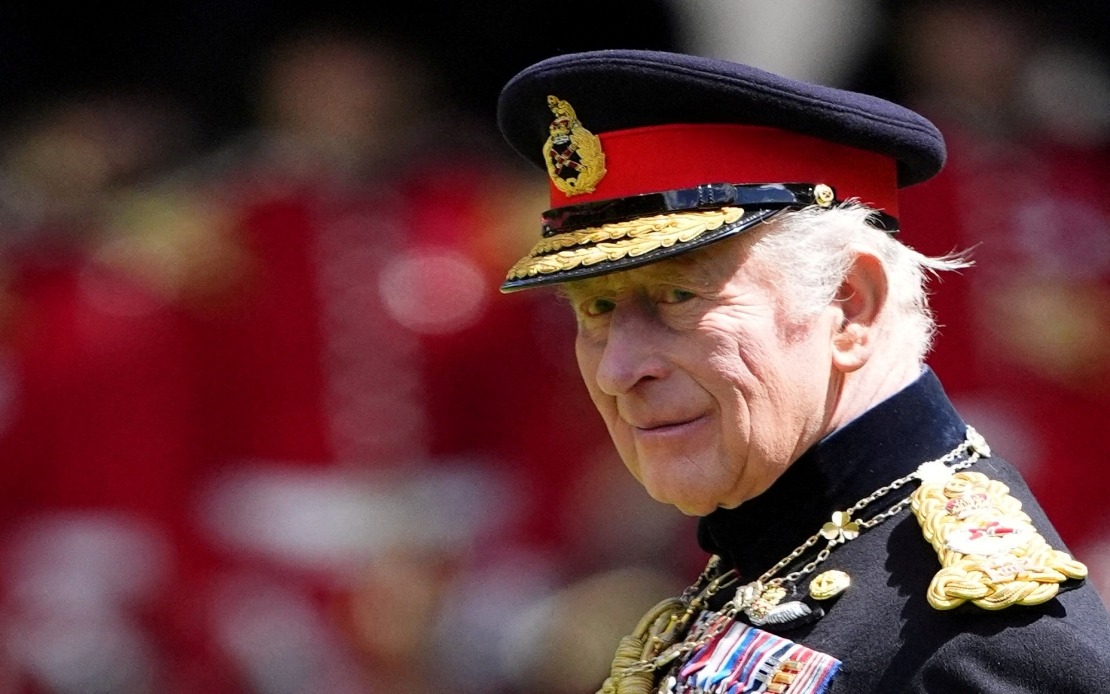
King Charles III has achieved a significant milestone in British constitutional history by becoming the first reigning monarch to publicly disclose his personal tax payment. Buckingham Palace announced on Thursday that the king paid £12.9 million, equivalent to approximately US$17 million, during the 2024-2025 tax year, marking an unprecedented level of financial transparency for the monarchy.
This disclosure represents a watershed moment for the institution, as no previous reigning British sovereign has ever made such information public. The announcement came as part of a comprehensive Royal Household statement on royal finances, signalling the palace's commitment to greater openness in how the monarchy manages and accounts for its finances. The timing and nature of this revelation underscore the contemporary pressure on traditional institutions to demonstrate accountability and fiscal responsibility to the public they serve.
The king's cumulative tax contributions since his accession to the throne in September 2022 have now surpassed £30 million. In the preceding 2023-2024 tax year, he paid £11.7 million in personal taxes. This growing financial commitment demonstrates a consistent pattern of voluntary tax compliance that extends beyond the legal requirements placed upon the monarch.
Crucially, it is important to understand the legal framework within which King Charles III operates. British monarchs possess a unique constitutional position and are not legally obligated to pay income tax, capital gains tax, or inheritance tax. This exemption stems from the principle of sovereignty and historical precedent. However, since the 1990s, successive monarchs have voluntarily chosen to pay income tax and capital gains tax, establishing a contemporary convention that balances royal privilege with public expectation for fiscal responsibility.
The king's personal income, which fuels these substantial tax payments, originates from multiple sources including returns on personal investments and revenues generated by his privately owned estates at Balmoral in Scotland and Sandringham in Norfolk. These income streams fund his private expenses and personal operations, distinguishing them from the separate public funding mechanisms that support the broader royal household and ceremonial functions of the crown. This dual structure—private income supporting private expenditure—reflects the historical evolution of royal finances.
King Charles III's willingness to disclose tax figures represents an extension of practices he initiated during his time as Prince of Wales. When holding that title, he voluntarily published information about his tax arrangements, establishing a personal precedent for transparency. However, the significance of these disclosures has intensified now that he occupies the throne, as public interest in royal finances and their governance has grown substantially in recent decades.
James Chalmers, the keeper of the Privy Purse and senior figure responsible for royal financial administration, addressed the rationale behind these disclosures. He emphasised that despite the apparent complexity of royal finances, the underlying system operates according to clear principles, is structured within established law, and has been refined over time. Chalmers underscored that this framework ensures the monarch can exercise authority with both independence and accountability while maintaining the long-term interests of the nation at its core.
For Malaysian and Southeast Asian observers, this development carries particular relevance. Many Commonwealth nations, including Malaysia, maintain constitutional connections to the British Crown through the Commonwealth framework. The precedent established by King Charles III regarding voluntary tax disclosure and enhanced financial accountability may influence discussions about transparency and good governance within Commonwealth institutions more broadly. It demonstrates how even the most traditionally reserved institutions are responding to contemporary demands for open financial reporting.
The palace's release of comprehensive documents summarising the various sources of royal finances reflects a broader institutional shift towards demystifying how the monarchy operates financially. This transparency initiative addresses longstanding public curiosity and occasional criticism regarding the costs of royal operations and the sources from which the crown derives its income. By proactively releasing this information, the palace attempts to satisfy demands for accountability while maintaining the constitutional separation between the public role of the monarch and his private financial affairs.
The voluntary nature of these tax payments carries symbolic weight beyond mere arithmetic. By choosing to pay taxes despite legal exemption, King Charles III signals alignment with contemporary expectations that all institutions and individuals, regardless of status, should contribute to the public fisc. This voluntary compliance has become increasingly important in an era of heightened scrutiny of wealth and privilege, where questions about fairness in tax systems resonate globally.
Looking forward, this disclosure may establish new expectations for royal financial transparency not only within Britain but potentially across Commonwealth realms. As public discourse increasingly emphasises accountability, transparency, and equitable contribution to taxation, the precedent set by King Charles III could influence how other monarchies, including those within Southeast Asia and the broader Commonwealth, approach financial disclosure and public accountability.
The announcement ultimately reflects a calculated balancing act—preserving the dignity and constitutional position of the monarchy while responding to modern expectations for governmental and institutional transparency. Whether this precedent becomes the new standard for royal financial reporting or remains a singular gesture will become clearer as subsequent fiscal years unfold and as other Commonwealth institutions respond to the transparency trend the British Crown has initiated.

