Malaysia's Ministry of Human Resources has unveiled a comprehensive strategy to support workers displaced by ongoing global supply chain disruptions, leveraging Technical and Vocational Education and Training programmes to equip affected individuals with marketable skills for the modern economy. Datuk Seri R. Ramanan, the ministry's head, announced the initiative during an event in Johor Bahru, signalling the government's commitment to addressing labour market challenges arising from international trade volatility that has rippled across manufacturing hubs throughout Southeast Asia.
The announcement comes at a critical juncture when Malaysia's manufacturing sector, traditionally a cornerstone of economic growth, faces unprecedented pressures from supply chain fragmentation and shifting global production patterns. Workers from services, manufacturing, and construction industries—sectors that have absorbed significant shocks from pandemic-related disruptions and subsequent restructuring—will be the primary beneficiaries of the upskilling programme. Rather than leaving displaced workers to fend for themselves, the government has designed a systematic approach combining skills development with active employment placement support.
The initiative incorporates the Social Security Organisation's MYFutureJobs platform as a central pillar, establishing a bridge between training completion and gainful employment. This two-pronged approach recognises that technical skills alone are insufficient without effective job matching mechanisms that align worker capabilities with employer requirements. The platform will facilitate this matching process, ensuring that trained workers secure positions suited to their newly acquired competencies and experience profiles, thereby improving employment stability and reducing skill-jobs mismatches that have plagued the Malaysian labour market.
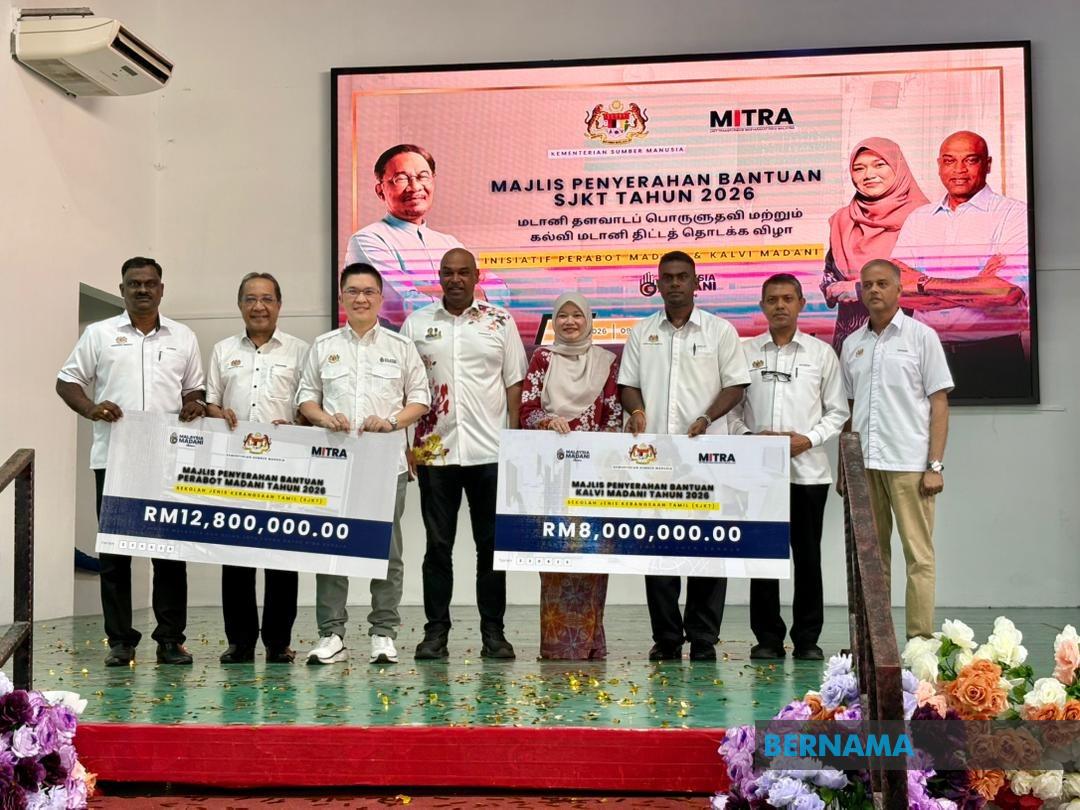
Beyond the supply chain crisis response, the ministry launched the MADANI Furniture Initiative, a targeted investment programme benefiting Tamil vernacular schools across Malaysia. The RM12.8 million initiative will furnish 361 government-aided Tamil-language schools with high-quality furniture and equipment, directly supporting 39,692 pupils and 5,290 teachers. This phased distribution, scheduled from June through August, addresses longstanding infrastructure gaps in vernacular education, a sector that serves significant minority communities while facing chronic underfunding relative to mainstream schools.
The furniture initiative represents a substantive commitment to educational equity, recognising that learning environments profoundly influence student engagement and academic outcomes. Fourteen categories of equipment—ranging from study tables and chairs to storage cabinets and ventilation fans—will be systematically distributed, standardising classroom conditions across participating institutions. For schools operating with limited resources, such supplies represent transformative investments that reduce teacher burden in preparing learning spaces and enhance student comfort during extended study periods.
Complementing the furniture initiative is the RM8 million KALVI MADANI Programme, designed to comprehensively address socioeconomic barriers to quality education within Indian communities. The programme encompasses free tuition classes that provide academic reinforcement beyond standard curricula, nutritional support recognising the link between child nutrition and cognitive development, and learning kits including technology devices that connect disadvantaged students to digital learning resources. Additionally, the programme dedicates resources to teacher welfare, acknowledging that educator satisfaction and support directly translates to instructional quality.
The KALVI MADANI Programme targets 10,410 Indian pupils across 315 selected Tamil vernacular schools, representing a focused but meaningful effort to close achievement gaps within this community. By integrating academic support, nutritional assistance, and technological access, the programme acknowledges that educational success requires multi-dimensional intervention beyond classroom instruction. The inclusion of teacher welfare initiatives reflects understanding that sustainable educational improvement depends on educator morale and professional development, factors often overlooked in narrowly focused school improvement schemes.
The dual announcement—addressing both immediate labour market disruptions and longer-term educational equity—demonstrates integrated thinking about Malaysia's human capital challenges. Supply chain crisis-induced job losses disproportionately affect workers with limited formal education or outdated skills, whilst many vulnerable school-age children face educational barriers perpetuating intergenerational poverty. By simultaneously investing in adult reskilling and foundational education for disadvantaged youth, the ministry addresses both immediate unemployment pressures and systemic inequality drivers.
For Malaysian policymakers, the initiatives reflect acknowledgment that global economic shocks demand proactive, targeted responses rather than passive adjustment. TVET programmes, long undervalued relative to university education in Malaysian social preferences, are positioned as viable pathways to stable employment, potentially reshaping educational aspirations across communities. The emphasis on job placement through PERKESO's platform indicates movement toward outcomes-based training accountability, where programme success is measured not merely by training completion but by sustained employment.
The educational initiatives targeting Tamil schools also signal recognition that minority language education requires dedicated support to remain viable and equitable. These programmes demonstrate that vernacular education can receive substantive government backing whilst maintaining Malaysia's multilingual education ecosystem. For Southeast Asian contexts where similar linguistic diversity exists, Malaysia's approach to funding minority-language schools may offer instructive models balancing national integration with cultural preservation.
The implementation timeline through August indicates urgency, suggesting the government views supply chain labour disruptions as pressing near-term concerns requiring rapid response. As regional economies increasingly decouple from traditionally dominant supply chains and companies diversify sourcing strategies, Malaysia's vulnerability to sudden workforce displacement remains significant. Proactive reskilling programmes can significantly mitigate social costs of such transitions, maintaining consumer spending and economic stability whilst workers transition between sectors.
The announcement ultimately reflects sophisticated understanding that modern economies require dual commitments: immediate support for displaced workers and foundational investments in youth education. By weaving together employment assistance, technical training, school infrastructure, educational equity initiatives, and teacher support into coherent programming, Malaysia demonstrates comprehensive human capital strategy recognising interconnections between labour market health and educational quality.

