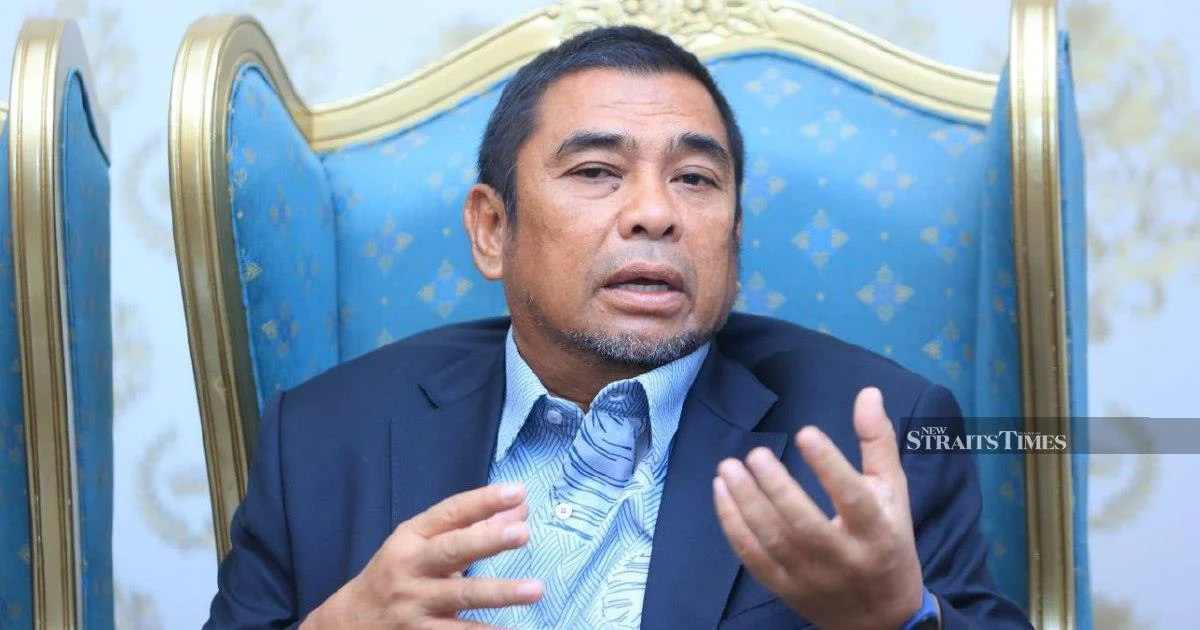
Kelantan Umno officials have weighed into ongoing political tensions by reinterpreting PAS's recent strategic decision to support Barisan Nasional candidates in the Johor election as a tacit confession that accusations levelled against their party were fundamentally dishonest. Speaking from their stronghold in Kota Baru, representatives from the state branch of Umno argued that the Islamist party's move represented a significant reversal that undermined earlier critiques.
The relationship between these two major Malay-Muslim political forces has long been marked by mutual suspicion and aggressive rhetoric. The "Umdap" terminology, which emerged as a pejorative label in previous political campaigns, has become a flashpoint in Malaysian political discourse. Umno has contested this characterization persistently, and party leaders view PAS's current positioning as strategically inconsistent with any legitimate basis for such attacks.
The Johor election represents a consequential moment for both parties and the broader Barisan Nasional coalition. By instructing its members to support BN candidates rather than fielding its own slate, PAS has essentially acknowledged shared interests with the federal government-linked coalition in this particular contest. Kelantan Umno representatives framed this tactical alignment as evidence that ideological or governance-based objections to their party, which the "Umdap" label supposedly encapsulated, were never sincere.
The historical context of Malay-Muslim politics in Malaysia reveals persistent jockeying for position and influence between secular nationalist and Islamist-oriented movements. Both Umno and PAS draw support from overlapping demographic constituencies, particularly rural and semi-urban Malay populations concerned with Islamic affairs and socioeconomic development. Competition for this voter base has frequently manifested in harsh accusations and counter-accusations, making electoral alliances particularly significant when they occur.
For Malaysian observers tracking coalition dynamics, the implications extend beyond rhetorical scoring between rival parties. The ability of PAS to coordinate with BN—despite their profound philosophical differences on governance, Islam's role in the state, and development priorities—demonstrates the pragmatic flexibility that characterizes Malaysian electoral politics. Regional concerns, demographic shifts, and local grievances often override ideological consistency when votes are at stake.
Kelantan's particular significance in this narrative cannot be overlooked. As a PAS-governed state where Umno remains a substantial opposition force, every political manoeuvre carries local resonance. The state has been a laboratory for competing visions of Islamic governance in Malaysia, with PAS implementing policies that its leaders present as authentically Islamic while Umno-aligned voices question both their effectiveness and their consistency with constitutional frameworks.
The "Umdap" framing itself deserves examination. The term, depending on its exact derivation and usage, has been deployed to suggest fusion, merger, or problematic combination—implications that PAS supporters presumably intended as criticism. Umno's counter-argument that any such criticisms become invalid once PAS cooperates with their coalition partners hinges on a particular logical framework: that tactical cooperation negates previous ideological objections. Critics might observe, however, that supporting candidates in a single election differs materially from permanent merger or fundamental alignment.
The timing of this renewed war of words reflects broader shifts in Malaysian politics following the 2022 elections and the subsequent reorganization of coalitional arrangements. The realignment that produced the Perikatan Nasional experiment and subsequent recalibrations has created new openings for unexpected partnerships. In this fluid environment, past accusations frequently become negotiable depending on contemporary political utility.
For Southeast Asian political analysts, the Malaysian case illustrates how religious, ethnic, and ideological divisions can coexist with pragmatic cooperation when electoral mathematics demand it. This flexibility—which Western observers sometimes characterize as unprincipled and Malaysian participants often describe as realistic politics—shapes the region's political trajectories. The capacity to ally with former rivals while maintaining rhetoric that distinguishes one's own positioning speaks to the complexity of identity-based politics in plural societies.
The Johor election outcome will provide crucial evidence regarding whether such tactical arrangements hold electoral weight. Should BN candidates perform strongly with PAS support, both parties may claim validation for their respective positions: BN celebrating coalition effectiveness, while PAS maintains that its Islamic credentials remain unchallenged. Conversely, disappointing results could trigger recriminations and renewed accusations, potentially resurrecting the very "Umdap" rhetoric that Kelantan Umno currently dismisses as definitively discredited.
For voters in Johor and across Malaysia, these political manoeuvres underscore persistent questions about party platforms, governance priorities, and the substance behind electoral appeals. The apparent fluidity of political relationships raises legitimate concerns about whether voters' interests genuinely drive policy or whether party preservation takes precedence. Understanding these dynamics remains essential for Malaysian citizens seeking to evaluate political claims critically.

