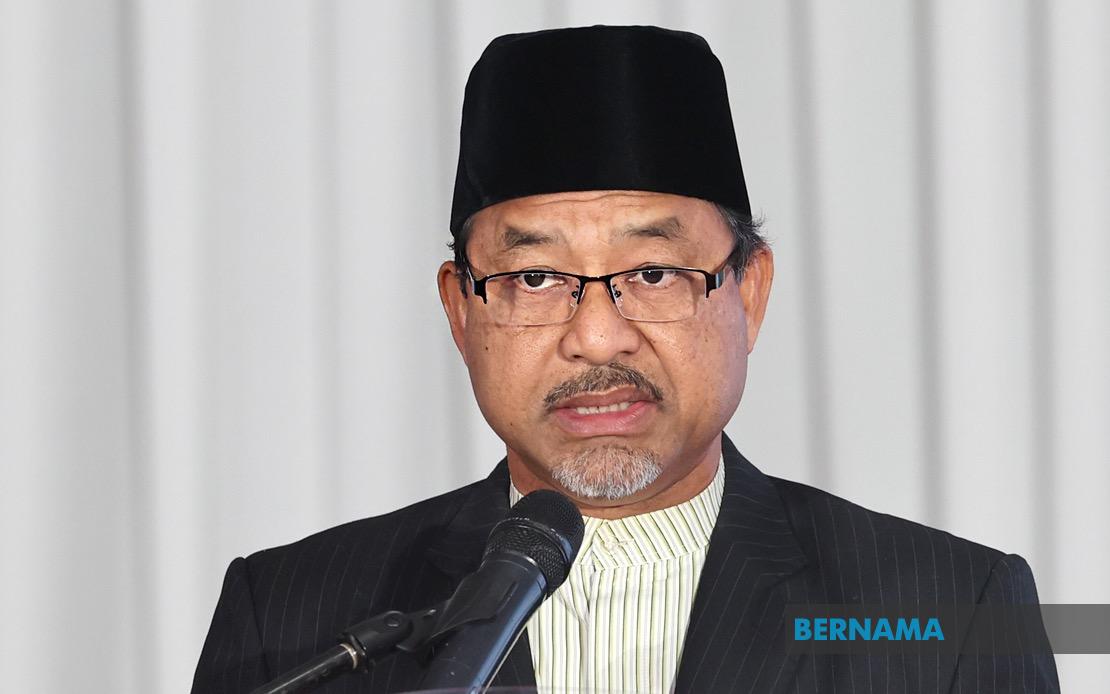
Kelantan's forest cover has remained steady at 51.79 per cent of its total land area, encompassing approximately 778,708 hectares, the state assembly heard during a recent legislative session in Kota Bharu. Menteri Besar Datuk Mohd Nassuruddin Daud presented these figures as evidence of the state's commitment to the Peninsular Malaysia Forestry Policy, which sets a minimum threshold of 50 per cent forest and tree cover across the nation. This maintenance of green cover demonstrates Kelantan's continuing efforts to meet federal forestry objectives, a particularly significant achievement given the competing pressures on land use across Malaysia's most forested eastern states.
The state's approach to forest management extends beyond simple preservation of existing woodland. Kelantan's authorities have undertaken a systematic review of available government land to identify areas suitable for formal designation as Permanent Reserved Forests under the HSK classification. This proactive strategy recognises that maintaining forest cover requires intentional governance frameworks and legal protections. The process involves evaluating terrain, ecological value, and sustainability potential to ensure that gazetting decisions reflect both conservation science and long-term land-use planning. Such methodical assessment stands in contrast to ad hoc approaches that might temporarily inflate forest statistics without delivering genuine environmental protection.
Legal mechanisms under the National Forestry Enactment provide the statutory foundation for Kelantan's conservation efforts. Protected forests continue to be classified and gazetted according to specific forest function categories established under Section 10(1) of the amended 2025 enactment. This classification system allows authorities to differentiate between forests reserved primarily for timber production, watershed protection, wildlife habitat, or cultural and recreational purposes. By applying function-based categorisation, Kelantan can tailor management strategies to the particular ecological and social roles each forest zone plays, rather than treating all forest areas uniformly. This granular approach reflects evolving best practices in forestry governance across Southeast Asia.
Beyond regulatory frameworks, Kelantan has embedded forest restoration and tree-planting initiatives into broader national campaigns. The state government participates actively in the Greening Malaysia programme, which coordinates afforestation efforts across multiple states and federal territories. These programmes serve multiple objectives simultaneously: they expand forest cover in degraded areas, create green corridors for wildlife movement, enhance carbon sequestration capacity, and generate employment in rural communities. Participation in nationwide campaigns also enables knowledge-sharing between states and access to specialised technical expertise that individual state governments might struggle to develop independently.
A defining feature of Kelantan's forest strategy is its commitment to balancing conservation with economic development. Rather than pursuing an absolutist preservation approach that forecloses all productive land use, the state has adopted what Menteri Besar Mohd Nassuruddin termed a balanced approach. This framework attempts to meet immediate development needs—infrastructure projects, resource extraction, agricultural expansion—without surrendering the capacity of future generations to access forest benefits and services. Such equilibrium proves difficult to achieve in practice, particularly when competing stakeholders pursue divergent interests, yet the stated principle reflects international sustainability discourse and the concept of intergenerational equity embedded in definitions of sustainable development.
Technological infrastructure now underpins Kelantan's forest protection regime. Rather than relying solely on ground patrols and ranger networks, the state has invested in systems capable of detecting changes in forest extent and identifying potential encroachment in near-real time. Satellite imagery, drone surveillance, and geospatial analysis tools allow authorities to monitor vast territories more comprehensively than traditional field methods alone. Early detection of forest loss or unauthorised land use enables rapid response before small infractions become entrenched violations. This technological dimension reflects the growing integration of digital tools into environmental governance across Malaysia and demonstrates Kelantan's recognition that modern forestry management requires contemporary monitoring capabilities.
Verification protocols ensure that technological alerts translate into appropriate enforcement action rather than generating false positives that erode public trust. Kelantan's forestry authorities conduct field patrols and detailed inspections to confirm any changes detected through remote sensing systems. Only after ground-truthing confirms that encroachment or forest loss has genuinely occurred do enforcement personnel proceed with formal action. This staged verification process protects against both under-enforcement (allowing violations to proceed due to insufficient surveillance) and over-enforcement (responding punitively to natural forest dynamics or measurement errors). The approach reflects mature institutional practice that recognises the difference between data collection and evidence suitable for legal proceedings.
Kelantan's forest cover maintenance carries particular significance for regional environmental health and climate dynamics. As one of Peninsular Malaysia's largest remaining contiguous forest landscapes, Kelantan's woodlands influence moisture cycling, biodiversity patterns, and carbon storage across a broader geographical area. The state functions as a green anchor for the east coast region, with forest-dependent communities relying on wood products, water resources, and ecosystem services that flow from well-managed forests. International climate commitments and regional biodiversity targets increasingly focus on ensuring that forested states like Kelantan maintain and preferably expand their woodland extent, creating alignment between local management objectives and global environmental imperatives.
The 51.79 per cent figure itself merits careful interpretation. Achieving exactly this proportion through deliberate management would be virtually impossible; the figure more likely reflects a carefully measured baseline established through forest inventory and remote sensing analysis at a specific point in time. Maintaining this percentage in subsequent years becomes the operational target, though natural forest dynamics, regeneration, and periodic disturbances mean that the exact proportion may fluctuate marginally year to year. The legislative communication of this statistic signals political commitment to forest conservation and provides a metric against which future performance can be evaluated, creating accountability for environmental stewardship at the highest state level.
For Malaysian readers and policymakers, Kelantan's forest management approach offers lessons applicable across the peninsula's forested states. The combination of legal protections through enactment, technological monitoring, restoration programmes, community engagement, and balanced economic consideration represents a comprehensive strategy that addresses multiple dimensions of forest governance simultaneously. As Malaysia faces increasing pressure to meet both domestic development objectives and international climate commitments, states that successfully maintain forest cover while supporting sustainable economic activity demonstrate that these goals need not remain in perpetual tension. Kelantan's experience suggests that thoughtful institutional design, adequate resourcing, and genuine political commitment can sustain forest landscapes that benefit both present and future Malaysian generations.

