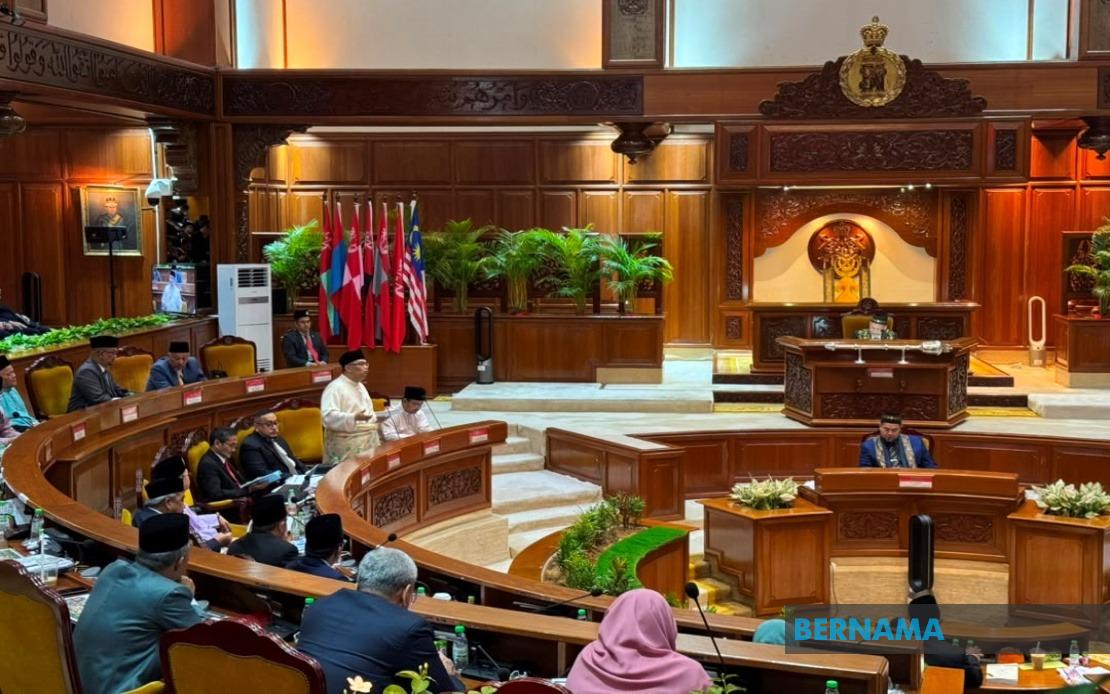
The Kelantan state legislative assembly has unanimously approved the Syariah Criminal Offences (Kelantan) Bill 2026, marking a significant legislative development in the state's approach to Islamic criminal law. The measure, tabled by Deputy Menteri Besar Datuk Dr Mohamed Fadzli Hassan and subsequently wound up by both him and Menteri Besar Datuk Mohd Nassuruddin Daud, passed through its second and third readings without objection during the assembly sitting on August 12, with Speaker Datuk Mohd Amar Nik Abdullah presiding.
The new legislation represents a comprehensive restructuring of Kelantan's Syariah criminal framework, containing nine distinct sections, 62 clauses and a supplementary schedule. State leadership has characterised the Bill as the product of meticulous planning and enhancement, suggesting that its development involved careful deliberation across multiple stages before reaching the assembly floor. This framing stands in contrast to the contentious path that led to the necessity for the current Bill, underscoring what officials view as a more robust and legally sound approach to codifying Islamic criminal offences within the state's jurisdiction.
The Bill introduces several substantive reforms to how Kelantan addresses Islamic criminal matters. These reforms encompass provisions relating to the obligation of performing obligatory prayers, protective measures regarding the safeguarding of private parts and bodily organs, intellectual protection, and implementation of restorative punishment mechanisms. Notably, the legislation prioritises whipping as a prescribed punishment and establishes a compound mechanism, suggesting a shift towards standardised penalties and settlement options within the Syariah criminal system.
The constitutional backdrop to this legislative initiative remains crucial to understanding its significance. In February 2024, Malaysia's Federal Court delivered a landmark 8-1 majority decision declaring 16 of the 18 provisions in the Kelantan Syariah Criminal Code (I) Enactment 2019 unconstitutional and null. The court ruled that the state assembly lacked authority to legislate on offences that fell within the Federal government's jurisdictional domain, a determination that triggered broader discussions about the constitutional division of legislative powers between Kuala Lumpur and the states regarding Islamic criminal law.
That Federal Court decision emerged from a constitutional challenge filed by a Kelantan-based lawyer, making the case a watershed moment in Malaysian constitutional jurisprudence. The ruling fundamentally reoriented the debate surrounding state-level Syariah legislative autonomy, prompting questions about which categories of Islamic offences properly belong within state authority versus federal jurisdiction. For Kelantan, which has long positioned itself as a leader in implementing comprehensive Syariah law, the decision necessitated significant recalibration of legislative strategy.
Menteri Besar Mohd Nassuruddin has framed the new Bill as building upon principles already embedded in the 2019 enactment, asserting that the current approach represents a continuation of foundational philosophy rather than a fundamental departure. He emphasised that the Bill's strength derives from its revitalisation grounded in existing constitutional and legal principles, suggesting that the legislative assembly has sought to craft provisions that both honour Kelantan's Islamic governance aspirations and align with federal constitutional requirements.
The Bill's passage through the assembly involved substantive debate among six state representatives from constituencies including Pasir Tumboh, Melor, Galas, Jelawat, Kota Lama and Chempaka. This cross-constituency engagement suggests a degree of deliberative scrutiny, even within a chamber that ultimately endorsed the measure unanimously. The involvement of multiple assemblymen in the discussion phase indicates that the legislation underwent examination from different perspectives before achieving consensus.
For Malaysia's broader Islamic legal landscape, Kelantan's response to the Federal Court's 2024 ruling carries implications extending beyond the state itself. The case represents a critical junction in how Malaysian federalism operates when state Islamic law initiatives collide with federal constitutional constraints. Other states pursuing enhanced Syariah criminal frameworks will likely monitor Kelantan's legislative formulations closely, as they may offer a template for reconciling state aspirations in Islamic governance with federal constitutional parameters.
The Bill's specific emphasis on restorative punishment and compounding mechanisms suggests an evolving philosophy within Kelantan's approach to Islamic criminal justice. Rather than purely punitive orientations, these provisions indicate movement towards reconciliation and alternative resolution pathways, elements that may appeal to both Islamic jurisprudential principles emphasising mercy and rehabilitation, and contemporary criminal justice reform discourse advocating restorative approaches.
The unanimous passage of the Bill reflects alignment among Kelantan's political leadership on Islamic governance priorities, yet the path to this legislation demonstrates the complexity courts have identified in state-level Syariah criminal lawmaking. The Federal Court's 2024 decision essentially forced Kelantan to recalibrate its constitutional strategy, and the 2026 Bill represents the state's attempt to advance its Islamic criminal law agenda within the constitutional boundaries established by that ruling.
For observers of Malaysian federalism and Islamic law, this legislative chapter underscores the ongoing tension between state desires for regulatory autonomy in religious matters and federal constitutional limitations. Kelantan's reframing of its Syariah criminal code suggests state legislatures may achieve their objectives through careful legal draftsmanship that respects federal jurisdictional boundaries, even while expanding the scope of Islamic criminal provisions within permissible domains. How federal courts ultimately assess this new Bill's constitutionality will shape future state initiatives in this domain.

