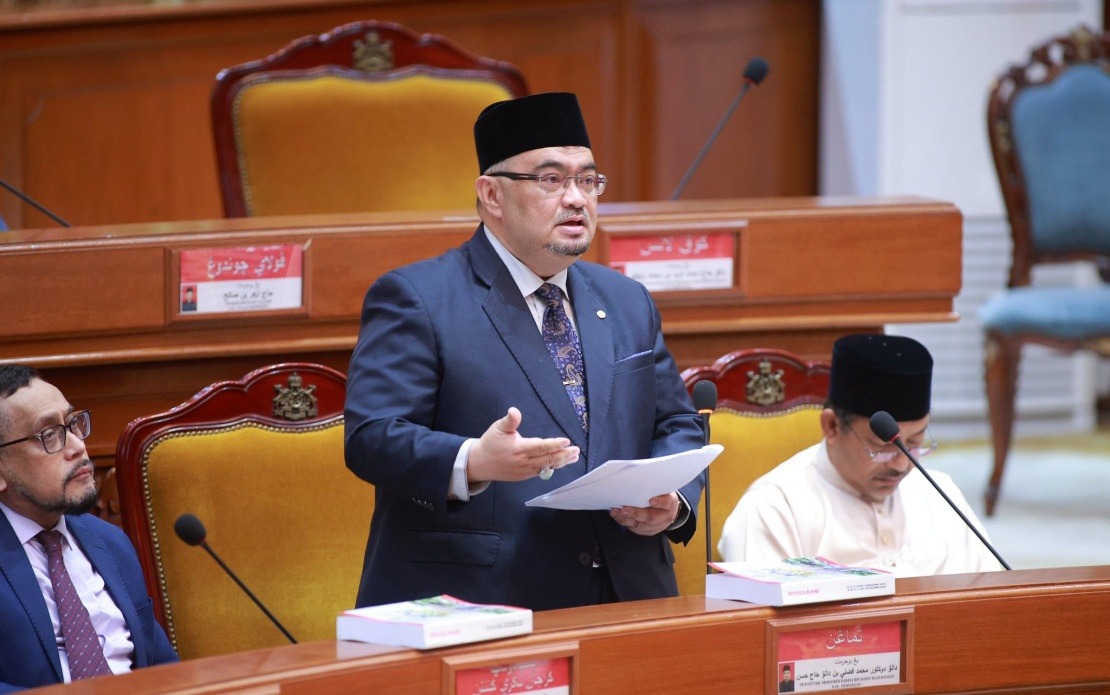
Kelantan's fight against illegal mining and land encroachment has yielded substantial results, with state authorities documenting 63 investigation cases stemming from enforcement drives conducted over the first half of this year. Deputy Menteri Besar Datuk Dr Mohamed Fadzli Hassan disclosed the figure during a sitting of the state legislative assembly in Kota Bharu, underscoring the regional government's determination to tackle what has become an increasingly visible problem across the state's mining-rich zones.
The crackdown reflects coordinated action across critical enforcement hotspots. Authorities conducted 77 separate field operations targeting the districts of Gua Musang, Kuala Krai, Jeli and Tanah Merah, areas historically susceptible to mineral extraction and land appropriation activities. These districts, particularly Gua Musang, are geologically significant for mineral deposits, making them attractive targets for those willing to operate outside regulatory frameworks. The geographic concentration of enforcement operations underscores a strategic approach to tackling the problem where it manifests most acutely.
The confiscation of heavy equipment represents a critical dimension of the enforcement strategy beyond merely documenting violations. Authorities seized 65 excavators and related machinery, collectively valued at approximately RM15.8 million. This approach targets the operational capacity of illegal operators by removing their means of production, making it substantially more difficult to resume activities even if fines are eventually paid. The scale of equipment seizures suggests operations of considerable sophistication rather than isolated incidents of small-scale unauthorised extraction.
Once violations are detected, the procedural framework channels cases toward formal prosecution. The 63 investigation papers generated through the enforcement operations have been forwarded to the Prosecution Unit of the Kelantan Land and Mines Office, the administrative body responsible for evaluating evidence and determining whether formal charges should proceed. This bureaucratic step, while necessary for legal legitimacy, introduces potential bottlenecks in accountability, as investigations can languish at the prosecution stage for extended periods.
The enforcement activity arose from legislative scrutiny. Datuk Shaari Mat Hussain, representing the Paloh constituency under PAS, pressed the state government on its strategy to curtail encroachment and illegal mining during the assembly session. The question reflected constituent concerns and broader awareness that such activities, while generating informal economic opportunities for participants, impose substantial costs on the state through environmental degradation, loss of revenue, and administrative burden. The formal questioning mechanism ensures that enforcement receives political attention and accountability.
Despite documented progress in field operations, authorities acknowledged a troubling possibility: that organised networks of middlemen, masterminds, and protectors sustain the illegal economy. Datuk Mohd Syahbuddin Hashim, representing Galas under the Barisan Nasional coalition, probed this dimension during supplementary questioning, recognising that visible enforcement against machinery and individual operatives may leave underlying criminal networks intact. The deputy menteri besar acknowledged that investigations would focus on identifying persons benefiting from violations, indicating awareness that conspiracy and corruption facilitate illegal mining beyond the level of individual operators.
The state government's investigative strategy hinges on land ownership records. By cross-referencing seized equipment and enforcement locations against property registries, authorities can identify legal owners of land where violations occur, creating both investigative leverage and potential liability for landowners who permit such activities. This approach potentially extends accountability beyond those who directly conduct the mining to those who knowingly facilitate it through providing access to land. However, establishing knowing participation remains legally complex, particularly where operators may conceal the true nature of their activities from landowners.
Recognising that existing penalties may insufficiently deter repeat violations, Kelantan's government has initiated discussions with the Land and Mines Office regarding enhanced sanctions for recidivist offenders. The rationale reflects economic logic: if penalties are modest relative to profits from illegal extraction, rational operators discount regulatory risk and continue activity. Strengthening penalties for repeat offences aims to shift this calculation, making continued violations economically unviable. However, such reforms require legislative amendment and raise questions about proportionality and due process protections.
The enforcement intensity reflects broader regional challenges. Across Southeast Asia, illegal mining generates significant informal income in economically marginal areas while imposing environmental and governance costs that disproportionately affect local communities. Malaysia's experience mirrors patterns observed in Thailand, Myanmar, and Cambodia, where enforcement capacity often lags demand. Kelantan's relatively robust approach to documentation and equipment seizure positions it ahead of many regional counterparts, though persistent challenges in prosecuting organisers rather than operatives remain endemic.
Looking forward, the effectiveness of Kelantan's strategy depends on sustained commitment beyond initial field operations. The sixty-three investigation papers represent only the first stage in a lengthy legal process. Prosecution, trial, and eventual conviction rates will ultimately determine whether enforcement translates into deterrence. Simultaneously, addressing the economic drivers that make illegal mining attractive to participants—limited formal employment in rural areas, weak land tenure security, and inadequate regulatory capacity in remote zones—remains essential for durable solutions beyond enforcement cycles.
The state government's multi-agency coordination and willingness to engage with organised networks represents progress compared to fragmented, reactive enforcement approaches. However, questions persist regarding whether current institutional capacity suffices to investigate white-collar participants in illegal extraction schemes or whether enforcement remains primarily directed at visible operational activity. The coming months will reveal whether the investigation papers opened yield significant prosecutions of masterminds or remain concentrated among lower-level participants.

