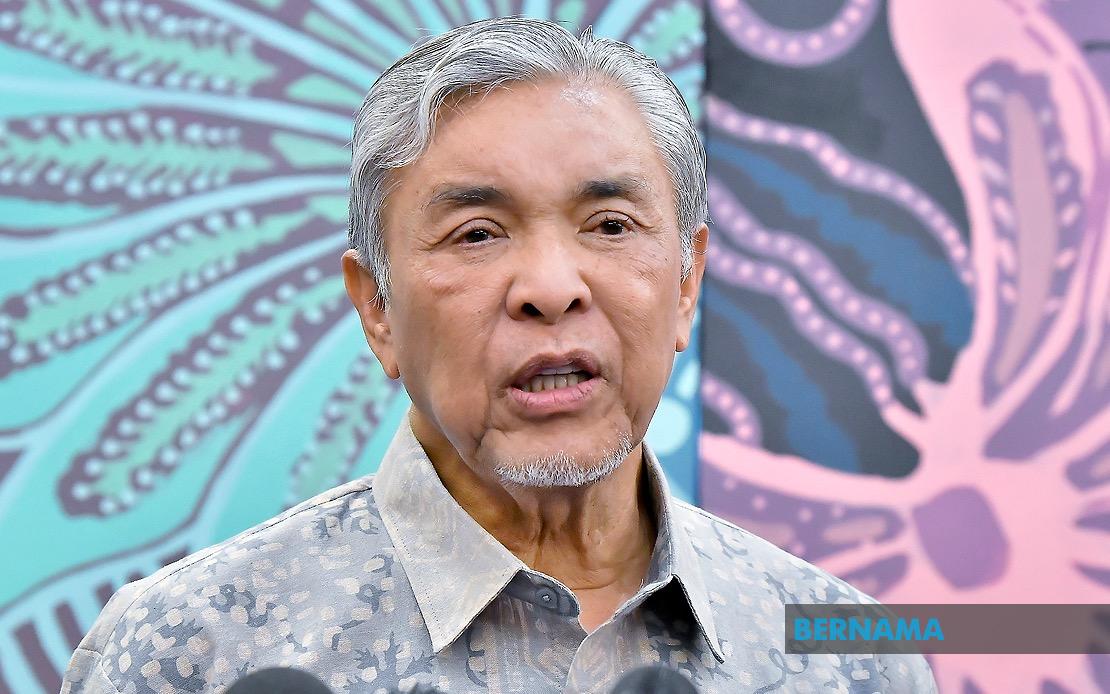
Deputy Prime Minister Datuk Seri Dr Ahmad Zahid Hamidi moved to address widespread public concern about the South East Johor Development Authority's planned expansion, insisting that the initiative focuses on coordinating development efforts across the region rather than acquiring land from residents in the affected districts. Speaking at the KEJORA 2025 Excellent Service Awards and Appreciation Ceremony in Kota Tinggi, Ahmad Zahid, who doubles as Rural and Regional Development Minister, acknowledged that clarification was essential to counter misunderstandings about the agency's true intentions and its relationship with property ownership in the area.
The misconception that KEJORA would move to assume control of land parcels has circulated among residents and observers since the expansion proposal surfaced. Ahmad Zahid's comments suggest that the authority's role would be more administrative and planning-oriented, working alongside district authorities rather than displacing existing landholdings. This distinction carries considerable weight for communities in south-eastern Johor, where concerns about state intervention in property rights remain sensitive, particularly given Malaysia's federal land tenure system where states retain ultimate authority over land matters.
The deputy prime minister pointed to KEJORA's operational performance as the primary justification for expanding its mandate. The authority has achieved a 98.3 per cent success rate across its implemented projects, a metric that Ahmad Zahid highlighted as evidence of institutional competence and effectiveness. This track record suggests that enlarging KEJORA's development footprint would replicate proven management practices across a wider geographical area, potentially improving project delivery and coordination in districts currently outside its purview.
Pengerang, a district experiencing accelerated economic transformation through major industrial and tourism ventures, would feature prominently in the expanded development zone. The region's rapid growth trajectory, driven by significant projects and emerging tourism infrastructure, has created administrative and coordination challenges that conventional local governance structures may struggle to address. By integrating Pengerang more closely into KEJORA's planning and development framework, authorities aim to ensure that infrastructure, services, and growth management keep pace with economic expansion.
Public opinion research conducted by KEJORA provided additional political cover for the proposal. The authority commissioned a feedback study in which 96 per cent of respondents endorsed the expansion initiative. This substantially high approval rate suggests either genuine community support or effective public messaging, though the methodological details of the survey remain unclear. Such overwhelming backing, if representative, strengthens the government's mandate to proceed, though skeptical observers might question whether the survey adequately represented all stakeholder perspectives, including smaller landholders and rural populations who might harbour reservations.
Despite the ministry's clear enthusiasm, Ahmad Zahid underscored that implementation ultimately hinges on obtaining formal consent from His Majesty Sultan Ibrahim and Tunku Mahkota Ismail, the Regent of Johor. This constitutional requirement reflects Malaysia's federal system, where sultans retain significant powers over land and state-level institutions. The need for royal approval introduces an additional procedural checkpoint that could delay or reshape the expansion, depending on the palace's assessment of public interest and constitutional propriety.
Financial commitment to the broader development agenda remained substantial. The Rural and Regional Development Ministry allocated approximately RM138 million to KEJORA for executing development projects across its operational area. This funding would support 107 programmes already underway, with an additional 350 smaller-scale projects anticipated to commence subsequently. The scale of investment demonstrates the federal government's confidence in KEJORA as a development delivery mechanism and its intention to channel significant resources toward south-eastern Johor's economic advancement.
Minister in the Prime Minister's Department (Law and Institutional Reform) Datuk Seri Azalina Othman Said, representing Pengerang in parliament, articulated complementary proposals for elevating the district's administrative status and establishing new healthcare infrastructure. Azalina's call to upgrade Pengerang to formal district status reflects the demographic and economic pressures created by rapid development. A district designation would confer greater administrative autonomy and potentially unlock additional federal funding mechanisms, though implementation would require coordination across multiple government layers and constitutional amendments in Johor's state administration.
Azalina's hospital proposal addresses a genuine service gap in the region. As Pengerang's population surges due to industrial and tourism investment, healthcare capacity has become critically important for attracting talent, supporting workers, and ensuring community welfare. A new medical facility would represent tangible government response to growth-driven demand and could enhance the district's appeal to businesses seeking to establish operations in locations with comprehensive infrastructure. The timing of this announcement alongside KEJORA expansion suggests a coordinated approach to positioning Pengerang as a priority development hub within south-eastern Johor.
The expansion proposal must be understood within Malaysia's broader regional development strategy. The government has consistently sought to decentralize economic activity away from the Klang Valley and northern peninsula, channeling investment toward underutilized regions with growth potential. South-eastern Johor, particularly through Pengerang's oil-and-gas and petrochemical sectors, represents a significant node in this rebalancing effort. KEJORA's proposed expansion would institutionalize more coordinated management of this strategic development zone, potentially improving service delivery and reducing administrative friction between state and federal authorities.
For Malaysian states beyond Johor, the KEJORA expansion model offers a template for how development authorities might be scaled to address rapid urbanization and economic growth. The emphasis on coordination rather than land acquisition responds to legitimate public anxieties about state overreach while maintaining government's ability to shape regional development. If KEJORA's expansion proceeds successfully and delivers measurable improvements in infrastructure, services, and economic outcomes, other states experiencing similar growth pressures may adopt comparable institutional arrangements. Conversely, implementation challenges or public backlash could discourage expansion of this model elsewhere in Malaysia.

