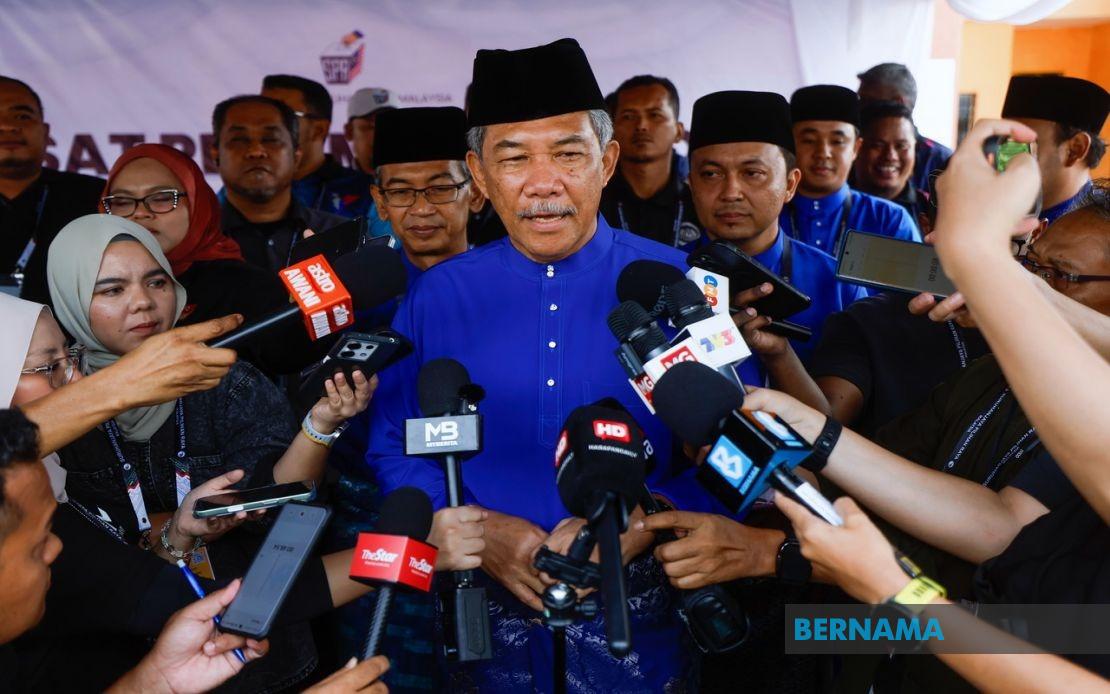
Barisan Nasional deputy chairman Datuk Seri Mohamad Hasan has sounded a stern warning to his party's election machinery, instructing them to refrain from leveraging matters tied to Negeri Sembilan's adat—the state's unique traditional customs and governance system—as campaign material in the upcoming 16th state election. Speaking at the nomination process in Rembau on July 18, Mohamad emphasised that preserving harmony throughout the electoral process requires political parties to maintain clear boundaries between democratic competition and sacred cultural institutions.
The UMNO deputy president's cautionary statement reflects growing concerns within BN's leadership that adat-related issues, given their sensitive standing within Negeri Sembilan's political and social fabric, carry particular risks when politicised. Negeri Sembilan's adat framework is deeply embedded in the state's constitutional arrangement and royal governance structure, making it fundamentally different from purely partisan policy matters. By drawing explicit attention to this boundary, Mohamad signalled to party candidates and campaign teams that certain subjects remain off-limits regardless of their electoral appeal.
During his remarks, Mohamad reiterated his position with directness, stating that party machinery must understand the distinction between legitimate campaign material and contentious cultural issues. He articulated that introducing adat matters into the political arena would serve only to complicate an already complex electoral landscape and generate avoidable discord. The warning underscores BN's recognition that Negeri Sembilan voters expect political parties to conduct campaigns with respect for the state's governing traditions, and that crossing this line could backfire electorally.
The Negeri Sembilan Legislative Assembly was dissolved on June 5, with the Election Commission subsequently scheduling early voting for July 28 and the main polling day for August 1. These tight timelines compressed the campaign period, making discipline and message control even more critical for all contesting parties. With 36 state seats at stake, both major coalitions are intensifying their ground operations, but Mohamad's directive suggests BN believes maintaining ethical campaign standards will ultimately strengthen rather than weaken their position.
Beyond his cautionary remarks on adat, Mohamad addressed the electoral understanding between BN and Perikatan Nasional, clarifying that both coalitions would maintain their existing arrangement rather than formalising a full merger similar to the model deployed in Johor. This tactical approach allows the two coalitions to coordinate strategically in constituencies where BN is not fielding candidates, thereby maximising their combined vote share and improving overall chances of securing victories across the state. Mohamad framed this as pragmatic cooperation focused on delivering results for both camps' candidates.
For Malaysian and regional observers, Mohamad's intervention highlights an often-overlooked dimension of state-level politics in Malaysia: the negotiation between modern electoral competition and traditional institutional frameworks. Negeri Sembilan's adat system, uniquely significant among Malaysian states, creates a governance context where cultural sensitivity genuinely shapes electoral legitimacy. Politicians who ignore this reality risk alienating voters who view adat-related matters as non-negotiable aspects of state identity rather than ordinary policy territory.
The BN deputy chairman's stance also signals internal party discipline. By explicitly prohibiting adat-related campaign messaging, Mohamad prevents ambitious candidates or local operatives from independently deciding to weaponise sensitive issues for short-term tactical advantage. This top-down messaging is crucial during compressed campaign periods when multiple campaign messages can proliferate rapidly without central coordination. Clear directives from party leadership help maintain message discipline across a large and decentralised party structure.
From a Southeast Asian perspective, Mohamad's approach reflects broader debates across the region about balancing democratic competitiveness with respect for traditional institutions. In several Southeast Asian democracies, electoral campaigns have occasionally inflamed sensitivities around customary governance, religious authority, or royal prerogatives. Malaysia's experience suggests that explicit leadership guidance setting campaign boundaries can help preserve both electoral authenticity and institutional respect, though enforcement remains an ongoing challenge.
The competitive dynamic between BN and PN adds another layer to these considerations. Both coalitions have incentives to distinguish themselves through campaign conduct, and Mohamad's warning positions BN as the responsible custodian of Negeri Sembilan's traditions. Should PN or any other contesting party venture into adat-related messaging, BN would likely leverage such incidents to portray themselves as more respectful of state identity. This reputational dimension makes maintaining campaign discipline economically rational from an electoral strategy perspective.
For Negeri Sembilan voters, the election ultimately turns on economic management, development priorities, and responsive governance rather than cultural symbolism. However, how parties conduct their campaigns reflects their underlying respect for the electorate and state institutions. Mohamad's intervention suggests that BN's leadership understands this calculus: campaigns conducted within recognised boundaries are more likely to produce durable electoral mandates than those that exploit sensitive cultural divisions. The coming weeks will demonstrate whether all contesting parties honour this implicit compact.

