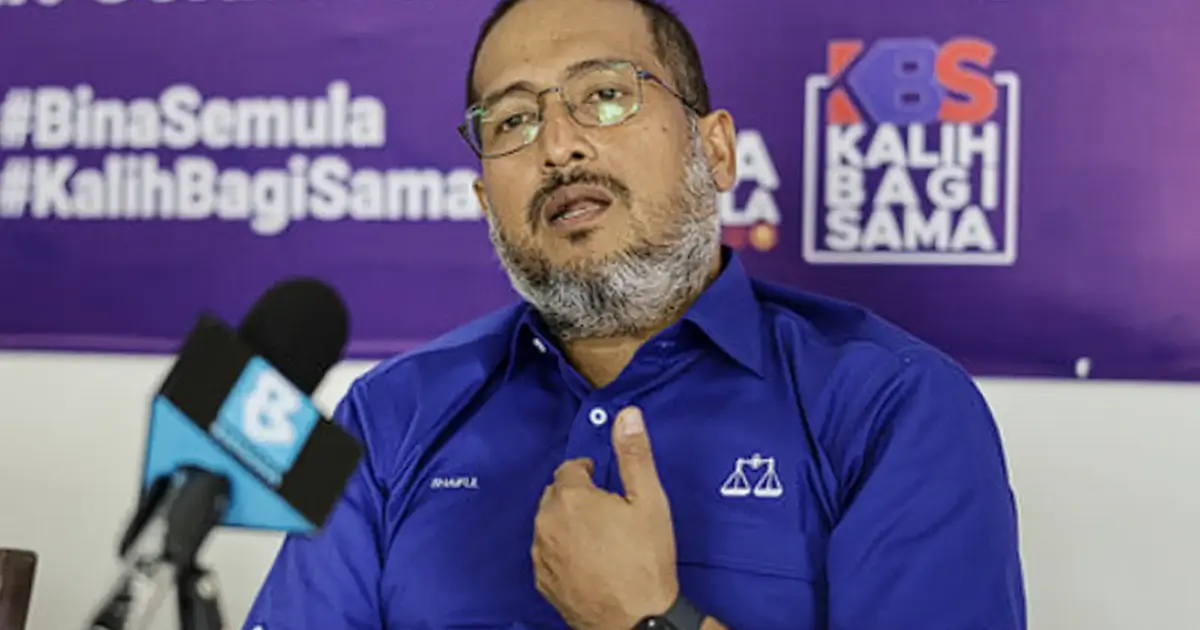
Kedah Umno has pushed back against using previous election results as the primary basis for determining seat distribution in any coalition arrangement between Barisan Nasional and Perikatan Nasional, signalling mounting tensions within discussions over a potential electoral partnership. Shaiful Hazizy Zainol Abidin, the party's information chief, contended that relying on past performance metrics ignores the considerable transformation in Malaysia's political environment and the volatility currently evident among voters across the country.
The statement reflects deeper concerns within Umno's Kedah machinery about how negotiations between the two major coalitions might disadvantage the party if historical data becomes the binding framework. Malaysian politics has undergone pronounced realignment in recent years, particularly following the 2022 general election, which produced a fractured parliament and complex coalition-building. Since then, voter preferences have continued shifting in response to economic conditions, policy debates, and leadership changes at both federal and state levels. What transpired during the 2022 election cycle therefore provides an increasingly unreliable snapshot for predicting electoral dynamics heading into any future contest.
The pace of political change in Malaysia has accelerated notably. Umno's revival in certain regions, the consolidation of Perikatan Nasional as a coherent political force in others, and the unpredictability of fence-sitting voters all argue against mechanically applying seat-sharing formulas derived from years-old results. Kedah, as one of the country's peninsular states, has experienced notable swings in voter mood, making the state party's caution particularly pointed. The assertion that voter sentiment undergoes rapid transformation acknowledges the reality that constituencies can shift dramatically between election cycles, influenced by local grievances, demographic changes, and the appeal of individual candidates rather than broad national trends alone.
This position by Kedah Umno carries significant implications for ongoing coalition negotiations. If seat allocations are pegged strictly to historical performance, parties that have been rebuilding might find themselves locked into disadvantageous arrangements that fail to reflect their current organisational strength or electoral appeal. Conversely, partners that benefited from particular circumstances in past elections might retain disproportionate influence despite changing conditions. The Kedah leadership appears to be advocating for a more flexible, contemporaneous assessment of which party can best capture votes in specific constituencies based on present-day factors rather than rearview-mirror calculations.
The warning also implicitly addresses concerns about internal party dynamics. Umno in various states, including Kedah, has been working to strengthen grassroots organisation and rebuild voter confidence following the party's electoral drubbing in 2022. A leadership that feels it has made genuine progress in reconnecting with constituents would naturally resist having its current position constrained by metrics from a period when the party was weaker. Shaiful Hazizy Zainol Abidin's intervention thus serves both a practical purpose—influencing seat negotiations—and an internal political function of reassuring Umno members that party leadership recognises and will fight for evidence of the party's recovery.
For Perikatan Nasional, which has strengthened its position in several states and at the federal level, the statement represents a potential complication. If seat deals are renegotiated based on current rather than historical strength, PN might find its gains in recent years—particularly in states like Terengganu and Kelantan—subject to renewed bargaining. This dynamic suggests that conversations between BN and PN remain fluid and contested, with neither side willing to accept frameworks that might lock in outcomes from a different political era.
The broader context of Malaysian coalition politics also matters here. Since no single party commands an outright majority at the federal level, future elections are likely to result in another hung parliament or a very slim majority situation. This reality makes seat negotiations unusually complex, as minor gains or losses in specific constituencies could prove decisive in determining which coalition commands the numbers to form government. Parties therefore have heightened incentive to ensure their seat allocations reflect realistic assessments of where they can actually win, rather than accepting distributions based on outdated performance.
Should BN and PN move toward formalising any alliance ahead of the next general election, the questions raised by Kedah Umno will require substantive resolution. Third-party observers, including political analysts and economists, have warned that prolonged uncertainty about seat arrangements could itself dampen investment and economic planning. Clarity on coalition membership and seat distributions, even if contested during negotiations, eventually provides the stability that markets and international investors value. The Kedah intervention suggests such clarity may still be distant.
The statement ultimately reflects the reality that Malaysia's political parties remain locked in a complex dance of cooperation and competition. Umno and PN may coordinate on certain national issues while simultaneously viewing each other as rivals in specific states and constituencies. This compartmentalised relationship—where parties can be partners at one level and competitors at another—makes the mechanics of seat allocation genuinely difficult to resolve through simple reference to past results. Kedah Umno's caution thus amounts to a practical acknowledgement that contemporary Malaysian politics defies tidy mathematical solutions based on historical precedent alone.

