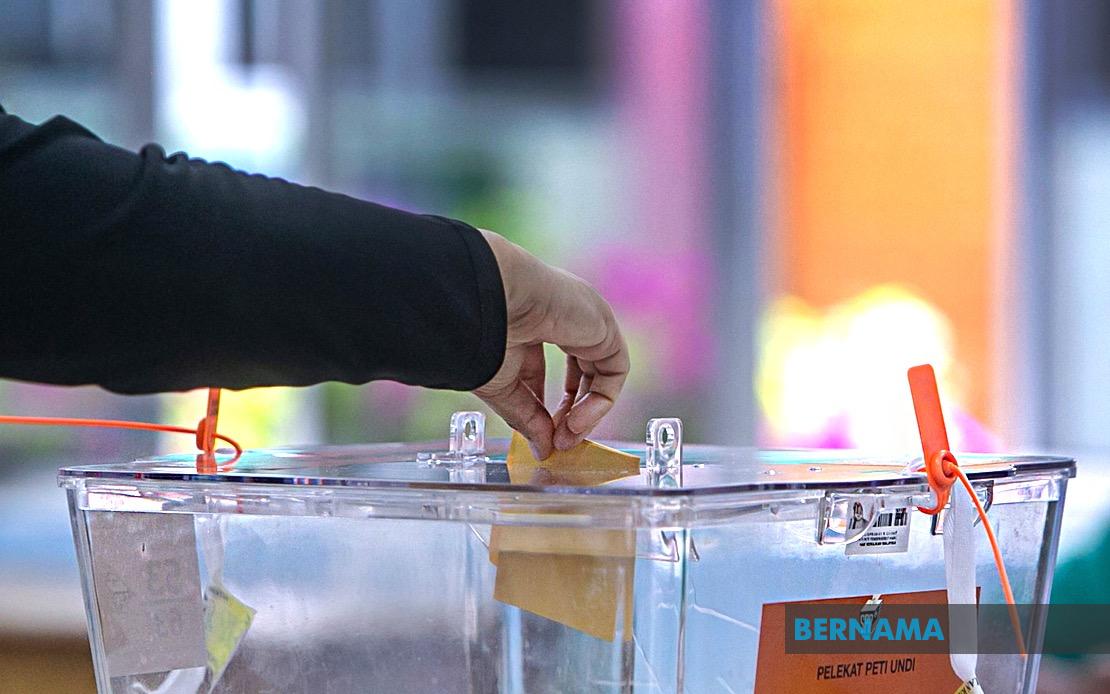
The Ministry of Youth and Sports has moved to remove barriers preventing student voters from participating in elections by directing all Youth and Sports Skills Training Institutions to grant special leave for those wishing to cast their ballots in general elections, state elections, or by-elections. The directive, issued through the Youth Skills Development Division, aims to reconcile citizens' fundamental democratic rights with the institutional demands placed on trainees at these facilities across the country.
The initiative reflects a policy position that voting represents far more than a simple administrative obligation—it is framed as the exercise of civic responsibility that shapes the nation's trajectory. Ministry officials emphasized that students should not face a false choice between fulfilling their educational and training commitments and discharging their duties as citizens. By regularizing special leave provisions, the government seeks to normalize electoral participation among younger generations currently enrolled in vocational and skills development programmes.
Institutions have been given clear guidelines for processing these leave requests. Approvals will consider multiple practical factors including the distance from the training facility to the student's assigned polling centre, realistic travel times necessary to reach the voting location, and the feasibility of rescheduling or adjusting training schedules to accommodate absences. Each application will pass through the respective institution's management structure, ensuring that decisions remain contextual rather than automatic, while maintaining systematic oversight of attendance records.
The policy requires early notification of eligible student voters so that applications can be submitted well in advance of election dates. This proactive approach allows trainees to arrange their travel logistics in an orderly fashion rather than making last-minute requests that could disrupt institutional planning. By institutionalizing advance notice procedures, the Ministry aims to transform electoral participation from an unexpected interruption into a planned, coordinated activity that minimizes disruption to training schedules.
Approval remains discretionary at the institutional level, reflecting the necessity for individual directors to balance competing demands on their facilities' operations. The welfare and safety of students remain paramount considerations, suggesting that leave might be denied in circumstances where travel would be inadvisable or where training schedules contain critical components that cannot be easily rescheduled. This flexibility acknowledges that blanket policies must accommodate diverse institutional contexts and student circumstances.
For Malaysian readers, this directive carries particular significance in the context of youth engagement with electoral processes. Skills training institutions serve a crucial pipeline function, preparing young people for workforce entry during formative years when civic habits are still being established. By facilitating rather than impeding voting, the Ministry sends a clear message that democratic participation is not peripheral to national development but integral to it.
The policy also addresses a demographic consideration relevant throughout Southeast Asia. Younger voters often face greater practical obstacles to participation due to work and educational commitments. By removing institutional barriers, Malaysia joins other democracies in recognizing that sustained electoral legitimacy depends on broadening access rather than accepting structural impediments to participation. Students who vote while in training are more likely to maintain voting habits throughout their professional lives.
From an administrative perspective, the directive represents a shift toward treating educational institutions as facilitators of citizenship rather than as entities separate from or competing with civic life. The coordination required between training schedules and electoral calendars reflects an acknowledgment that modern democracies must integrate rather than compartmentalize different aspects of citizens' lives and responsibilities.
The Ministry's emphasis on responsible voting adds a normative dimension to the policy. Officials urge students not merely to vote, but to do so conscientiously, framing electoral participation as part of youth contribution to strengthening democratic institutions and national development. This language suggests that the Ministry views voting as developmental—a habit-forming exercise that cultivates civic consciousness beyond the immediate act of casting a ballot.
Implementing such a policy across multiple institutions scattered throughout Malaysia will test coordination between federal Ministry directives and institutional autonomy. Training centre directors will navigate the tension between accommodating electoral participation and maintaining training programme integrity. How flexibly institutions interpret the guidelines will likely vary based on programme structure, institutional culture, and director judgment regarding individual circumstances.
Looking forward, this directive may establish precedent for broader recognition of electoral access as a public policy priority. If student voter participation increases and causes no measurable disruption to training outcomes, momentum may build for extending similar accommodations to other institutional settings. The policy thus functions as both an immediate practical measure and a potential catalyst for reconsidering how government agencies facilitate versus obstruct citizen participation in electoral processes.

