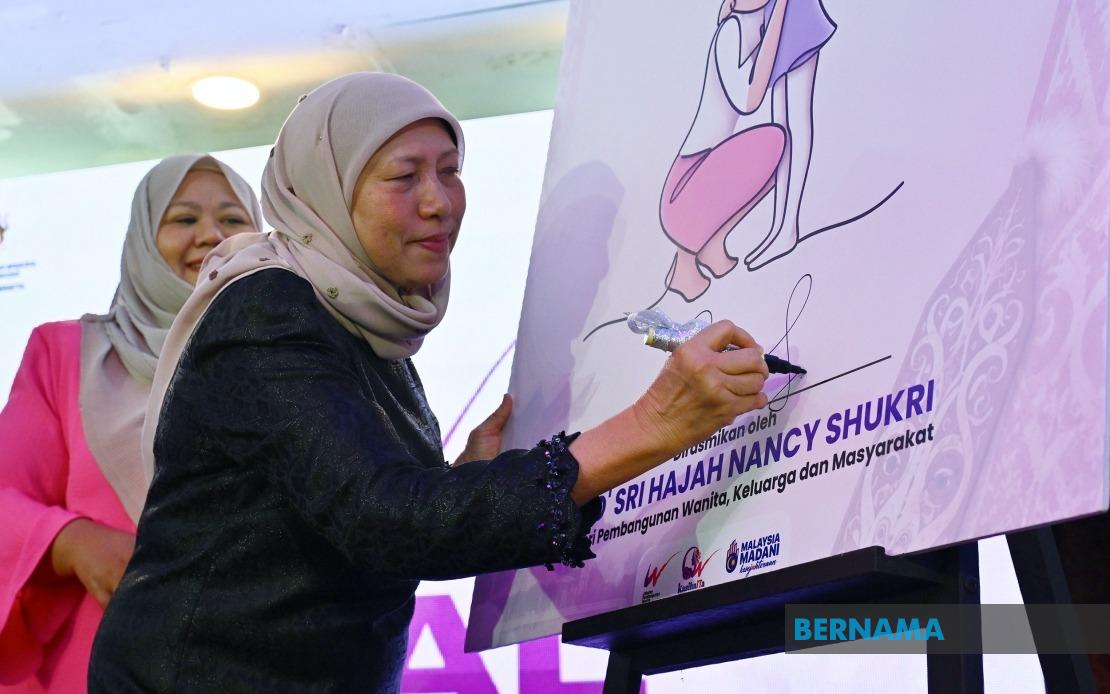
The Ministry of Women, Family and Community Development has expanded its Single Mothers Support programme, known as KasihnITa, into Sarawak as part of a phased rollout aimed at strengthening support systems for one of Malaysia's most vulnerable demographic groups. Minister Datuk Seri Nancy Shukri formally inaugurated the state-level initiative in Kuching on July 19, marking another milestone in a programme that has previously been deployed in Selangor and now brings integrated assistance to single mothers across the peninsula and East Malaysia.
The initiative represents a coordinated approach to tackling the multifaceted challenges faced by single mothers, who often navigate complex financial, legal and social circumstances with limited resources. Rather than operating in silos, KasihnITa brings together an ecosystem of specialised government bodies including the Credit Counselling and Debt Management Agency, Bank Negara Malaysia, the Legal Aid Department and the Syariah Judiciary Department. This convergence of expertise allows single mothers attending the programme to access comprehensive guidance spanning personal finance management, debt resolution strategies and legal protections in one facilitated setting.
The Sarawak rollout attracted approximately 130 participants across a three-day workshop format, providing an intensive opportunity for women to gain practical knowledge and connect with peer support networks. The programme equips attendees with concrete financial management skills designed to enhance household budgeting, savings discipline and long-term economic planning. For many single mothers operating with tight margins and competing financial pressures, such knowledge transfer can translate into tangible improvements in family stability and children's welfare outcomes.
A critical component of KasihnITa addresses a persistent challenge within Malaysian family law: enforcement of child maintenance obligations. The Legal Aid Department and Syariah Judiciary Department representatives provide counselling on recourse options when ex-husbands fail to comply with court-ordered maintenance payments. This is particularly significant because maintenance disputes frequently leave children vulnerable to reduced educational opportunities, healthcare access and basic provisions. By demystifying the legal process and connecting mothers with free or subsidised legal support, the programme reduces barriers to enforcement action.
Minister Shukri emphasised that the Ministry's approach is deliberately evidence-based, with KasihnITa designed as a feedback mechanism to inform future policy refinement. By gathering direct input from programme participants about gaps in existing services and unmet needs, the government creates a channel for single mothers themselves to shape the policy landscape affecting them. This participatory design principle addresses a historical weakness in social policy formulation, where beneficiary voices are often marginalised in decision-making processes.
The expansion to Sarawak carries particular significance given the state's geographic dispersion and unique demographic circumstances. Rural single mothers in Sarawak often face greater isolation and reduced access to government services compared to their counterparts in urban Klang Valley. By bringing KasihnITa to the state, the Ministry extends support infrastructure to communities where single-parent households may lack proximity to financial counselling, legal advice or welfare registration services. This geographic stratagem aligns with broader inclusivity objectives stated by the Minister.
The psychological and social dimensions of the programme should not be underestimated. Single mothers frequently internalise stigma and experience isolation despite their substantial contributions to family and society. KasihnITa creates structured spaces where participants can share experiences, establish peer networks and collectively problem-solve challenges. Research on social support demonstrates that such peer-to-peer interaction mechanisms produce lasting improvements in resilience and mental wellbeing, complementing the instrumental benefits of financial and legal instruction.
From a policy perspective, KasihnITa reflects Malaysia's incremental mainstreaming of gender-sensitive social protection frameworks. Rather than treating single mothers as welfare recipients requiring charity, the programme positions them as economically productive actors who benefit from targeted knowledge and institutional access. This framing carries implications for how future support programmes are conceptualised across the social welfare apparatus, potentially spurring adoption of similar capacity-building approaches in related domains.
The phased geographic expansion strategy also indicates the Ministry's recognition that nationwide rollout requires adequate resource allocation and quality assurance. By deploying in stages across Selangor and now Sarawak, officials can refine programme delivery, assess outcomes and adapt content to regional contexts before further scaling. This deliberate approach contrasts with hurried nationwide launches that often falter due to implementation weaknesses.
For single mothers themselves, particularly those managing multiple income sources, childcare responsibilities and often limited educational credentials, access to formal financial counselling and legal guidance represents a tangible boost to household management capability. Many single mothers lack access to informal advice networks that other demographic groups take for granted; institutionalised programmes like KasihnITa partially compensate for these asymmetries in social capital.
Moving forward, the success of KasihnITa will depend on sustained funding, sufficient staffing of participating agencies and sustained commitment to reaching marginalised single mothers, particularly in rural and indigenous communities where participation barriers remain substantial. The programme's emphasis on policy feedback suggests that subsequent iterations should incorporate outcome metrics tracking whether participants achieve measurable improvements in financial stability, legal dispute resolution and family welfare outcomes.

