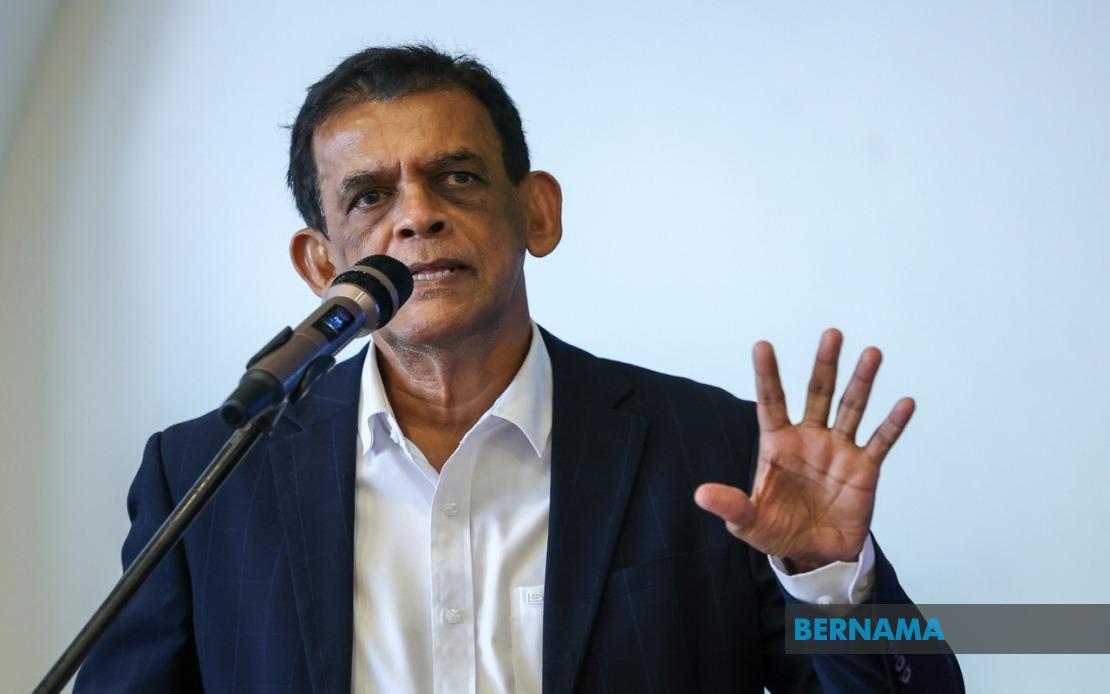
The Malaysian music industry faces a critical juncture as the Malaysian Artistes' Association (Karyawan) prepares to escalate sectoral concerns directly to the highest level of government. Following a Music Practitioners Convention scheduled for Sunday at Saloma Restaurant in Kuala Lumpur, Karyawan president Datuk Freddie Fernandez announced that the organisation will compile a comprehensive memorandum of resolutions to present to the Prime Minister, signalling the growing urgency of structural reform within the creative sector.
The convention represents a significant moment of reckoning for an industry that has witnessed what Freddie describes as two decades of concerning drift. By convening more than 200 artistes and music professionals, Karyawan seeks to transform individual grievances into a coordinated, evidence-based advocacy platform. This grassroots consultation model—gathering practitioners before formulating policy positions—reflects a pragmatic approach to building consensus around divisive issues that have long festered within the sector without adequate resolution mechanisms.
Among the most contentious matters is the persistent inequity in royalty distribution, a structural problem that has plagued Malaysian musicians for generations. Government records examined by Karyawan reveal a stark disparity: between 2002 and 2017, record companies collected approximately RM700 million in aggregate royalties, yet artists' bodies received only around RM20 million in disbursements. This 35-to-1 ratio underscores systemic inefficiency or, depending on one's interpretation, a fundamental misalignment of incentives within the collection and distribution infrastructure. For emerging and mid-career musicians dependent on performance royalties, such leakage represents the difference between sustainable livelihoods and economic precarity.
The memorandum will cast a wider net than royalties alone, addressing the thorny question of how the music industry should govern artificial intelligence technologies. As AI-driven music generation and voice synthesis become technically feasible and commercially attractive, musicians worry about displacement and the erosion of their negotiating power with platforms and producers. Freddie has signalled that Karyawan seeks balanced guidelines—frameworks that neither stifle innovation nor leave practitioners unprotected. This reflects a maturing understanding that blanket opposition to technological change is neither credible nor sustainable; instead, the music sector must articulate its interests within a rapidly evolving technological landscape.
Career development and music education represent another pillar of the forthcoming recommendations. Freddie emphasised that the industry must offer young talent clearer pathways, more structured mentorship, and transparent information about viable career trajectories in music. Currently, aspiring musicians often lack institutional guidance on sustainable income models, rights management, collaboration opportunities, and professional development. By institutionalising such support, Karyawan hopes to professionalize the sector and reduce the arbitrary factors that currently determine who succeeds and who abandons music careers.
The convention itself functions as both catalyst and testimony to industry unease. Panels featuring prominent figures—including music activist Joe Lee, composer Dr Moja Salim, and Live Nation managing director Para Rajagopal—will provide platforms for practitioners to articulate grievances, seek clarification on confusing or contradictory policies, and collectively identify priority reform areas. This deliberative process, unfolding over a single day beginning at 10 am on Sunday, aims to distil complex sectoral challenges into actionable recommendations suitable for government consideration.
Freddie's framing of the convention as addressing "unhealthy developments" in the industry carries particular weight given his two decades of observation. His willingness to invoke the need for "renewal" signals recognition that incremental adjustments are insufficient; the foundational architecture of the music industry requires examination and potential reconfiguration. Whether this includes proposed industry legislation, revised regulatory frameworks, or enhanced direct support for artistes remains to be clarified in the final memorandum, but the trajectory is clear: the status quo is unsustainable.
The timing of this initiative merits scrutiny. As Malaysia navigates broader economic transitions and seeks to position itself as a creative economy powerhouse, the music sector's persistent structural problems have become increasingly visible. International attention to artists' rights, fuelled by global debates over streaming economics and platform accountability, has created political space for local reform advocacy. Karyawan's decision to escalate its concerns to the Prime Minister reflects confidence that the moment for systemic change has arrived.
For Malaysian musicians and the broader creative ecosystem, the forthcoming memorandum could represent a watershed. Should the government respond substantively—through legislation, funding mechanisms, or institutional reform—the convention will be remembered as the catalyst for long-overdue modernisation. Conversely, if the memorandum languishes without action, the episode may amplify frustration within the creative sector and fuel migration of Malaysian talent to more supportive jurisdictions.
The inclusion of royalty analysis, AI governance, education initiatives, and career support infrastructure within a single memorandum reflects systemic thinking about industry challenges. These issues are interlocking: inadequate royalties make music careers precarious, deterring young talent from formal music education; unclear AI policies create uncertainty about future income streams; and fragmented career pathways result in talent wastage. By addressing these dimensions in concert, rather than piecemeal, Karyawan positions itself as offering integrated solutions rather than isolated complaints.
As the convention approaches, the music industry's eyes will be fixed on whether Karyawan can translate the diverse concerns of 200 practitioners into a coherent, politically compelling agenda. The credibility of the final memorandum—and the likelihood of government action—will depend substantially on how persuasively Karyawan synthesizes evidence, articulates musician interests, and frames reform as essential to Malaysia's creative economy ambitions. The next week promises to be consequential for an industry long accustomed to marginalisation within broader cultural and economic policy discussions.