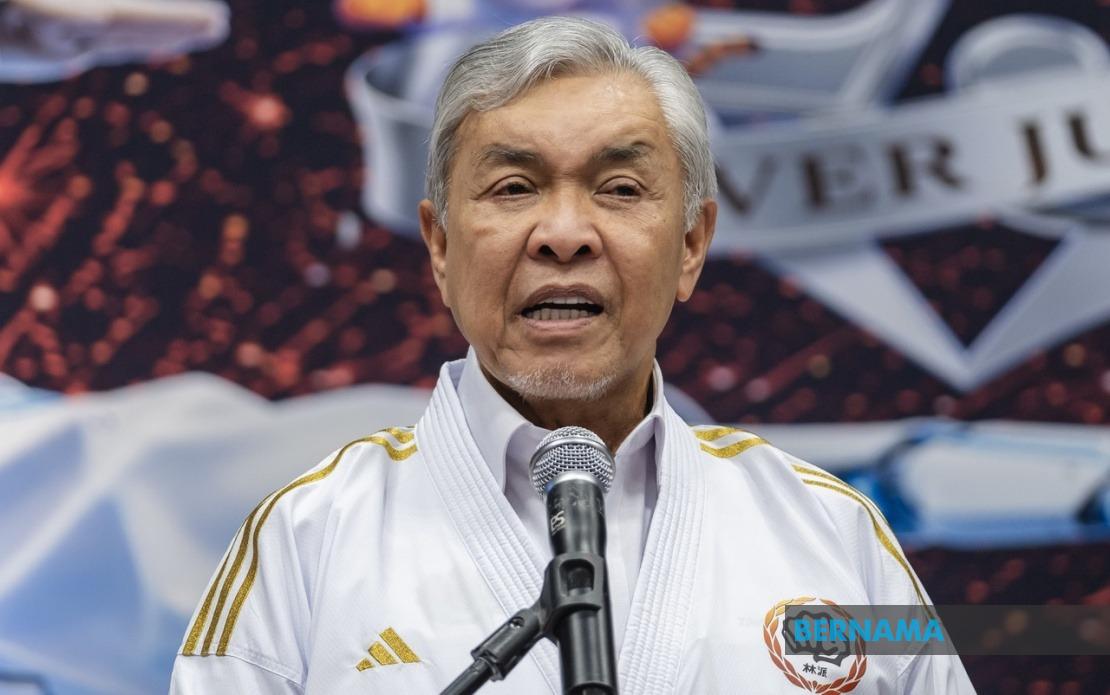
The Malaysian government is moving closer to formally recognising karate within the school sports system, with plans to table the proposal at Cabinet level within days. Deputy Prime Minister Datuk Seri Dr Ahmad Zahid Hamidi, who chairs the Cabinet Committee on Sports Development, revealed the timeline after presiding over the International Open Karate Championship 2026 at Titiwangsa Stadium in Kuala Lumpur on June 26. The push to integrate karate into Malaysia's premier school competition framework represents a significant shift in how the sport is positioned within the national athletic ecosystem, signalling growing momentum for its institutional recognition.
Ahmad Zahid indicated that Education Minister Fadhlina Sidek will be formally approached to evaluate karate's suitability for inclusion in the Malaysian Schools Sports Council (MSSM) calendar. The Cabinet's intervention suggests the matter carries sufficient weight among senior government figures to warrant executive consideration rather than remaining at departmental level. This political backing may accelerate decision-making and provides a clear pathway for karate advocates who have long campaigned for greater integration within Malaysia's school sports structure, where MSSM competitions serve as a critical pipeline for identifying and developing young athletic talent across the country.
The initiative comes at an opportune moment, as the International Open Karate Championship 2026 continues to demonstrate the sport's growing infrastructure and participation base within Malaysia. Now entering its 25th year of operation, the tournament attracted more than 1,850 competitors representing 17 countries, underlining the competitive sophistication and international standing karate has achieved locally. Such large-scale events provide tangible evidence to policymakers that the sport commands substantial participant numbers and organisational capacity, addressing potential concerns about whether karate possesses the grassroots foundation necessary for successful integration into a national school competition framework.
Putrajaya Karate Association president Datuk P. Thiagu, who also spearheaded the tournament organisation, has been instrumental in articulating the case for MSSM inclusion as a strategic priority for the sport's future development. Thiagu argues that incorporating karate into the school championships would fundamentally strengthen talent pathways by creating structured competitive opportunities at the grassroots level, where most athletic development occurs. The association's reasoning reflects broader international experience, where school-based competition calendars serve as essential mechanisms for talent identification, coach development, and the normalisation of sport participation among young people.
The relationship between school sports participation and elite athlete production remains a cornerstone of sports development policy across Southeast Asia. By positioning karate within MSSM competitions, Malaysia would create formal recognition and support mechanisms that currently exist for established sports like badminton, athletics, and swimming. This institutional embedding typically translates into enhanced funding visibility, dedicated coaching allocation, and improved equipment provision—factors that substantially influence whether talented young practitioners remain engaged with a discipline through secondary education and into university-level competition.
Karate's growing popularity within Malaysian schools has already been observed by administrators and sports officials, suggesting that demand for formal competition pathways already exists among the student population. However, popularity alone is insufficient for inclusion in a crowded MSSM calendar, where administrators must balance numerous competing requests from different sports seeking recognition and resources. The Cabinet-level attention now being directed toward karate's case indicates that proponents have successfully elevated the discussion beyond routine administrative channels, implying senior officials perceive strategic value in the inclusion proposal.
The timing of this development also reflects broader shifts in global sports policy, where karate's inclusion in the Olympic Games has elevated its international profile and encouraged national governments to invest more substantially in development infrastructure. Japan's successful integration of karate into its school sports system, combined with its Olympic status since Tokyo 2020, provides a compelling template that Malaysian policymakers can reference when evaluating domestic inclusion possibilities. Such international precedents often carry significant weight in bureaucratic decision-making, as they reduce perceived risk and provide evidence-based frameworks for implementation.
Implementing karate within MSSM would require coordination across multiple stakeholder groups, including school administrators, state education departments, and the national sports governing body. Thiagu's expressed hope for near-term implementation may prove optimistic given the bureaucratic complexity inherent in modifying established competition calendars, but the Cabinet's scheduled review suggests momentum is building toward resolution. Any delay in formal approval would likely prove frustrating for karate's advocates, particularly given the sport's demonstrated capacity to attract large participant numbers and international competition.
For Malaysian schools specifically, karate's addition would diversify sporting offerings beyond traditional disciplines and potentially appeal to students seeking non-contact or alternative competitive experiences. The sport's emphasis on discipline, respect, and technical precision also aligns well with educational institutional values, potentially enhancing its appeal to school administrators concerned with holistic student development. Furthermore, karate's relatively modest infrastructure requirements compared to sports like football or basketball may address concerns about facility constraints in schools operating with limited sporting amenities.
The broader implications for Southeast Asian sports development could prove significant if Malaysia successfully integrates karate into its school system. Other regional nations often observe policy innovations introduced by larger neighbours, and a successful Malaysian model could encourage similar moves across Indonesia, Thailand, and the Philippines. This potential regional ripple effect underscores why the Cabinet's consideration of this proposal warrants attention beyond karate enthusiast circles, representing one of those incremental policy shifts that can gradually reshape how entire regions approach sports development architecture.

