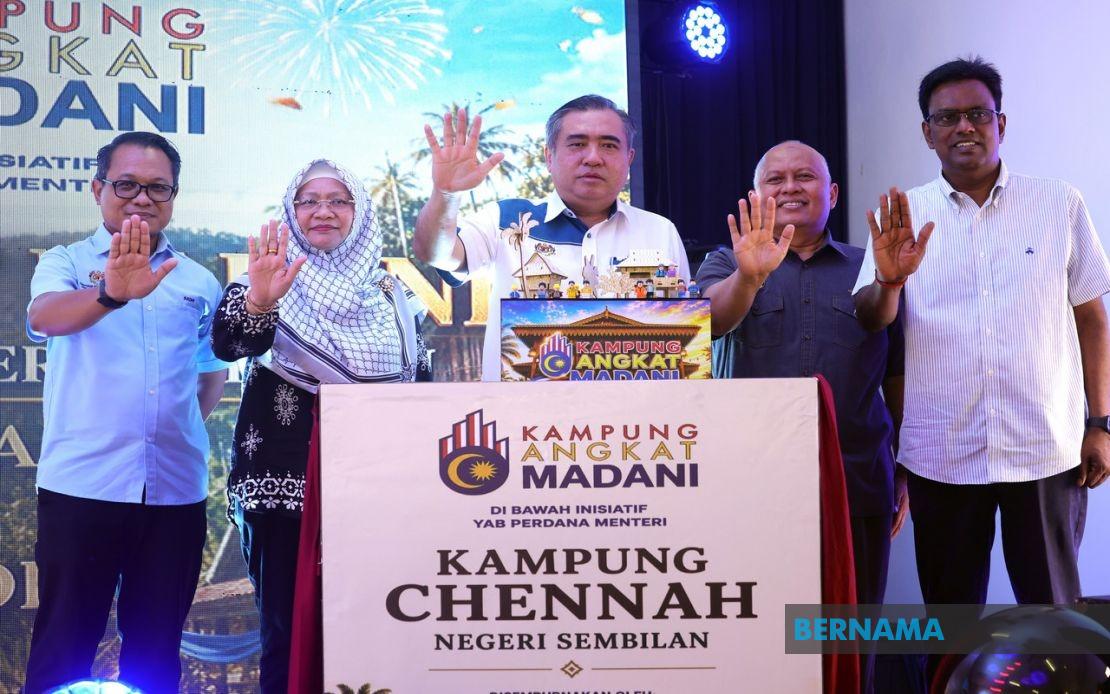
Transport Minister Anthony Loke Siew Fook has moved to dispel suggestions that the Kampung Angkat MADANI programme is part of election-year politics, instead characterising it as a continuation of a nationwide rural development initiative launched two years ago. Speaking in Jelebu on July 12, Loke explained that the phased rollout targets villages facing significant infrastructure deficiencies and socio-economic challenges, particularly those situated in remote areas away from established urban centres.
The minister stressed that implementation of such programmes must proceed before the official nomination day of any election cycle, in compliance with conventions limiting government activities during campaign periods. He highlighted that Prime Minister has introduced this as part of a broader shift towards a new administrative culture that reinforces the separation between governance duties and electoral activity. This directive extends even to ministers themselves, who are barred from attending official government functions in constituencies actively engaged in elections, though they continue performing their ministerial responsibilities elsewhere.
Loke's comments came during the launch of the Land Public Transport Agency's iteration of Kampung Angkat MADANI at Kampung Chennah, which was selected based on its geographic isolation and infrastructure needs. The government has committed RM500,000 to execute five distinct projects in the village, addressing longstanding community concerns. These initiatives include structural upgrades to the existing library facility, comprehensive refurbishment of the futsal court, and critical improvements to the drainage infrastructure surrounding the local mosque. All projects are scheduled for completion within two to three months, with the ministry pledging close oversight to ensure timely delivery.
This programme reflects a broader pattern since Loke's implementation last year, which has already extended to various communities including an Orang Asli settlement in Lenggeng. The initiative demonstrates the government's methodology of surveying village-level requirements through multiple agencies before deploying targeted development resources. By identifying specific deficiencies in remote settlements, authorities can tailor interventions to address genuine local priorities rather than applying generic solutions across diverse communities with distinct challenges.
The clarification carries particular significance for Malaysian voters monitoring government conduct during election periods. The establishment of clear protocols separating administrative functions from electoral activity represents an institutional safeguard against instrumentalising public resources for partisan advantage—a concern that regularly surfaces during contested elections. By pre-emptively implementing programmes and establishing transparent timelines, the government demonstrates compliance with electoral propriety standards that voters and observers have increasingly scrutinised.
For rural communities in Southeast Asia, such targeted infrastructure programmes address persistent development gaps that often leave remote villages behind during periods of economic growth concentrated in urban areas. Kampung Chennah's selection illustrates how government agencies can identify and prioritise underserved populations when systematic needs assessments guide resource allocation. The focus on basic amenities—library facilities, recreational spaces, and sanitation infrastructure—reflects priorities that directly enhance daily life quality in ways that residents themselves likely identified.
Loke's expansion of the Transport Ministry's mandate beyond its traditional regulatory purview into community development projects signals an evolving understanding of government agencies' roles in national development. Rather than limiting portfolios to sectoral oversight, ministries increasingly recognise their capacity to contribute to broader socio-economic objectives through targeted community engagement. This approach potentially creates opportunities for integrated development where transport policy intersects with rural connectivity and accessibility challenges.
The timing of Loke's statement itself warrants attention, as it proactively addresses potential perceptions of political motivation rather than waiting for opposition criticism. This forward-looking communication strategy may reflect lessons learned from previous election cycles where government initiatives faced credibility questions. By establishing clear programme timelines and explicitly referencing compliance with electoral conduct guidelines, authorities attempt to reduce political controversy around development spending during sensitive periods.
For regional observers and development practitioners, the Kampung Angkat MADANI framework offers insight into how emerging democracies balance governmental efficiency with electoral integrity principles. The programme's two-year track record provides evidence of sustained commitment rather than one-off initiatives, lending credibility to claims of systematic rather than opportunistic implementation. This institutional consistency matters for building public confidence that development priorities rest on genuine need assessment rather than fluctuating political calculations.
The RM500,000 allocation to Kampung Chennah represents modest but meaningful investment in rural infrastructure that addresses cumulative neglect in communities distant from commercial and administrative centres. Such targeted spending acknowledges that uniform per-capita development approaches often fail to serve populations with concentrated needs in specific geographic areas. By concentrating resources where infrastructure gaps most severely constrain community development, the government maximises impact per ringgit spent.

