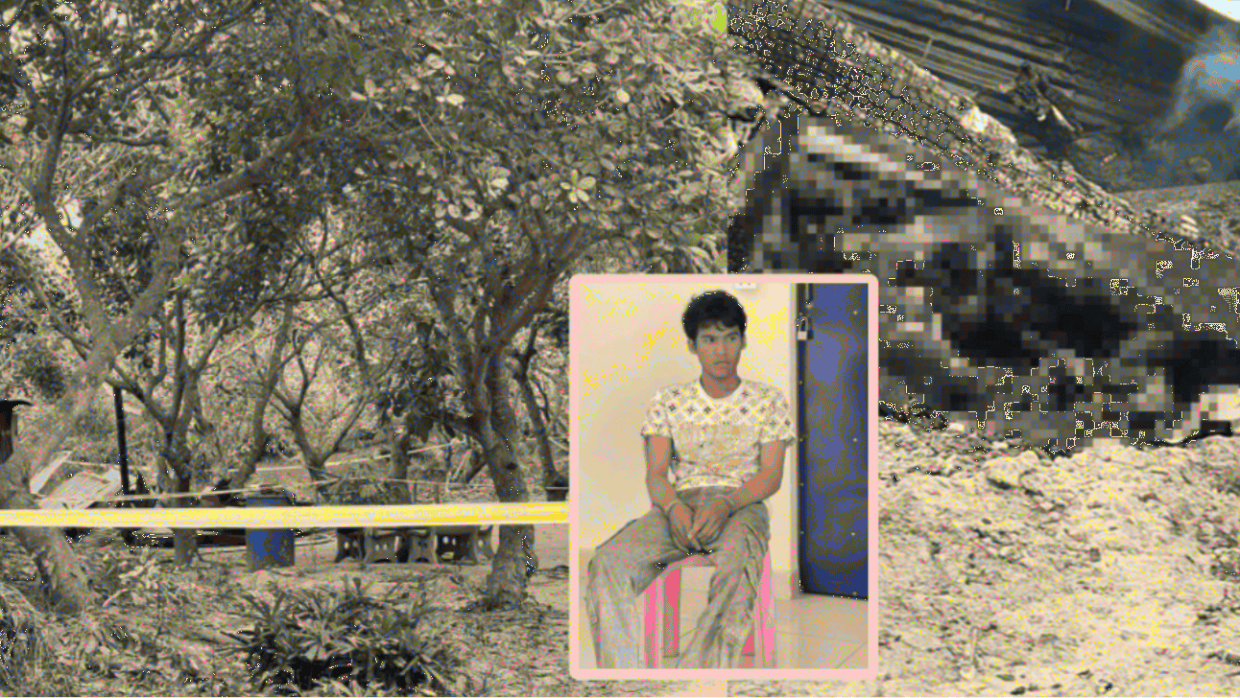
A Cambodian court has delivered its verdict in one of the country's most shocking family violence cases, sentencing a young man to life imprisonment for the premeditated murders of nine relatives in a single savage attack. The Kampong Cham Provincial Court issued its judgment on July 30 against Soben Minea, finding him guilty of both murder and premeditated murder in connection with the killings that occurred in Tuol Sambuor village and commune, within Stueng Trang district of Kampong Cham province. The maximum possible penalty under Cambodian law—life imprisonment—was imposed on the defendant, now 19 years old, reflecting the gravity and brutality of the crimes.
The court's documented findings reveal the horrifying nature of the attack. According to the verdict, Minea decapitated one family member before methodically setting fire to a residential house, resulting in the deaths of eight additional victims who were asleep inside at the time of the arson. The incident unfolded on November 23, 2025, in the Kien Khleang area, demonstrating how a single act of violence spiralled into multiple fatalities through calculated actions. The verdicts underscored the premeditated nature of the assault, distinguishing between opportunistic violence and carefully planned harm—a critical legal distinction that influenced the severity of sentencing.
Beyond imprisonment, the provincial court imposed substantial financial penalties on Minea. He was ordered to compensate the civil plaintiffs with US$20,000 in moral damages, a significant sum intended to provide some measure of restitution to surviving family members who suffered incalculable loss. However, questions remain regarding whether the young defendant possesses any realistic means to satisfy this financial obligation, raising concerns about whether such awards constitute symbolic justice rather than meaningful compensation for grieving relatives.
Investigative disclosures surrounding the case have shed light on the psychological and relational factors that preceded the tragedy. During questioning, Minea confessed to harbouring deep-seated resentment towards his wife stemming from a pattern of domestic disputes that had accumulated over time. His admissions identified the victims as including his mother-in-law, spouse, brother-in-law, and several younger relatives, suggesting that family relationships themselves became the backdrop for catastrophic violence. The case illustrates how unresolved marital conflict and simmering resentment, left unchecked within a household setting, can escalate into extreme and irreversible harm affecting an entire extended family network.
The severity of this case resonates across Southeast Asia as a stark reminder of the potential consequences of domestic violence when left unaddressed. Family disputes, particularly those rooted in marital discord, represent a significant proportion of violent crimes throughout the region. Malaysia and other Southeast Asian nations have increasingly focused on domestic violence prevention through counselling services, legal protections, and community intervention programs. This Kampong Cham case underscores why such preventative measures deserve sustained investment and why early intervention in deteriorating family relationships can literally be lifesaving.
The case also reflects broader patterns within Cambodia's criminal justice system, where courts have increasingly pursued rigorous prosecution of family violence offences in recent years. By imposing life sentences in particularly brutal cases, the judiciary aims to send clear messages about the seriousness with which such crimes are treated and to deter potential offenders. However, the sentence's effectiveness as a deterrent may be limited when the underlying causes of familial violence—poor mental health services, inadequate domestic violence support infrastructure, and limited access to conflict resolution resources—remain insufficiently addressed.
From a Southeast Asian perspective, the case highlights disparities in social support systems across the region. While developed nations offer multi-layered interventions including crisis hotlines, shelter networks, counselling services, and mandatory arrest policies for domestic violence, many Southeast Asian communities rely on more informal mechanisms such as family mediation and village elder involvement. The trajectory from domestic dispute to mass murder in this instance suggests that whatever informal systems existed in Minea's community proved insufficient to arrest his deteriorating mental state or curb his violent impulses.
The psychological profile of a 19-year-old perpetrator of such extreme violence warrants consideration. Young offenders who commit crimes of this magnitude often display warning signs including social isolation, difficulty managing anger, access to weapons or tools that facilitate violence, and exposure to previous trauma. Whether Minea exhibited identifiable warning signs and whether mental health or social services were accessible to his family remain unanswered questions that could inform prevention strategies elsewhere in the region.
As Cambodia's legal system progresses, questions emerge about rehabilitation prospects and long-term imprisonment management. Life sentences in developing nations can present significant resource and facility challenges. How prisons accommodate young offenders serving life terms, whether educational or psychological rehabilitation programmes are available, and what long-term detention conditions entail remain pertinent considerations for regional criminal justice standards and human rights oversight.

