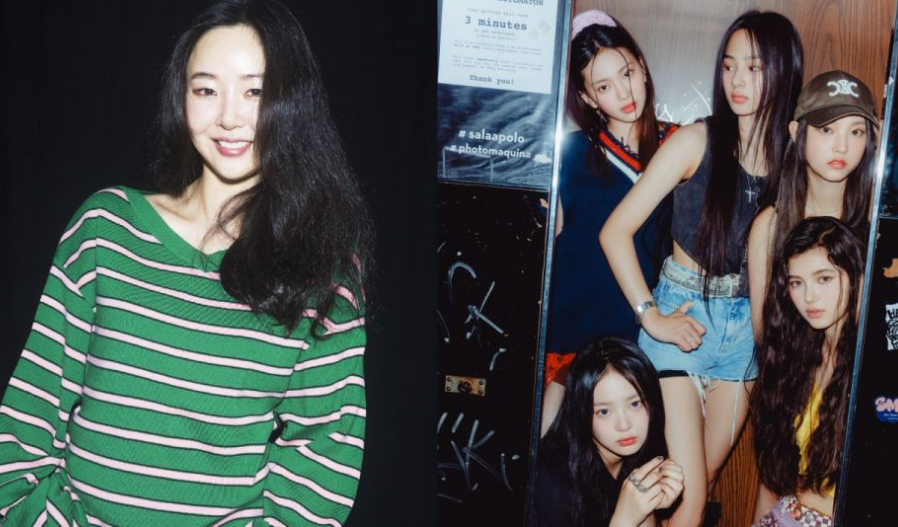
The ongoing dispute between K-pop agency Ador and its former leadership has taken a sharper turn, with the company presenting what it characterises as damning evidence that ex-chief executive Min Hee-jin actively orchestrated girl group NewJeans' departure from the label rather than simply offering advisory support. During the third hearing in a damages case on July 2, Ador submitted an audio recording from September 2, 2024, which the agency says captures Min instructing the members' parents that an upcoming YouTube live stream "must go ahead" as it would create documentary evidence for a future lawsuit to dissolve their exclusive contracts. This assertion directly contradicts Min's earlier public claims that she had actively discouraged the group from holding the broadcast and that they had independently made that decision.
The significance of the audio recording lies in its timing and context. It predates the September 11 live stream in which all five NewJeans members publicly demanded that Ador's parent company Hybe reinstate Min as chief executive within a specified deadline, citing concerns that management changes had compromised the group's creative identity and artistic direction. By presenting this recording, Ador seeks to establish that Min did not merely react to the members' wishes but rather strategically orchestrated events to build legal ammunition for contract termination. This distinction carries profound implications for how South Korean courts evaluate employer-employee relationships and the boundaries of advice versus direction in entertainment industry contexts.
The underlying conflict emerged when Hybe removed Min from her position at Ador in August 2024, justifying the decision through organisational restructuring aimed at separating management from production functions. However, Ador alleged at the time that Min had attempted to seize control of the agency's management structure and extract NewJeans from corporate oversight. Following Hybe's refusal to reinstate her, NewJeans announced the termination of their exclusive contracts on November 28, 2024, subsequently launching independent promotional activities under the name NJZ. The protracted legal standoff represents one of the most high-profile contract disputes in contemporary K-pop, drawing attention from industry observers across Asia and beyond.
Among the newly disclosed evidence, Ador has introduced what it calls an "Exclusivity Agreement" between NewJeans and AAO, a Chinese-backed company owned by Bonnie Chan Woo, the organiser of the ComplexCon event in Hong Kong. According to Ador's submission, this agreement obligated NewJeans to report matters concerning both their activities and Ador's management decisions to AAO, with an initial nine-month term that would automatically extend unless either party formally objected. This arrangement takes on considerable importance in Ador's narrative because it suggests the formation of an alternative corporate relationship that would supersede the group's primary obligations to their original label.
A particularly contentious element involves the ComplexCon Hong Kong appearance, which occurred merely two days after a South Korean court granted an injunction in March 2025 prohibiting NewJeans members from pursuing entertainment activities without Ador's approval. Ador contends that Min orchestrated virtually every aspect of this performance, including choreography development, styling decisions, merchandise creation, music production, photography, and Danielle's solo pictorial work. The agency has produced a consulting fee agreement showing that Min received US$500,000 for her involvement in the ComplexCon project, compared to a collective US$350,000 payment to the five members themselves, further demonstrating her central role in coordinating the event.
The situation involving Danielle, the youngest member, has become particularly complicated within this legal framework. While three other members—Hanni, Haerin, and Hyein—eventually returned to Ador and began terminating their arrangements with AAO in November 2025, Danielle's contract with Ador was formally terminated in December 2025. More significantly, Ador alleges that Danielle deliberately concealed the ongoing AAO agreement's existence, and that her mother and Min were responsible for directing this concealment strategy. This allegation adds a layer of complexity involving parental involvement and questions about the extent to which underage or young adult performers can be said to make autonomous decisions within highly structured entertainment industry hierarchies.
Beyond the documented agreements and recordings, Ador has characterised Min's conduct as extending well beyond the contract termination itself. The agency claims that even after losing the earlier injunction case, Min encouraged the parents of Danielle and Minji to make demands on Ador that the company could not reasonably accept, while simultaneously instructing them to secretly record conversations with the agency. According to Ador's interpretation, this strategy was designed to manufacture additional justification for contract termination rather than to facilitate the members' genuine return to the label. This narrative suggests a calculated approach to dispute escalation that courts may view unfavourably when evaluating claims of orchestrated conduct.
For Malaysian and Southeast Asian readers, this dispute illuminates several issues pertinent to the region's rapidly expanding entertainment sector. The conflict demonstrates how corporate hierarchies and contractual relationships in K-pop production can become contentious when creative personnel and management have divergent visions for an enterprise. The involvement of a Chinese-backed company in brokering alternative arrangements for Korean entertainment assets also reflects the increasingly transnational character of Asian pop culture production, with implications for how intellectual property and exclusive services are managed across borders.
The legal proceedings also raise broader questions about power dynamics within entertainment industries where significant age gaps may exist between management and performers, and where young women from non-English speaking backgrounds operate within complex corporate structures. The case underscores the potential vulnerabilities that arise when creative professionals lack independent legal counsel or when information asymmetries between management and artists are pronounced. Industry observers across Southeast Asia may find precedent value in how South Korean courts ultimately adjudicate questions about orchestration, direction, and the boundaries between legitimate business strategy and improper manipulation of contractual relationships.
Looking forward, the remaining legal proceedings will likely determine whether Ador can successfully prove that Min's actions constituted actionable breach of duty to the company, or whether courts view Min's conduct as protected advocacy for the members' interests. The outcome will inevitably shape how entertainment companies across East and Southeast Asia approach contractual disputes involving established artists seeking independence. Should Ador prevail, it may establish stronger legal protections for companies managing entertainment assets and clearer precedent regarding when individual advisors can be held liable for orchestrating departures of contracted performers. Conversely, if courts find that Min merely supported the members' independently formed desires, the decision would affirm greater flexibility for creative professionals to seek exit from contractual arrangements they find artistically restrictive.
The case also raises considerations about the adequacy of current contractual frameworks within K-pop and whether the industry's standard agreements sufficiently address scenarios involving management transitions, creative disagreements, and the rights of artists to pursue alternative arrangements. As NewJeans' current activities under the NJZ banner demonstrate, the group has successfully maintained audience engagement and commercial viability outside traditional agency structures, suggesting that the exclusivity model may face increasing pressure as artists gain confidence in independent operations. This trend extends beyond NewJeans and touches on fundamental questions about how entertainment industries throughout Asia will balance protecting corporate investments in artist development against evolving expectations that performers should retain meaningful autonomy over their creative and professional futures.

