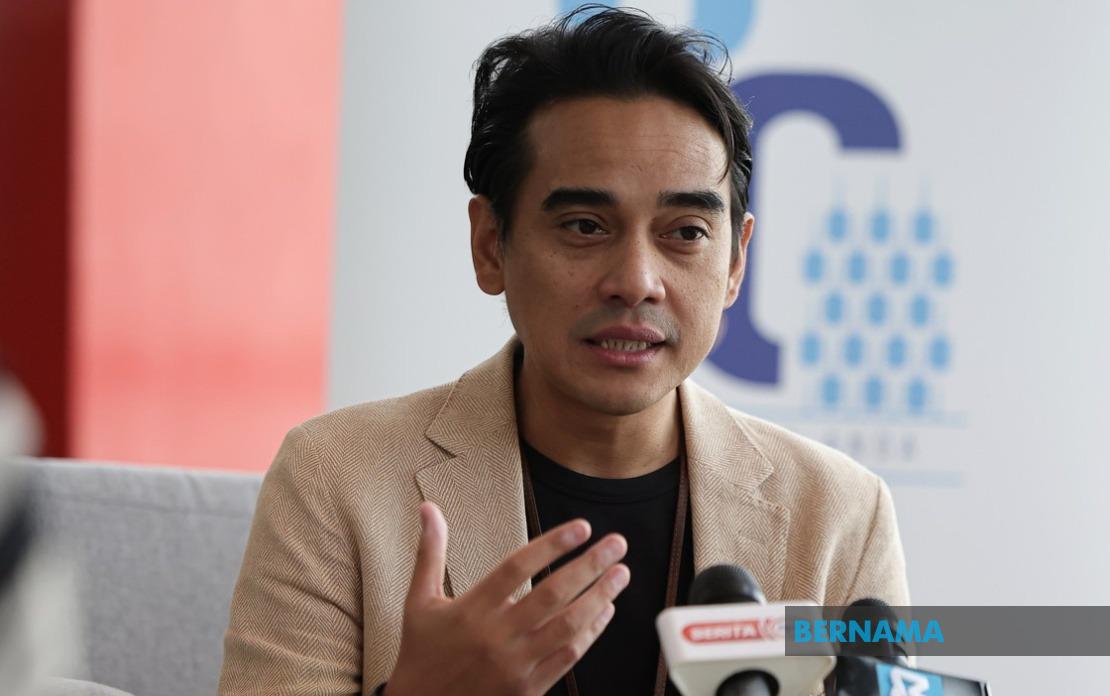
The future of journalism hinges not on whether artificial intelligence will disrupt newsrooms, but on individual journalists' ability to harness its capabilities, according to Ashwad Ismail, Director-General of Broadcasting. Speaking in Kuala Lumpur, Ismail reframed the automation anxiety gripping media organisations worldwide by asserting that technological obsolescence in journalism is fundamentally a skills problem rather than a displacement certainty. His remarks underscore a growing consensus among media leaders that the profession's survival depends less on resisting AI adoption and more on aggressive upskilling.
Ismail articulated a competitive reality that extends beyond Malaysia's borders into the broader Southeast Asian media ecosystem. Rather than presenting AI as an existential threat to journalism as an institution, he characterised the technology as a performance amplifier—one that magnifies the capabilities of practitioners who understand how to deploy it strategically. His formulation offers a psychologically reframing perspective: the threat journalists face is not from machines themselves, but from colleagues and competitors who develop competence faster. This creates a powerful incentive for individual practitioners to invest in learning, even within organisations that may lack formal retraining programmes.
The Broadcasting chief's warnings about adaptability lag reflect genuine anxieties documented across newsrooms in the region. Media organisations in Malaysia, Singapore, Indonesia, and beyond have struggled to integrate new technologies without comprehensive strategy or staff preparation. Many journalists entered the profession during an era of relatively stable toolsets and are now confronting rapid-fire innovations—from natural language processing tools that generate story drafts to AI-powered data analysis platforms that uncover investigative leads. The ability to distinguish between genuine productivity enhancements and gimmicky applications requires training that few newsrooms have systematically provided. Ismail's emphasis on the need to develop concrete skills reflects frustration with the vague digital transformation initiatives that have characterised much of the industry's response to technological change.
The potential for job displacement within Malaysian media remains a legitimate concern that Ismail acknowledged, even while emphasising individual agency in determining career outcomes. Newsrooms have already contracted significantly across the region over the past decade due to digital advertising disruption and reader migration. AI's capacity to automate routine reporting tasks—earnings summaries, match reports, weather updates—threatens entry-level and mid-career positions traditionally occupied by journalists building foundational experience. However, Ismail's argument that implementation of AI under proper governance could actually preserve jobs by allowing journalists to focus on higher-value investigative and explanatory work reflects an optimistic but plausible scenario. The critical variable is whether news organisations invest the savings from productivity gains into quality journalism or simply cut staff entirely.
Ismail stressed that harnessing AI's potential requires institutional frameworks, not merely individual initiative. He called for clear guidelines governing AI use in newsrooms to ensure that technological implementation serves journalistic integrity rather than undermining it. Such frameworks must address several practical challenges: establishing editorial review processes for AI-generated content, maintaining source confidentiality and verification standards, preventing algorithmic bias in story selection, and ensuring accountability for automated editorial decisions. Without these guardrails, newsrooms risk deploying AI in ways that damage reader trust and journalistic credibility. Malaysia's regulatory environment, shaped by Media Prima, Malay Mail, and other major organisations, has an opportunity to establish best practices that could influence broader Southeast Asian adoption patterns.
Rebuild trust in institutional media represents perhaps the more urgent challenge than AI integration, according to Ismail's framing. The credibility crisis afflicting news organisations across Malaysia and the region has multiple causes—declining local reporting as resources contracted, algorithm-driven distribution that rewards sensationalism, and misinformation competition that forced outlets to chase engagement metrics. Ismail's prescription emphasises returning to journalistic fundamentals: investing in hyperlocal coverage that speaks directly to community concerns, establishing regular engagement mechanisms that allow readers to influence editorial priorities, and cultivating the personal relationships that characterise trusted local journalism. These recommendations align with successful strategies employed by regional outlets that have maintained reader loyalty despite broader industry decline.
The integration of AI into this trust-restoration agenda requires careful calibration. Journalists armed with AI tools can theoretically produce more hyperlocal coverage by automating routine tasks while deploying human effort toward community-embedded reporting that competitors cannot easily replicate. AI-powered data analysis could surface stories of specific local significance that broader national outlets overlook. However, readers must perceive that the AI-enabled newsroom maintains human editorial judgment and community accountability. Ismail's emphasis on the "human touch" as essential to trust suggests awareness that excessive automation, even if technically efficient, can alienate audiences seeking authentic connection with journalists who understand their specific communities.
The upcoming HAWANA 2026 conference in Penang, to be officially launched by Prime Minister Datuk Seri Anwar Ibrahim on June 20, will gather over 1,200 media professionals and ASEAN delegates to address these industry transformation questions. The event's timing—as global media organisations experiment with increasingly sophisticated AI applications—makes it a pivotal moment for Southeast Asian journalism to establish its own development trajectory rather than simply importing solutions designed for Western media markets. Malaysian media leaders, through forums like this conference, have an opportunity to build regional consensus around AI implementation principles that prioritise both economic sustainability and editorial independence.
For journalists in Malaysia specifically, Ismail's message carries both warning and opportunity. Those who treat AI skills development as peripheral to their professional practice risk becoming uncompetitive within five years as newsroom workflows increasingly incorporate these tools. However, journalists who approach AI as a lever for deepening their reporting capabilities—enabling faster research, broader data analysis, and more sophisticated story investigation—can differentiate themselves in a crowded market. The profession's future rests not on whether AI arrives in Malaysian newsrooms, but on the speed and sophistication with which individual practitioners and news organisations collectively develop competence in harnessing it responsibly.