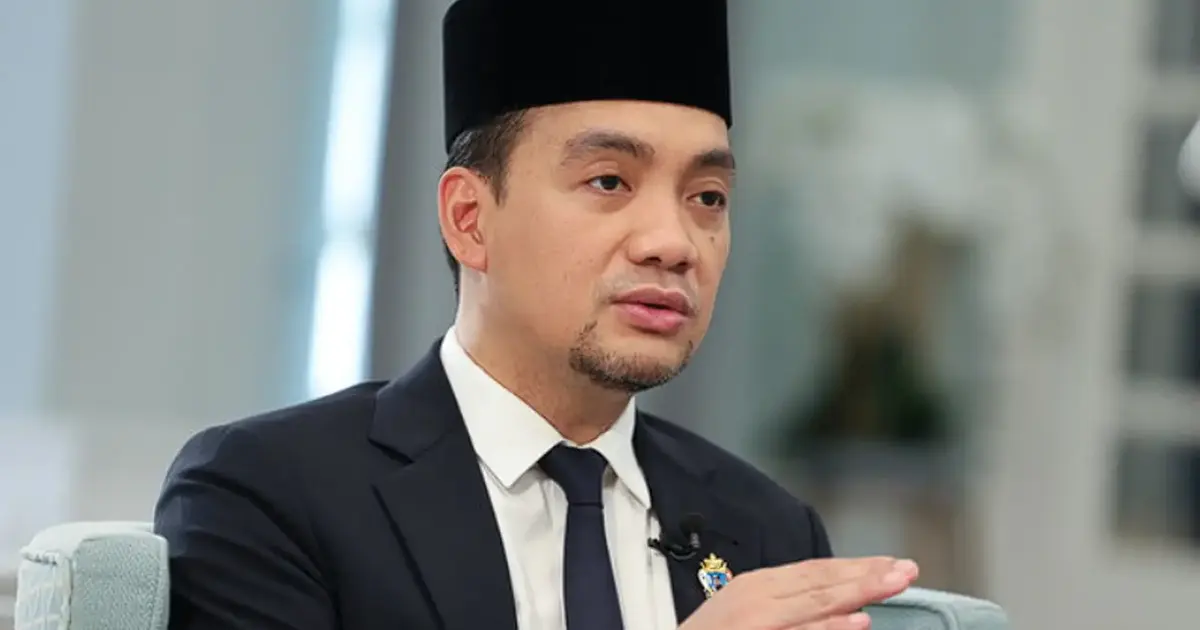
Caretaker Johor Menteri Besar Onn Hafiz has moved to dispel concerns that the palace's formal approval for dissolving the state assembly represents political interference, insisting instead that the process follows established constitutional conventions that have governed Malaysia's monarchical system for decades.
The distinction Onn Hafiz draws reflects broader sensitivities around the role of Malaysia's nine hereditary sultans in electoral processes. While the sultanate's formal approval is legally required for assembly dissolutions across most Malaysian states, the relationship between royal authority and elected government remains a subject of public scrutiny and occasional political contestation. By characterising the sultan's assent as purely procedural rather than discretionary, the caretaker leader attempts to frame the development as apolitical.
In Malaysia's constitutional framework, state assemblies cannot be dissolved without the sovereign's formal approval. This requirement exists not as a means of wielding executive power over elected bodies but as a ceremonial checkpoint embedded in the constitutional architecture. The assent from Johor's sultan represents the final step in a sequence initiated by the state government and reflects respect for the institution of the monarchy as guardian of constitutional propriety, according to Onn Hafiz's interpretation.
The timing of Onn Hafiz's clarification suggests underlying political sensitivities within Johor. Recent years have witnessed occasional debates about palace involvement in state affairs, particularly when dissolutions or government formations occur during periods of political uncertainty. By promptly reframing the royal assent as constitutionally mandated rather than discretionary, the caretaker leader appears intent on preventing mischaracterisations that might undermine public confidence in either the state government or the sultans' commitment to remaining above partisan politics.
For Malaysian readers, the distinction carries practical implications. A dissolution process that is widely perceived as purely procedural and constitutional in nature tends to enjoy greater legitimacy than one that attracts allegations of palace favouritism or intervention. The public narrative surrounding how elections come about affects voter confidence in democratic processes and the perception that institutions operate according to established rules rather than personal preferences or factional interests.
Onn Hafiz's statement also reflects how caretaker governments operate within Malaysia's political system. When governments are dissolved, the menteri besar or chief minister typically continues in an interim capacity until election results determine the next administration. During this vulnerable period, caretaker leaders must navigate between exercising necessary duties and avoiding actions that might appear self-serving. Publicly affirming that procedural steps like royal assent are constitutional rather than optional helps establish the legitimacy of the transition process itself.
The Johor situation must also be understood within the context of Malaysian federalism and the special constitutional position of the sultanates. Unlike the Yang di-Pertuan Agong at federal level, state sultans play more visible roles in state governance and typically maintain closer relationships with their administrations. This proximity sometimes generates questions about where constitutional authority ends and political preference begins. Onn Hafiz's clarification essentially argues that the sultan was performing a required constitutional function rather than exercising discretion.
Johor's political history includes episodes where the relationship between government and palace has attracted public interest. The state's size, economic importance, and historical prominence mean that its governance receives substantial media attention both within Malaysia and regionally. Any development that touches on sovereign authority or the bounds of royal involvement therefore resonates beyond local politics into discussions about constitutional practice across Southeast Asia's monarchies.
The framing of royal assent as procedural reflects also a broader pattern in modern Malaysian politics where formal constitutional roles are consistently described as ceremonial or routine, particularly when questions arise about whether institutions are overstepping defined boundaries. This language strategy helps maintain the formal separation between monarchy and government that underpins Malaysia's constitutional design, even when that separation is sometimes tested in practice.
For electoral observers and constitutional scholars, Onn Hafiz's distinction matters because it signals how political actors prefer dissolutions to be publicly understood. Characterising the process as constitutionally standardised rather than discretionary invites voters and commentators to accept it as inevitable and proper rather than as a moment where political actors or institutions made consequential choices. Whether this framing succeeds in shaping public perception will likely depend on how smoothly the subsequent electoral process unfolds and whether no further questions about institutional relationships emerge during the campaign period.

