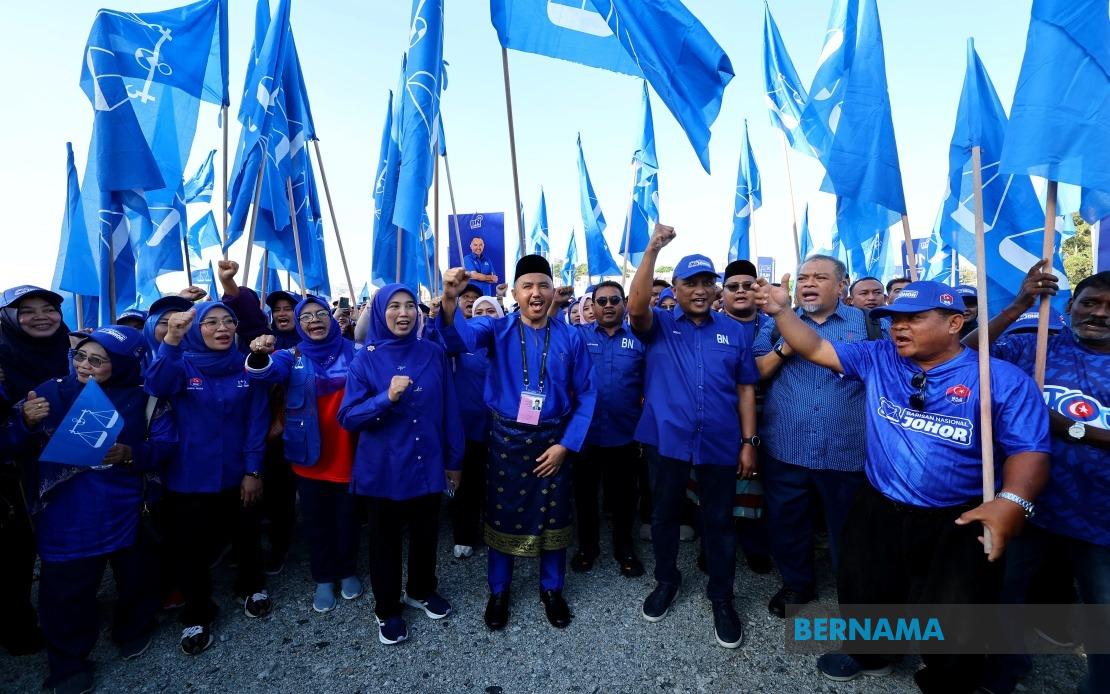
The nomination phase of Johor's 16th state election formally concluded at 10am on June 27 after all 56 nomination processing centres across the state shut their doors simultaneously. The one-hour submission window, which opened at 9am, saw a structured handover of responsibility from the returning officers stationed at each centre to the Election Commission, which now faces the task of verifying candidate eligibility and publishing the official roster of contenders.
The closure of nomination centres marks a critical juncture in the electoral calendar, shifting focus from candidate registration to the substantive campaign period. The Election Commission has designated a 14-day campaign window extending from the nomination closure through to 11.59pm on July 10, providing political parties and independent candidates with a defined timeframe to conduct their grassroots outreach, public rallies, and persuasion efforts across Johor's diverse constituencies. This compressed campaign schedule reflects the commission's effort to maintain electoral momentum while adhering to constitutional timelines.
Candidate supporters mobilised across the state throughout the morning, gathering at nomination centres to accompany their party nominees in what has become a customary display of political solidarity. These scenes played out across urban and rural nomination venues, with party machinery activated to ensure high-profile candidate submissions received appropriate publicity and member engagement. The exercise demonstrated the operational readiness of Johor's major political formations as they prepare for the substantive campaign phase.
Security arrangements remained notably robust throughout the nomination process, with police personnel and members of the People's Volunteer Corps deployed across all nomination centres. This coordinated approach succeeded in maintaining orderly conditions without recorded incidents of confrontation or disruption, suggesting a disciplined adherence to electoral protocol by all participating parties. The absence of provocation or security breaches provides an encouraging foundation for the campaign period ahead, signalling consensus among political actors regarding the legitimacy and integrity of the process.
The next critical milestone arrives with the Election Commission's publication of the official candidate list, which will illuminate the competitive landscape by revealing how many nominations each state seat received. This data point carries significance beyond mere administrative reporting, as it indicates the intensity of intra-party competition where multiple candidates from the same party contest a single seat, and the strength of independent candidacies challenging the established party structures. The candidate list will also clarify whether certain seats face uncontested races, a possibility that would reduce the substantive campaign burden in those divisions.
Johor's electoral rolls encompass approximately 2.73 million registered voters, a cohort that extends beyond the civilian population to include designated military personnel and their spouses, alongside police force members and their families. This broader franchise reflects Malaysia's constitutional recognition of security personnel as stakeholders in democratic processes, though their voting participation occurs through designated early voting procedures rather than standard polling day mechanisms. The military and police contingents, totalling roughly 24,700 eligible voters, represent a distinct electoral segment with potentially differing political concerns from the civilian majority.
The Election Commission has scheduled early voting for July 7, providing designated personnel and registered absentees an opportunity to cast ballots ahead of the main polling day. This staggered voting arrangement accommodates operational requirements within the security services while maintaining the integrity of the secret ballot. Early voting logistics typically occur at designated facilities with heightened security oversight, ensuring that these specialised polling procedures operate under conditions comparable to standard election day management.
Polling day itself is set for July 11, concentrating the voting exercise into a single day across all state constituencies. This consolidated approach contrasts with some regional models that employ multi-day polling and reflects Malaysia's traditional electoral architecture. The concentration of voting into a single day maintains strong symbolic resonance with democratic principles while creating logistical demands on election administration, from recruitment of polling personnel to coordination of security arrangements across multiple simultaneous voting locations.
The 16th Johor state election carries significance within Malaysia's broader political landscape, as it represents one of the more electorally competitive state contests given Johor's economic importance and the state's historical role as a political bellwether. The election outcome will influence calculations within national political coalitions, particularly regarding power-sharing arrangements in state governments and federal legislative delegations. Johor's voting patterns often presage trends evident in subsequent national elections, making this contest subject to analysis by political analysts and party strategists well beyond the state's borders.
The transition from nomination to campaign phases typically energises political activity, as candidates and party machinery shift from administrative tasks to direct voter engagement. Radio and television broadcasting will intensify with political advertisements, while traditional street-level campaigning—from door-to-door canvassing to neighbourhood gatherings—accelerates across Johor's constituencies. The campaign period will test not only the policy platforms and candidate appeal of competing parties, but also their capacity to mobilise supporters and sustain engagement over the relatively compressed two-week timeframe.
Regional observers will monitor Johor's election trajectory given the state's economic clout and its historical voting patterns' correlation with national political shifts. The results will offer insights into voter sentiment regarding incumbent performance, opposition party competitiveness, and the durability of existing political coalition arrangements in Malaysia's devolved system of state governance. For Malaysian political analysts and regional commentators, Johor's 16th state election represents a significant data point in understanding contemporary electoral dynamics within Southeast Asia's established democracy.

