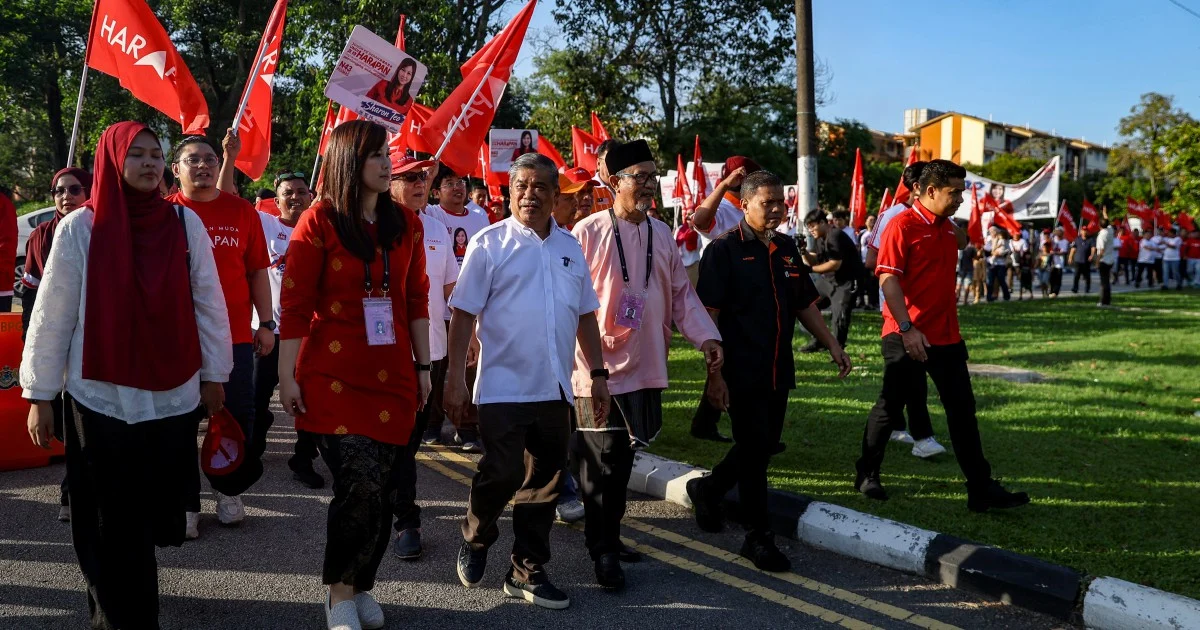
Sharon Teo's path to the nomination office in Pasir Gudang's Dewan Muafakat Taman Mawar was lined with vocal supporters of the Pakatan Harapan coalition on Monday, marking a show of strength for the opposition alliance ahead of the Johor state election. The repeated chanting of "Johor undi Pakatan Harapan" — a call for Johor voters to choose the coalition — underscored the grassroots enthusiasm driving the opposition's campaign strategy in the southern state.
Teo's nomination for the Permas state constituency represents a strategic positioning by Pakatan Harapan in a seat where the coalition believes it can make electoral gains. Permas, located within the Pasir Gudang parliamentary district in Johor's eastern region, has emerged as a competitive battleground in recent political cycles, with demographic shifts and changing voter sentiment creating opportunities for opposition-aligned candidates.
The scale and energy of the crowd gathered at the nomination centre reflected broader developments within Malaysia's political landscape, where Pakatan Harapan has been working to rebuild its electoral machinery following setbacks in the 2023 general election. In Johor specifically, the coalition's performance in recent contests has been uneven, making ground mobilisation efforts particularly crucial for rebuilding momentum in constituencies it views as winnable.
Supporters who converged on the venue demonstrated the coalition's capacity to mobilise volunteers and activate party members in key electoral battlegrounds. This grassroots dimension of campaigning remains significant in Malaysian electoral politics, particularly in state-level contests where local issues and community networks often carry substantial weight with voters. The visible enthusiasm captured at the nomination event serves as a barometer of organisational readiness as the coalition prepares for the wider campaign period.
Johor's electoral significance within Malaysia's political system cannot be overstated. As the second-largest state by population and an economic powerhouse, voting patterns there have historical implications for national politics. The state has traditionally been a stronghold for the Barisan Nasional coalition, though Pakatan Harapan made significant inroads during the 2018 general election. Recent elections have shown the political landscape in Johor to be more fluid than previously assumed, with both coalitions capable of winning support across different constituencies.
Teo's nomination comes at a moment when Pakatan Harapan is emphasising the need for policy alternatives and good governance messaging to resonante with voters. The coalition has been positioning itself as offering contrasting visions on economic management, public accountability, and social welfare delivery compared to the incumbent administration. In a state like Johor, where development issues, infrastructure needs, and industrial policy frequently dominate local political discourse, these themes have particular relevance.
The Permas constituency, with its mix of urban and semi-urban areas, contains voter demographics that have proven responsive to messaging focused on cost of living, employment opportunities, and community services. Younger voters in particular represent a growing segment of the electorate in constituencies like this, and their voting behaviour has shown increasing volatility compared to older cohorts, making them a prime target for opposition mobilisation efforts.
Teo's candidacy reflects Pakatan Harapan's strategy of fielding diverse candidate profiles intended to broaden the coalition's appeal across different communities and demographics. The coalition has placed emphasis on selecting candidates who can connect with local constituencies on specific issues while also representing the broader policy platform that Pakatan Harapan intends to advance if successful in electoral competition.
The nomination process itself, while administratively routine, carries symbolic weight in Malaysian electoral campaigns. The public gathering of supporters sends signals to both party activists and general voters about the vibrancy and organisational capacity of the campaign machinery. The chanting of slogans and visible expressions of support become part of the narrative that campaigns construct and project to a wider audience through media coverage and social sharing.
As the Johor state election campaign proper unfolds, constituencies like Permas will become focal points for both coalitions' resource allocation and campaign intensification. The strength of the reception Teo received at her nomination event suggests that Pakatan Harapan intends to mount a serious competitive effort in this seat, mobilising volunteers and supporters to reach voters through direct engagement and community organising.
For Malaysian observers tracking the health of opposition politics and the trajectory of competition between coalitions at state level, the Permas nomination and the turnout supporting it offers one data point among many that will shape understanding of electoral dynamics as the campaign season progresses. The capacity of Pakatan Harapan to generate enthusiastic grassroots participation in contests outside its traditional strongholds will be an important factor in determining whether the coalition can return to electoral relevance in Johor.

