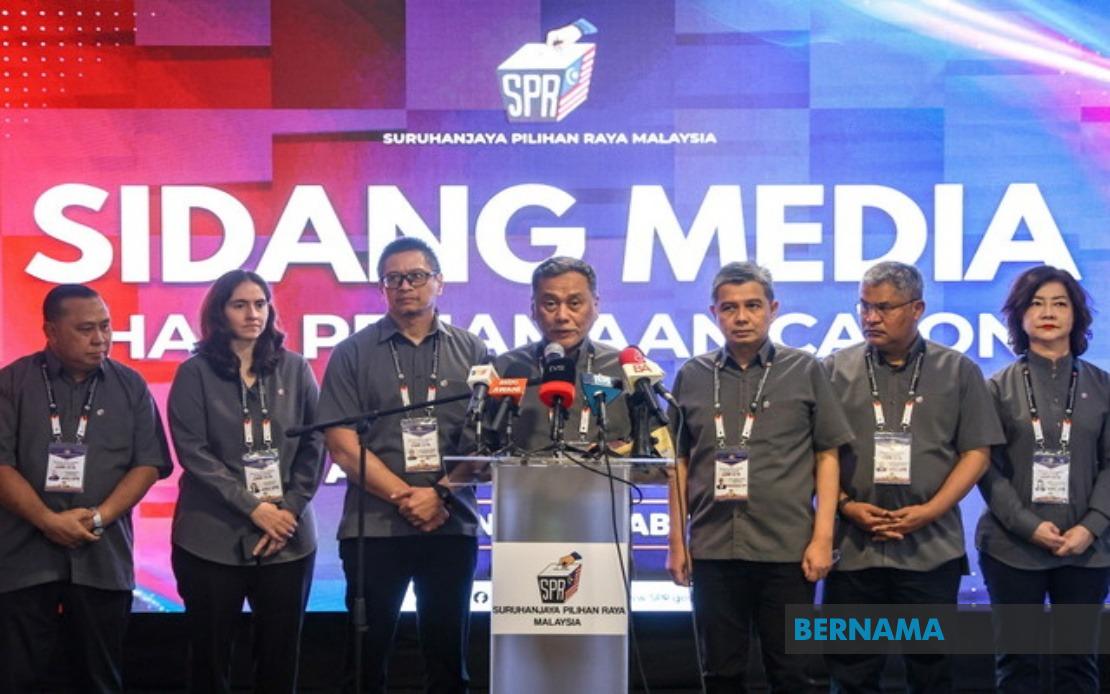
The Election Commission has given the green light for 172 candidates to compete in Johor's 16th state election, marking a significant moment in the southern state's political calendar. The confirmation came after the nomination process wrapped up at all 56 nomination centres across the state, with the Electoral Commission chairman Datuk Seri Ramlan Harun announcing that every submission met the required standards and no aspirants were disqualified from the contest.
The gender composition of the candidate field reflects ongoing debates about political representation in Malaysia. Among the 172 contenders, 138 are men while 34 are women, indicating that female participation in state-level electoral contests remains a minority proportion despite increasing calls for greater inclusivity in political life. This figure suggests that while parties have gradually expanded opportunities for women candidates, substantial progress in achieving gender parity at the ballot box remains outstanding.
The distribution of nominees across political groupings reveals the continuing dominance of Malaysia's two main coalitions in electoral competition. Barisan Nasional and Pakatan Harapan have each secured 56 nominations apiece, demonstrating their equivalent organisational capacity and grassroots strength in the state. This equilibrium between the traditional ruling coalition and the opposition alliance suggests that Johor's electorate faces a genuinely competitive two-way contest, with neither side enjoying an obvious numerical advantage before voting commences.
Perikatan Nasional, the newer coalition that has grown in political salience since the 2018 general election, has fielded 33 candidates, positioning itself as the third major force in the contest. The grouping's participation underscores the fragmentation of Malaysia's political landscape and the emergence of alternatives to the long-established BN and PH blocs. Smaller parties and regional movements have also entered the fray, with Parti Bersama Malaysia nominating 15 candidates, MUDA proposing four, while Parti Orang Asli Malaysia and Parti Sosialis Malaysia each put forward one candidate respectively.
Independents contesting state elections in Malaysia have traditionally occupied a marginal position, but six individuals have chosen to run without party affiliation in this election. Their participation, though numerically modest, reflects the persistent appeal of contesting outside formal party structures for some candidates who may prioritise local issue advocacy or maintain independence from broader political coalitions.
The competitive landscape will be significantly shaped by the nature of contests across the 56 constituencies. Fourteen seats are set to feature straight fights between two candidates, a dynamic that typically favours the front-runner and reduces vote fragmentation. However, the vast majority of constituencies will see multi-candidate races that could produce more unpredictable outcomes and reward campaigners adept at mobilising targeted voter bases.
Twenty-seven seats will witness three-cornered contests, the most common scenario across the state. These triangular races introduce strategic voting considerations, as electors must weigh not only their preferred candidate but also the likelihood of each contender's victory. In such scenarios, votes can become distributed across multiple parties, potentially allowing candidates with minority support to prevail if opposing votes split effectively.
Twelve constituencies are set for four-way contests, further fragmenting the vote and complicating predictions about likely winners. These more crowded races reflect the increased competitive space occupied by newer political movements and candidates operating outside the traditional two-coalition framework. The presence of four simultaneous campaigns in these seats will likely intensify ground-level political activity and voter engagement efforts.
Three constituencies will feature five-candidate contests, representing the most saturated competitive environment in the election. These high-stakes races demonstrate how significantly Malaysia's political terrain has shifted from the binary competition that once characterised state elections. The proliferation of candidates in these constituencies suggests either particularly competitive local dynamics or the presence of appealing independent or smaller-party contenders capable of drawing nominations.
The diversity of contest types across Johor's 56 seats will produce markedly different campaigning strategies and victory conditions for competing parties. Candidates competing in two-way races must focus on direct contrast with a single opponent, whereas those in multi-candidate contests face the challenge of distinguishing themselves among numerous alternatives and capturing disproportionate support to secure plurality victories. This variation across constituencies will likely produce a patchwork electoral outcome that defies simple statewide generalisation.
For Malaysian observers of electoral politics, Johor's election carries significance beyond the state itself. As a major population centre and traditionally a bellwether for national political trends, the outcome will signal changing voter sentiment toward Malaysia's competing coalitions and emerging political alternatives. The scale of multi-candidate competition also provides a real-world test of how Malaysian voters navigate increasingly fragmented political choices, offering insights relevant to future general elections and the evolution of the country's political system.
The nomination process's completion marks the transition from the internal party selection phase to the public campaign period. With 172 candidates now officially cleared to contest, the focus shifts to grassroots mobilisation, policy differentiation, and voter persuasion across Johor's diverse communities. The competitive intensity will be particularly pronounced in constituencies featuring multiple candidates, where margins of victory may prove razor-thin and every vote consequential in determining electoral outcomes.

