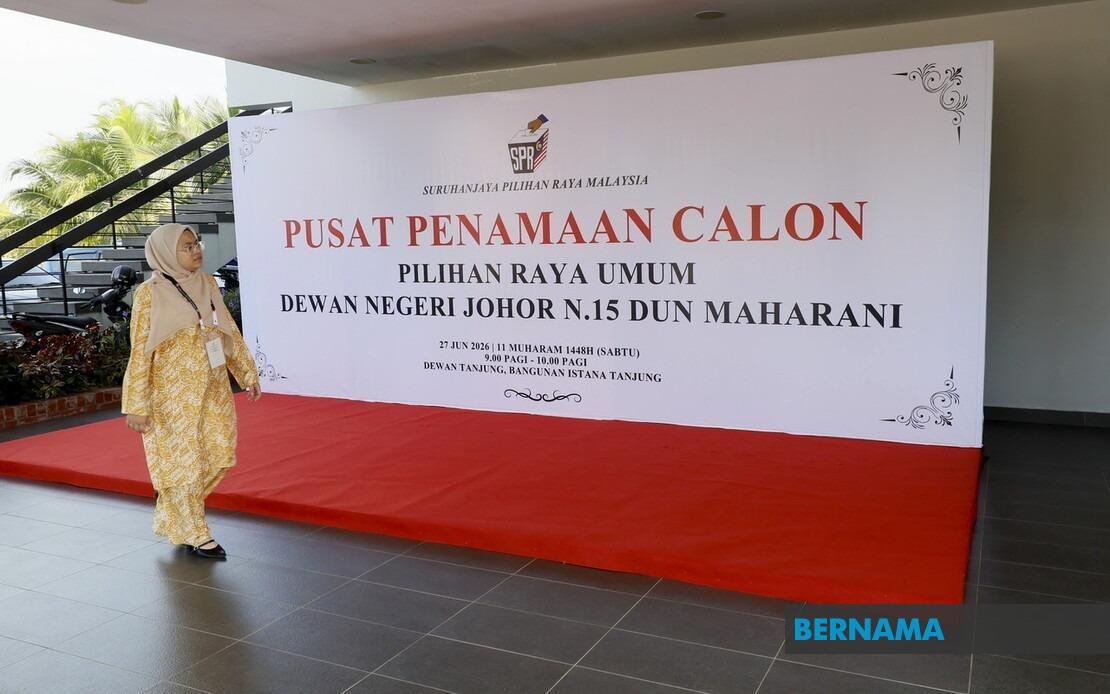
Malaysia's second-largest state by population enters a significant electoral phase today as the 16th Johor State Election formally begins with simultaneous nomination proceedings at 56 centres spanning the entire state. Prospective candidates have a narrow one-hour window, commencing at 9 am and closing at 10 am, to lodge their nomination documents with returning officers—a critical procedural moment that will determine the final field of contenders vying for the 56 available state assembly seats. The Election Commission has established an orderly administrative framework for this initial phase, with the formal announcement of eligible candidates expected to follow immediately after the nomination period closes.
The election timetable reflects a carefully structured campaign schedule designed to allow parties adequate time to mobilise their grassroots networks. Once nominations close and eligible candidates are declared, the official campaign period will commence and run continuously for a fortnight, concluding at 11:59 pm on July 10. This compressed but intensive 14-day campaign window requires political parties to move swiftly from candidate selection to full-scale voter engagement. Early voting has been scheduled for July 7, providing flexibility for military and police personnel, while the decisive polling day arrives on July 11—a date set following the State Legislative Assembly's dissolution on June 1.
Demographic data released by the Election Commission underscores the scale of democratic participation anticipated. The electoral roll encompasses 2,727,926 registered voters, comprising 2,703,175 ordinary voters alongside 12,041 military personnel and their spouses and 12,710 police officers and their families. This voter composition reflects Johor's diverse population, with representation from various occupational and community segments. The inclusion of military and law enforcement representatives in the electoral process demonstrates the commission's commitment to ensuring broad participation across different sectors of society.
By yesterday morning, the momentum toward the election was already evident, with 593 nomination forms having been distributed and 133 prospective candidates confirming their intent to contest by submitting the required election deposits. This preliminary figure suggests a competitive environment with multiple candidates likely in several constituencies, which could lead to three-cornered or multi-cornered contests in certain areas. The level of early preparation indicates that political parties and independent aspirants have been actively organising their candidacies in anticipation of nomination day.
Pakatan Harapan enters the contest fielding candidates across all 56 seats, drawing from its three component parties: PKR (20 seats), Amanah (19 seats), and DAP (17 seats). This comprehensive coverage reflects the coalition's strategic ambition to compete vigorously throughout the state. Barisan Nasional, which controlled the assembly before dissolution with 40 seats, is similarly contesting all constituencies through its traditional three-party structure: UMNO (36 candidates), MCA (16 candidates), and MIC (4 candidates). The composition of BN's slate suggests UMNO's dominance within the coalition, as the party provides the largest proportion of candidates.
Perikatan Nasional's strategy differs markedly, with the coalition concentrating its resources in selected constituencies rather than attempting statewide coverage. Through PAS (11 seats), Bersatu (16 seats), the Malaysian Indian People's Party (5 seats), and Pejuang (1 seat), Perikatan Nasional will contest a total of 33 seats. This targeted approach suggests the coalition is prioritising strongholds and winnable areas rather than spreading its limited organisational capacity too thinly. The emergence of Parti Bersama Malaysia as an electoral participant is noteworthy, with the relatively new party contesting an ambitious 15 seats. Smaller players including MUDA (4 seats), Parti Sosialis Malaysia (1 seat), and various independent candidates will add additional dimensions to constituency-level contests.
The configuration of candidate lists reveals an interesting pattern across the state's political landscape. While major coalitions dominate the contest, the participation of smaller parties and new entrants such as Bersama suggests a diversifying political environment. The mix of new faces, established incumbents, and returning former elected representatives across all party groupings indicates that several constituencies may witness intriguing contests between personalities with different track records and electoral experiences. This diversity could provide voters with meaningful choices in their individual state seats.
Nomination day traditionally generates considerable public interest and animated scenes at nomination centres, as party supporters gather to demonstrate enthusiasm for their chosen candidates. To maintain order and ensure compliance with electoral regulations, the Election Commission has issued clear reminders regarding the Election Offences Act 1954 and local authority by-laws. Specifically, restrictions apply to the use of musical instruments and loudspeaker-equipped vehicles during campaign activities, regulations designed to prevent excessive noise and disruption to public spaces and private residences during the campaign period.
Logistical and security preparations have been implemented extensively across Johor to facilitate the nomination process and subsequent campaign activities. The Malaysian Meteorological Department forecasts morning rainfall in several state areas with afternoon thunderstorm development, potentially affecting voter movement and campaign logistics. To maintain law and order and manage the anticipated congestion near nomination centres and along major thoroughfares, the police have deployed 4,832 personnel. This significant security presence will oversee traffic management, including planned road closures and diversions affecting 19 major routes throughout the state, ensuring that nomination centre operations proceed without disruption.
The transition from the previous assembly composition to this new electoral contest marks a critical juncture for Johor's political direction. The outgoing assembly under BN's governance saw the coalition hold a commanding 40 seats, with Pakatan Harapan holding 12, Perikatan Nasional 3, and MUDA 1. The dramatic shifts in electoral mathematics that could result from the July 11 polling will significantly influence the state government's composition and policy priorities for the next term. For Malaysian voters and political observers more broadly, the Johor result will serve as an important barometer of shifting political preferences and regional dynamics within the country's competitive federal system.

