The Johor State Election's nomination phase commenced smoothly on June 27 as candidates filed their papers at 56 polling centres statewide, with clement weather conditions supporting the day's proceedings. The Election Commission orchestrated the receipt of nomination documents between 9am and 10am, with officials completing final preparations beforehand to ensure an orderly transition into the formal candidacy registration process. The logistics-heavy operation reflected the scale of the electoral contest, as the Johor State Legislative Assembly's 56 contested seats represented a significant political prize in Malaysia's second-most populous state.
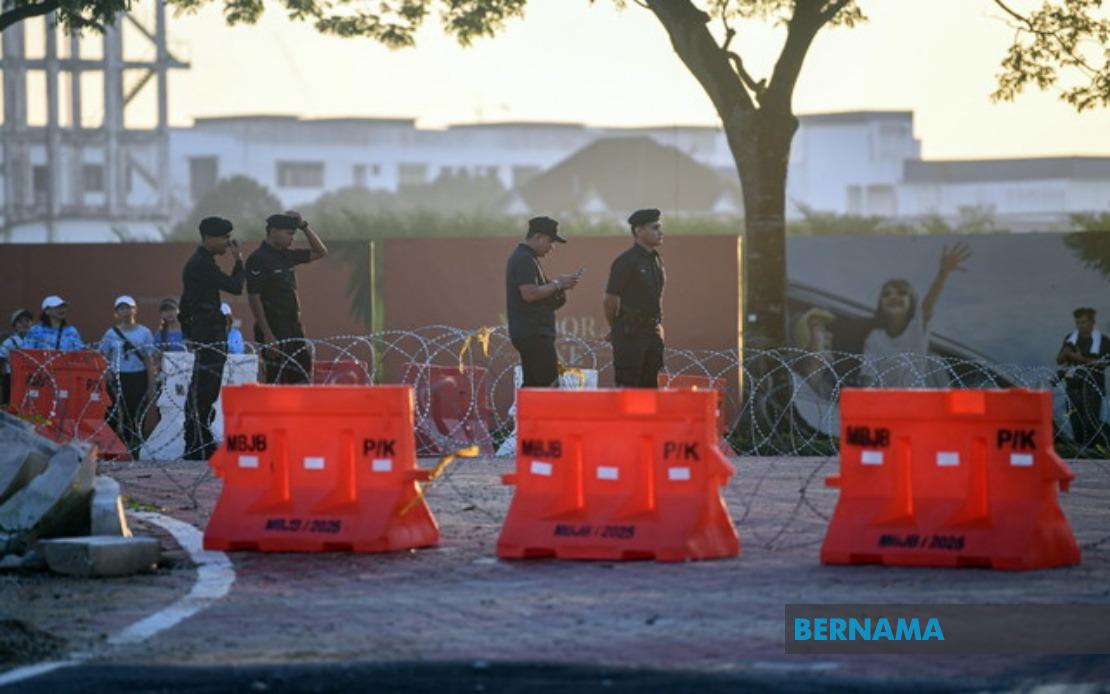
Across the nomination centres, security deployment maintained a steady presence to forestall disruptions and uphold the integrity of the registration procedure. Officials worked systematically through the documentation submissions, processing each candidacy with the procedural rigour demanded by electoral law. The visible security arrangements underscored the Election Commission's commitment to preventing irregularities, though the absence of reported incidents suggested that stakeholders respected the formal nature of the nomination process.
Party enthusiasm manifested visibly at multiple venues, where supporters assembled as early as 7.30am to demonstrate backing for their preferred candidates. These early arrivals reflected genuine grassroots mobilisation rather than coordinated spectacle, with party workers and sympathisers marking the symbolic launch of the campaign proper. The gathering patterns signalled that despite a shortened election season—the state assembly was dissolved on June 1—political organisations had mobilised their networks effectively to amplify their candidates' profile during this opening electoral moment.
Weather forecasting by the Malaysian Meteorological Department indicated predominantly dry conditions throughout the morning hours across most Johor districts, with afternoon thunderstorms confined to isolated pockets. The clement conditions facilitated voter movement and candidate visibility at the centres, preventing weather-related disruptions that might have complicated the nomination timetable. Afternoon precipitation posed minimal risk to the 9am-10am window during which most submissions occurred, allowing the schedule to proceed without delay.
The electoral landscape encompasses a substantial franchise across Johor's varied constituencies. A total of 2,727,926 registered voters will participate in the coming ballot, subdividing into 2,703,175 ordinary voters alongside 12,041 military personnel and their spouses and 12,710 police personnel and their spouses. This voter composition reflects both Johor's diverse demographic profile and the special provisions Malaysia's electoral framework extends to security force members and their families. The registration figures underscore why Johor represents a strategically significant battleground within Malaysian federalism, with electoral outcomes holding implications for national coalition mathematics.
The abbreviated timeline between dissolution and polling day compressed the campaign window substantially. With early voting scheduled for July 7 and election day fixed for July 11, candidates faced a concentrated campaigning period requiring efficient resource deployment and message saturation. This compressed schedule stood in contrast to some recent Malaysian elections, potentially advantaging incumbents with established machinery and disadvantaging challengers requiring time to build organisational presence. The nomination day thus served as the critical juncture at which aspirants formally commenced their bids to represent constituencies across this politically consequential state.
Johor's electoral significance within Malaysian politics extends beyond mere numerical weight. The state represents a traditional stronghold whose political complexion influences broader national narratives regarding coalition viability and regional power distributions. The 16th state election thus carried implications transcending Johor's borders, with results potentially informing calculations about future federal alignments and ministerial configurations. This broader strategic context animated the party mobilisations visible on nomination day, as organisations recognised that victory here translated into negotiating leverage at the national level.
The Election Commission's operational readiness on the day reflected institutional competence in managing complex electoral logistics. The deployment of personnel across 56 venues, coordination of security resources, and systematic processing of nomination papers demonstrated the administrative infrastructure Malaysia has developed for conducting elections across multiple concurrent levels. This institutional capacity, though sometimes questioned in public discourse, enabled the smooth progression through a procedurally demanding phase that could have encountered complications absent proper planning and execution.
For Malaysian electoral observers, the nomination day represented the formal commencement of a contest whose outcome remained genuinely uncertain despite various pre-election surveys and political analysis. The visible enthusiasm among party supporters, combined with the orderly procedural conduct, suggested that both government and opposition blocs possessed sufficient organisational capacity to mount serious campaigns across Johor's constituency mosaic. The coming weeks would test which coalition could more effectively translate this nomination-day energy into sustained voter persuasion and mobilisation.

