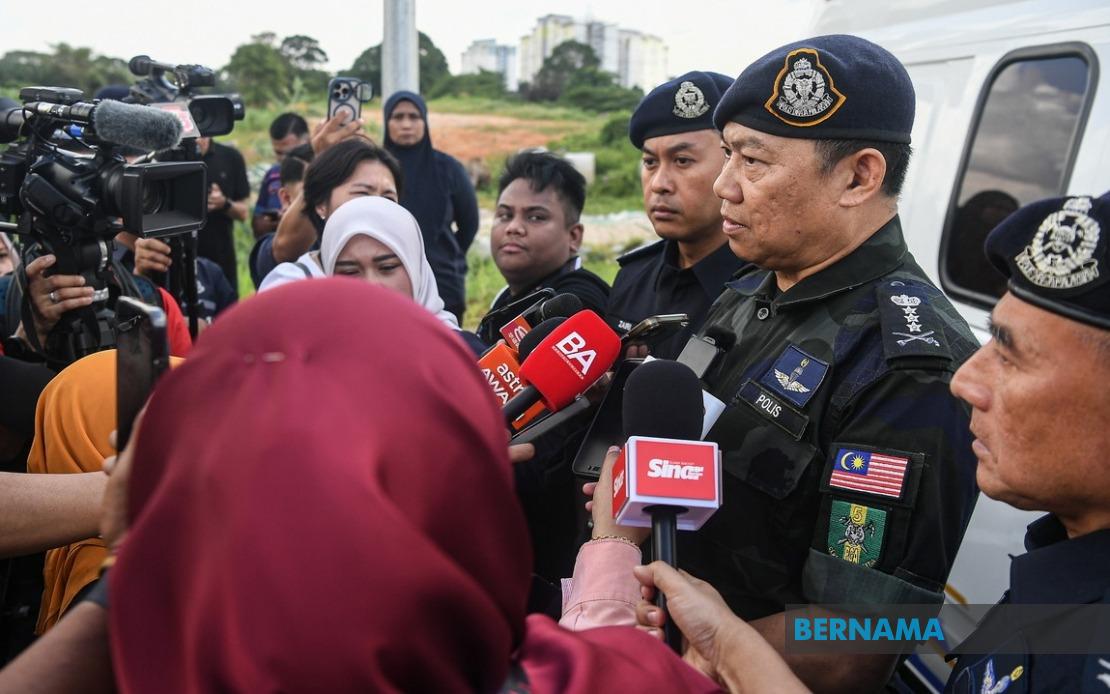
The nomination process for Johor's 16th state election unfolded without complications on June 27, as candidates and their representatives filed nomination papers across 56 polling centres throughout the state. The statewide exercise was characterised by an orderly atmosphere, with no reports of violence, intimidation, or other irregularities that might have marred the democratic process, according to law enforcement officials overseeing the day's proceedings.
Johor police chief Datuk Ab Rahaman Arsad confirmed that the constabulary received no incident reports throughout the nomination period. His statement underscores the logistical effort invested in securing the process, with 4,832 police officers and personnel deployed strategically across the state to manage crowd control and prevent any potential breach of peace. This substantial police presence, roughly equivalent to the number of candidates and workers mobilised by various parties, reflected the authorities' commitment to ensuring that voters could observe the nomination proceedings without fear or intimidation.
The deployment strategy prioritised key nomination centres, where the police maintained visible patrols and established coordination posts. Datuk Ab Rahaman observed the nomination process firsthand at the Puteri Wangsa seat nomination centre, located at Sekolah Menengah Kebangsaan Bandar Dato Onn in Johor Bahru, enabling direct assessment of ground conditions and personnel performance. This hands-on approach by senior police leadership signalled that election security was a top-tier priority for the state force.
Beyond the nomination phase, the police also processed 26 campaign permits statewide by June 27, with expectations that additional permits would be approved as political parties formally commenced their campaign activities. Campaign permits regulate the time, place, and manner of political rallies, gatherings, and public engagement activities, ensuring they do not conflict with one another or obstruct public spaces unnecessarily. The approval rate suggested a cooperative relationship between election authorities and political parties willing to comply with regulatory frameworks.
Datuk Ab Rahaman issued clear guidance to all contesting parties and candidates regarding their responsibilities during the campaign period. He urged political actors to conduct themselves in accordance with election laws and regulations, emphasising that the police expect campaigns to be mounted responsibly and ethically. This message was particularly significant given Malaysia's history of heated state and federal elections, where campaign rhetoric occasionally escalates into inflammatory language or confrontational behaviour that unsettles communities.
The police chief also issued a pointed warning against activities that could destabilise public order. He signalled that law enforcement would act decisively against any breaches of the peace, whether arising from candidate behaviour, party workers, or supporters. The tone of his remarks suggested preparedness rather than complacency, with the implicit message that while the nomination process had been smooth, the campaign phase would demand continued vigilance and rapid response capabilities.
For Malaysian voters and observers, the orderly nomination process is a reassuring signal about the health of democratic institutions at state level. Johor, as Malaysia's second-largest state by population and a major economic contributor, holds outsized significance in national politics. The election here, coming at a time of broader political realignments in the country, will test voter preferences and party performance in one of the peninsula's most strategically important jurisdictions. A peaceful nomination phase sets a positive foundation for the subsequent campaign and polling phases.
The Election Commission's calendar allocates a fortnight between nomination day and polling day, scheduled for July 11. During this period, candidates and parties will undertake intensive campaigning, including rallies, house-to-house visits, social media engagement, and media appearances. Early voting has been scheduled for July 7, providing flexibility for essential workers, security personnel, and others unable to vote on the main polling day. This staggered approach reflects election management best practices adopted in Malaysia over successive electoral cycles.
The absence of nomination-day disturbances also reflects broader trends in Malaysian electoral politics, where security forces and election authorities have progressively improved logistical and safety protocols. However, the need for 4,832 deployed officers—a figure that would constitute a small army in many democracies—highlights the precautions deemed necessary to guarantee peaceful elections in Malaysia's politically charged environment. This investment of resources suggests that authorities regard election security as foundational to democratic legitimacy.
Looking ahead, the focus will shift to campaign conduct and polling-day management. Political parties will test messaging strategies that resonate with Johor voters, who have historically shown willingness to shift allegiances between elections. The 56 nomination centres, spread across the state's geographic and demographic diversity, will give way to polling stations that must accommodate varying voter turnout levels. If the nomination phase has established any pattern, it is that careful planning, adequate resourcing, and clear communication from authorities can facilitate orderly democratic processes, even in contexts of intense partisan competition.

