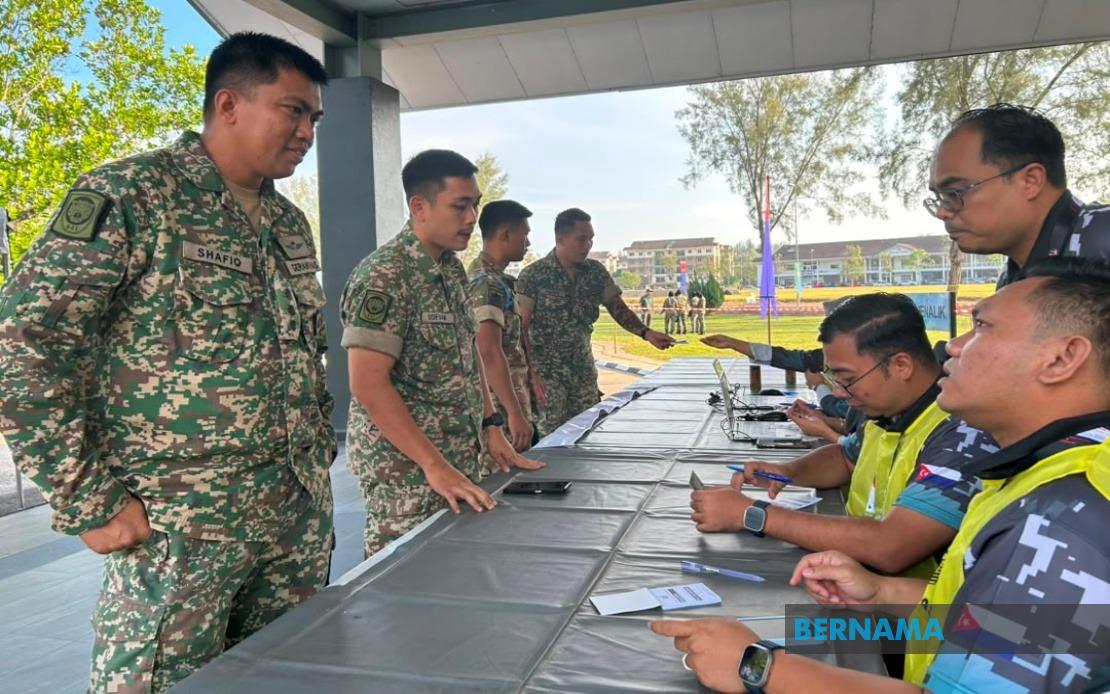
The early voting phase of Johor's 16th state election demonstrated brisk participation on Thursday, with the Election Commission reporting that more than half of all eligible early voters had already cast their ballots by 11 am. The strong turnout among designated early voting groups—primarily comprising police and military personnel along with their family members—suggests robust engagement ahead of Saturday's general polling day, when approximately 2.7 million voters across the state are expected to participate in choosing representatives for 56 state assembly seats.
According to official figures released by the Election Commission via social media, 11,605 ballots had been cast out of 20,607 registered early voters by late morning, translating to a 56.32 per cent participation rate. This pace of voting underscores the operational efficiency of the early voting system, which was established to accommodate security personnel who may face scheduling conflicts during the main election period. The early voting arrangement represents a standard electoral practice in Malaysia, ensuring that those on active duty can fulfil their democratic responsibilities without compromising security operations.
The Royal Malaysia Police and General Operations Force personnel, along with their spouses, constituted the largest contingent of early voters. Of the 12,063 registered police and paramilitary personnel eligible to vote early, 6,852 had completed their ballots by mid-morning, reflecting a turnout rate of approximately 57 per cent within this group. This performance indicates strong compliance among law enforcement ranks with the early voting schedule and suggests sustained institutional commitment to electoral participation despite demanding operational schedules.
Malaysian Armed Forces personnel and their spouses similarly demonstrated solid early voting participation, with 4,753 of the 8,544 registered military voters having cast their ballots by 11 am. This represented roughly 56 per cent participation among defence force members, mirroring the turnout rate among police and paramilitary groups. The comparable participation rates across security and defence sectors point toward consistent messaging and coordination efforts to encourage eligible personnel to utilise the early voting opportunity, ensuring minimal disruption to deployment schedules and operational readiness.
The Election Commission organised early voting across 64 dedicated polling centres that opened at 8 am on Thursday, providing sufficient infrastructure to process the expected volume of security personnel voters. The distribution and number of polling centres reflected careful planning to accommodate concentrated voting by specific institutional groups across Johor's geographic expanse. By establishing dedicated facilities and opening times for early voting, authorities aimed to streamline the process and minimise congestion that might otherwise occur if these voters attempted to participate during mainstream polling on Saturday.
Scheduled closure times for early voting centres varied between noon and 6 pm depending on location and local voter volumes, providing flexibility to accommodate late arrivals and ensure all eligible early voters could participate. This staggered closing arrangement reflected practical recognition that some voters might experience scheduling variations due to shift rotations or operational assignments. The extended voting window throughout Thursday afternoon allowed security personnel returning from morning duties or shifts to access polling stations without undue time pressure.
The overall competitive landscape for Johor's state assembly comprises 172 candidates seeking election across the 56 available seats, creating a dynamic political environment with multiple contests unfolding across diverse constituencies. This candidate-to-seat ratio of just over three candidates per position indicates moderately contested races rather than unopposed or minimal-competition seats, suggesting meaningful electoral choice in most constituencies. The level of competition reflects genuine political engagement from multiple parties and independent candidates seeking to represent Johor voters.
Saturday's main polling day represents the culmination of the electoral process for Johor's 16th state election, with the approximately 2.7 million registered voters in the state invited to determine the state assembly's composition. This substantial electorate reflects Johor's population scale and significance within Malaysia's political landscape, as the southern state represents one of the country's major population and economic centres. The overall turnout—combining early voting figures with Saturday's anticipated participation—will provide important indicators regarding voter engagement levels and democratic vitality in the state.
For Malaysian observers and Southeast Asian regional analysts, the Johor election carries significance beyond state-level governance, as electoral outcomes in major Malaysian states often carry implications for national political trajectories and coalition stability. Strong early voting participation among security forces may suggest institutional confidence in the electoral framework and suggests that technical preparations appear sound. The systematic accommodation of security personnel through dedicated early voting arrangements demonstrates mature electoral administration, permitting those with public safety responsibilities to participate fully while maintaining operational continuity, a model reflecting best practices in democratic governance within regions with substantial security force populations.

