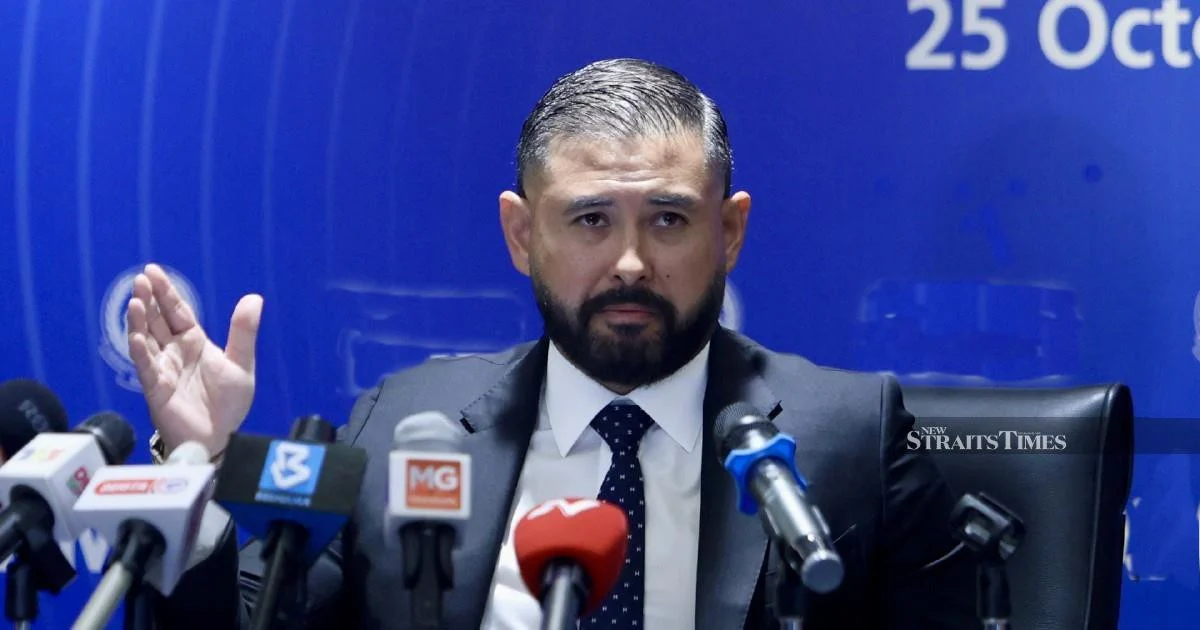
Tunku Ismail Sultan Ibrahim, the Regent of Johor, has firmly rejected assertions by Prime Minister Anwar Ibrahim that the state suffers from substantial financial leakages. Speaking in Johor Baru, the Regent presented a contrasting perspective on the state's economic challenges, directing blame toward the federal government rather than accepting the premise that internal inefficiencies are undermining Johor's wealth.
The Regent's statement constitutes a notable pushback against the Prime Minister's recent characterisation of Johor as a prosperous state whose financial resources are being depleted through various forms of leakage. Instead of endorsing this diagnosis, Tunku Ismail Sultan Ibrahim argued that the core problem lies with how the federal government manages the distribution and retention of revenue streams that originate within Johor's borders. This framing shifts the discussion from internal state governance to inter-governmental fiscal relationships.
The distinction the Regent draws is politically significant within Malaysia's federal system. Under the Malaysian Constitution, certain revenue sources are designated as state income while others belong to the federal government. The Regent's complaint suggests that the federal authorities are either retaining a disproportionate share of revenues that should accrue to Johor, or failing to return to the state the financial allocations to which it is constitutionally entitled. This interpretation transforms what might appear as a state-level accountability issue into a question of fair fiscal federalism.
Johor's economic position makes this disagreement particularly consequential. As one of Malaysia's largest economies by gross state product and a major contributor to national revenue through ports, manufacturing, and other sectors, Johor generates substantial tax revenues and economic activity. The debate between the Regent and the Prime Minister therefore touches upon how the benefits of the state's economic output are distributed between Johor's government and the federal centre. For Malaysian readers, this has implications for how effectively state governments can invest in local infrastructure, education, and services.
The timing of this exchange reflects broader tensions within Malaysia's federal structure. Different state governments have periodically raised concerns about the adequacy of federal allocations and the fairness of revenue-sharing arrangements. Johor, under the Regent's leadership, has been particularly vocal about state autonomy and the need for adequate resources to manage local development. The current disagreement with the Prime Minister's administration suggests these tensions remain unresolved despite the formation of the current federal government.
The Regent's rebuttal also carries implications for accountability and governance narratives in Malaysia. By rejecting the leakage characterisation, Tunku Ismail Sultan Ibrahim is pushing back against a framing that might suggest Johor's state government requires greater scrutiny or restructuring. Instead, he is pivoting the conversation toward federal-level conduct and the fairness of how the centre treats resource-rich states. This rhetorical move has consequences for how Johor's administration is perceived relative to federal authorities.
For Southeast Asian observers, this dispute illustrates broader debates occurring across the region about resource distribution in federal systems. Many Southeast Asian nations grapple with balancing centralisaton against regional autonomy, and questions of who controls and benefits from natural resources and economic output. Johor's position as an economically dynamic state asserting its rights against federal retention of revenues resonates with similar movements elsewhere in the region seeking greater fiscal decentralisation.
The practical stakes of this disagreement extend to Johor's ability to fund development projects, maintain infrastructure, and provide public services. If the Regent's concerns about federal retention are valid, then Johor's capacity to invest in education, healthcare, transportation, and economic development could be materially constrained. Malaysian policymakers and citizens in Johor have a direct interest in understanding whether the state's financial constraints stem from internal leakages or from the federal government's allocation and distribution practices.
The contrast between the Prime Minister's and the Regent's analyses also raises questions about data and transparency. The Prime Minister's statement about leakages presumably rests on specific evidence or findings, while the Regent's counterargument implies alternative interpretations of the same fiscal situation. For Malaysian media and civil society, this disagreement underscores the importance of transparent, independently verified information about state and federal finances to allow public scrutiny of both positions.
Looking forward, this dispute may influence the trajectory of federal-state relations and resource negotiations. If Johor's Regent continues to publicly challenge federal-level characterisations of the state's fiscal challenges, it could create pressure for more detailed discussions about revenue-sharing formulas and the bases for federal allocations. Other states observing this disagreement may also feel emboldened to raise similar concerns about their own treatment within the federal fiscal system.
The Regent's intervention also reflects the political weight that state leadership can exercise, particularly in a state of Johor's economic significance. His willingness to publicly contradict the Prime Minister signals that state authorities are not simply accepting federal narratives about their own governance challenges. This dynamic will likely continue to shape Johor's relationship with the federal government and may influence broader discussions about fiscal federalism in Malaysia.

