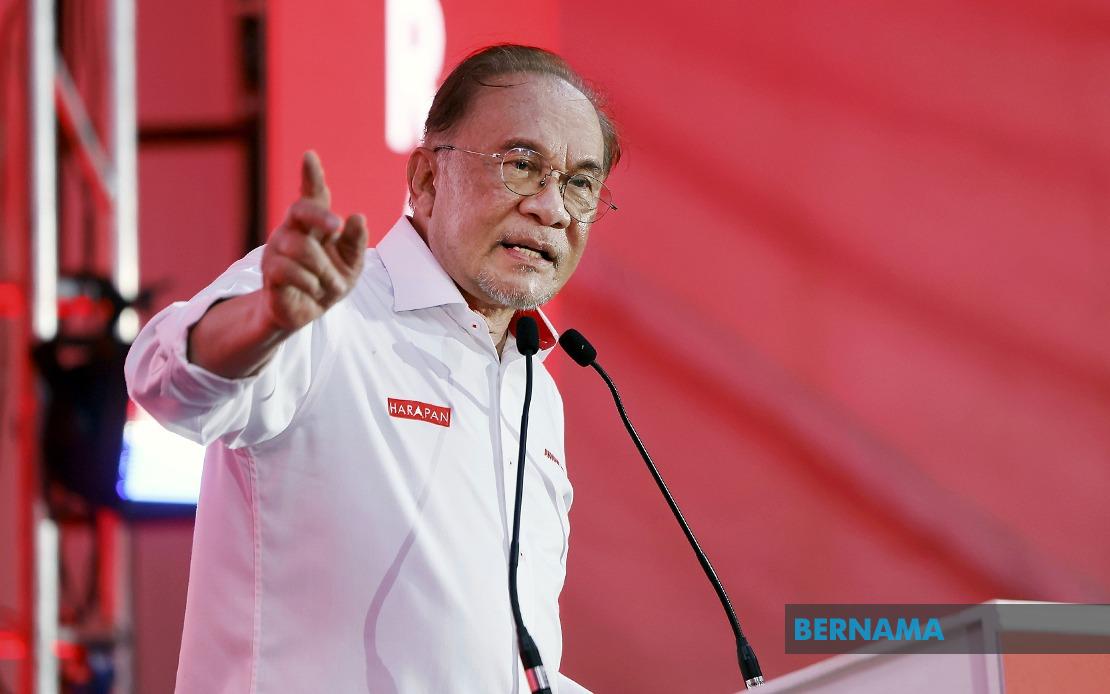
Pakatan Harapan's campaign for the 16th Johor state election kicked into high gear this week, with party chairman Datuk Seri Anwar Ibrahim emphasizing the need for a different caliber of political representation in Malaysia's southern heartland. Speaking during the coalition's opening day of canvassing activities, the Prime Minister outlined a vision of leadership grounded in wisdom, decisiveness and genuine understanding of grassroots concerns, qualities he suggested would distinguish PH candidates from their rivals.
Anwar's messaging reflects broader tensions within Malaysian politics about the kind of representatives voters should prioritize. His emphasis on leaders who possess both intellectual capacity and moral courage speaks to frustrations that have simmered beneath the surface of Johor politics for years—concerns about whether elected officials truly serve their constituents or pursue narrow partisan interests. By framing the election in these terms, PH is attempting to shift the conversation away from personality-driven politics toward substantive questions about governance competence and public accountability.
The coalition has committed resources across Johor's 56 state constituencies, fielding a complete slate of candidates for the first time in this cycle. The distribution reflects careful coalition mathematics: PKR is running 20 candidates, Amanah 19, and DAP 17, suggesting a negotiated arrangement aimed at maximizing overall seat gains while maintaining balance among the three main PH components. This configuration indicates that despite occasional strains, the coalition partners remain committed to presenting a unified front in an economically significant state where their control remains contested.
Anwar's initial campaign day involved an intensive schedule designed to maximize media coverage and voter contact. Attending seven separate events across different areas, the Prime Minister engaged in direct voter outreach through community meetings, public talks and grassroots mobilization activities. This hands-on approach signals that PH views the Johor election as consequential enough to warrant top-level attention, particularly given the state's historical significance as a political bellwether and economic engine for the federation.
The competitive landscape presents a demanding challenge for all participants. A total of 172 candidates are vying for the 56 available seats, creating a crowded field where voter attention becomes a premium resource. This density of candidates suggests that multiple parties and alliances view Johor as genuinely competitive territory where victory is achievable but far from guaranteed. The resulting scramble for votes will likely intensify as polling day approaches, with candidates attempting to distinguish themselves through a combination of local development promises and broader policy platforms.
For Malaysian observers, the Johor election carries implications extending beyond state boundaries. The state accounts for a substantial share of national economic output and represents a crucial swing constituency in federal politics. Results here will offer early indicators about whether PH can maintain momentum from the 2022 general election or whether opposition forces have successfully rebuilt organizational capacity. Additionally, the outcome may influence calculations about future coalition stability and the balance of power between different political blocs heading toward the next general election.
Anwar's specific emphasis on multi-communal representation and inclusive development also warrants attention. His repeated references to Malays, Chinese and Indians working together to build the nation touches on a perpetual challenge in Malaysian politics: whether political parties can transcend ethnic and religious divisions to focus on shared prosperity. The notion that wise leadership requires bridging these traditional fault lines represents an important ideological claim that PH is attempting to advance, though whether voters ultimately reward or punish such messaging remains to be determined.
The coalition's messaging strategy appears designed to appeal across traditional demographic boundaries by prioritizing governance quality and responsiveness over identity-based mobilization. This approach carries both advantages and risks. It could attract voters fatigued by endless identity politics and seeking competent administration. Conversely, it might struggle to energize voters for whom ethnic and religious representation remains the primary voting consideration. How these countervailing forces resolve themselves will shape not only the Johor election outcome but also broader lessons about the viability of inclusive political coalitions in contemporary Malaysia.
With early voting scheduled for July 7 and polling day set for July 11, the campaign period compresses into a narrow window where ground organization and messaging effectiveness become particularly consequential. The three-week sprint will determine whether PH can translate Anwar's calls for smarter leadership into actual electoral victories. For Johor's 2.6 million registered voters, the upcoming weeks offer a rare opportunity to directly influence their state's political direction and hold representatives accountable to the standard of wise, courageous leadership that the Prime Minister has outlined.

