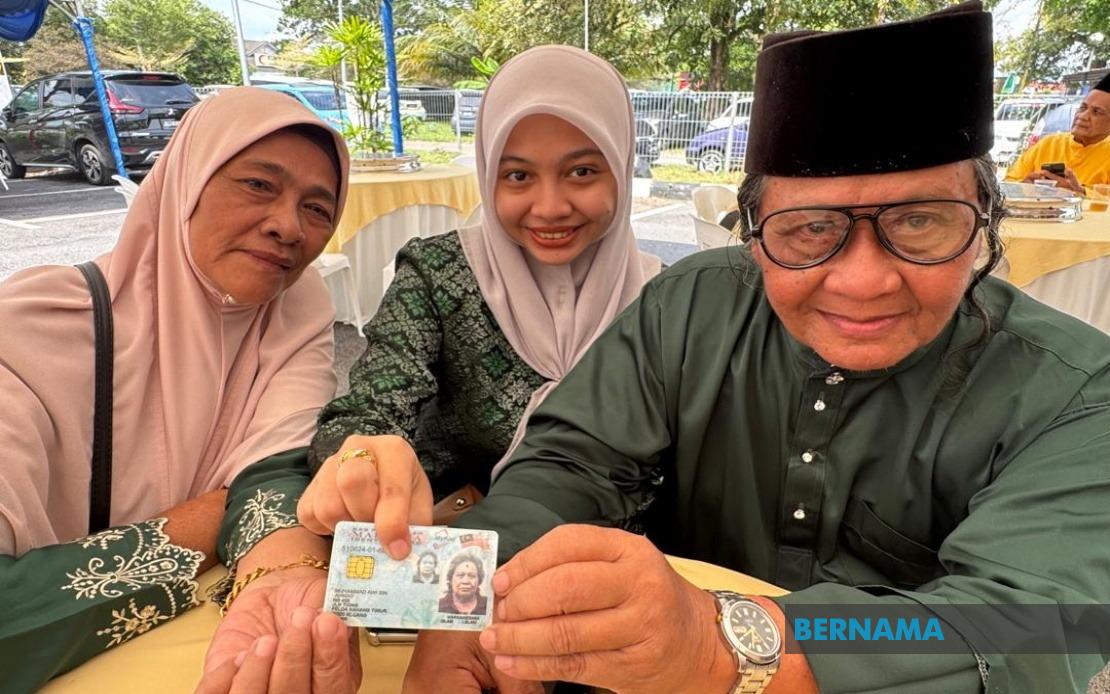
A 75-year-old Felda settler in Kluang received perhaps the most meaningful birthday present imaginable this week when the Johor state government handed him the ownership title to the 4.2-hectare plantation he has farmed for nearly four decades. Muhammad Awi Ahmad's case exemplifies the culmination of a long-standing land security challenge that has haunted Malaysia's Federal Land Development Authority settler communities, particularly in Johor where the backlog was most acute. The handover ceremony, attended by Menteri Besar Datuk Onn Hafiz Ghazi, distributed land titles to 210 recipients across three constituencies in Kluang, Kota Tinggi and Mersing, marking a significant milestone in resolving what has emerged as one of the most pressing rural development issues in the state.
Muhammad Awi's journey towards securing his land highlights the frustration many settlers endured. He submitted his first application for ownership in 1990, followed by another attempt in 2000, both of which were rejected. For a farmer who had invested decades cultivating the same plot, these repeated denials created profound uncertainty about his future and his family's financial security. The approval of his third application came through remarkably quickly under the current state administration, taking only about a year to process after submission. This acceleration suggests a fundamental shift in how the Johor government has approached what was previously an intractable bureaucratic problem, indicating renewed political will and administrative efficiency in addressing settler grievances.
The broader impact of this resolution extends far beyond individual cases like Muhammad Awi's. The Johor state government has now approved land titles for 27,639 out of 27,642 Felda settlers who filed applications, representing a near-complete resolution of the issue. This 99.9 percent success rate demonstrates the scope of what was achieved and underscores the previously systemic nature of the problem. For decades, thousands of Malaysian citizens who formed the backbone of the nation's agricultural modernization in the 1970s and 1980s found themselves in a peculiar legal limbo, working land they could not officially own, unable to use their properties as collateral for loans or pass secure inheritance to their children.
The generational implications of this resolution carry particular weight. Muhammad Awi's daughter, Norliyani, spoke poignantly about how unresolved land ownership issues would have cascaded through subsequent generations of settler families. Unlike the first generation of Felda residents, who often maintained ancestral villages and could theoretically return to their origins, the second and third generation settlers have known only their Felda plots as home. For them, the security of land ownership is not merely an economic question but fundamentally about their sense of place and belonging. Without clear titles, these younger settlers faced an existential uncertainty that their parents had hoped to resolve before passing on their life's work.
Another settler, Mohd Farhan Mohamad, represents this intergenerational challenge vividly. At 43 years old, he has spent most of his adult life pursuing a land title on behalf of his father, Mohamad Masek, who had cultivated the Felda Pasak plot since the 1980s. Farhan's initial application in 2006 remained unanswered for years, and his subsequent reapplication only last year came as a surprise when it was suddenly approved. This case illustrates the arbitrary and lengthy delays that have characterized the land title approval process, where applications could languish for over a decade without clear explanation or timeline for resolution.
The historical context of Felda settlements is essential to understanding the significance of this resolution. The Federal Land Development Authority was established to resettle rural Malays and indigenous peoples, transforming them into smallholder farmers and contributing to agricultural development. Settlers were allocated plots and provided support structures, yet the fundamental question of ownership was left unresolved for generations. This created an unusual situation where people could work, improve, and derive income from land they did not legally own, a situation that undermined their economic security and limited their ability to participate fully in the formal economy.
For the broader Malaysian economy and rural development, this resolution addresses a critical impediment to agricultural productivity and rural wealth accumulation. When farmers lack secure property rights, they are less likely to invest in long-term improvements, adopt modern farming techniques, or access credit necessary for expansion. Land title security is recognized internationally as fundamental to agricultural development and poverty alleviation. By granting Felda settlers official ownership, the Johor government has potentially unlocked significant economic potential in these rural communities, allowing farmers to leverage their assets for business expansion or generational wealth transfer.
The speed of resolution under the current Johor administration suggests that what was previously presented as a complex administrative challenge may have been, in part, a matter of political prioritization. The state government managed to process and approve 27,639 applications within a reasonable timeframe, indicating that resources and administrative capacity were available once the issue became a policy priority. This raises questions about why previous state administrations allowed this backlog to persist for so long, affecting families across multiple decades. The successful clearance of the backlog demonstrates that determined governance can overcome bureaucratic obstacles that might otherwise seem intractable.
Beyond Johor, this resolution carries implications for other states with Felda settlements. Peninsular Malaysia has numerous Felda schemes across different states, and similar land title issues may persist in other locations. The success of the Johor resolution, with its near-complete 99.9 percent approval rate, provides a template and proof of concept that other state governments could replicate. If Felda settler communities in other states face similar challenges, they now have evidence that political commitment can deliver solutions. This could potentially prompt other state governments to undertake similar reviews of their own land title backlogs.
The human dimension of this achievement should not be underestimated. For Muhammad Awi and thousands of others, receiving a land title at an advanced age represents the fulfillment of a lifelong aspiration. At 75, having spent nearly fifty years farming the same plot, the security of ownership provides not just economic peace of mind but emotional closure. Many settlers in his cohort have passed away before seeing this resolution, making the timing bittersweet for many families. Yet for those who remain, the title represents official recognition of their contribution to nation-building and validation that their decades of labor have resulted in tangible, secured assets.
Looking forward, the focus will likely shift towards ensuring that the 0.1 percent of applications that remain unapproved are resolved, and that the settlement of land titles translates into tangible improvements in settler livelihoods. The title itself is a necessary but not sufficient condition for agricultural prosperity. Settlers will need continued access to markets, extension services, and infrastructure development. Additionally, the success of this initiative should encourage deeper reflection on how Malaysia's rural development frameworks can be reformed to prevent similar crises in other sectors or regions. The Felda settler land title resolution demonstrates that long-standing problems, when given proper attention and resources, can be resolved in favor of the communities most affected by them.

